
China’s army of 2 million loan brokers went silent. Beijing just broke their playbook
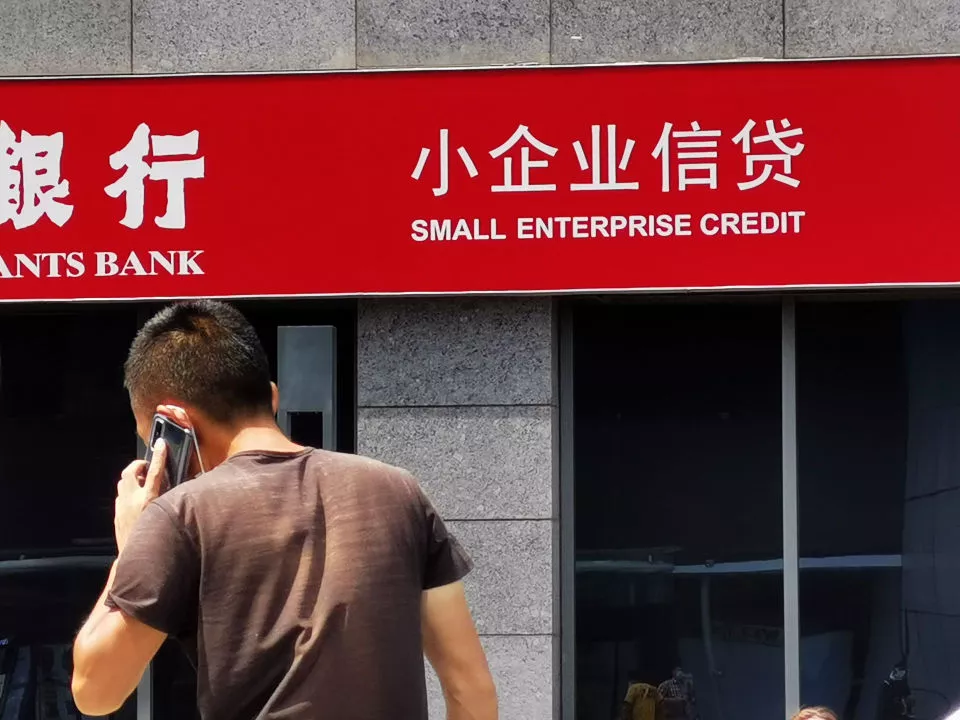
Loan intermediaries act as a bridge between borrowers and commercial banks, but the sector is now facing unprecedented regulatory pressure. (Visual China via Southern Weekly)
The ubiquitous loan brokers that once flooded Chinese social media feeds have suddenly gone dark.
Catchphrases like “Credit optimization and packaging, approval guaranteed” and “Instant payouts with relaxed requirements” have vanished from digital spaces, while many brokers have restricted their WeChat Moments to a three-day visibility window.
The sudden quiet follows the implementation of the Administrative Measures for Internet Marketing of Financial Products, jointly issued by multiple state ministries, which officially took effect on September 30. The rules explicitly bar any institution or individual lacking the proper licensing from conducting digital marketing for financial products.
The new mandate is the culmination of a broader regulatory assault that has plunged China’s massive loan-intermediary and auxiliary-lending sector into an unprecedented crisis.
Chen Rui runs a corporate-focused loan brokerage in Guangdong province. Over recent years, he has grown accustomed to sudden market shifts as regulators sweep through the grey areas of the industry, pushing once-sprawling brokerages with hundreds of employees to the brink of collapse.
Acting as middlemen between cash-strapped borrowers and formal financial institutions, these intermediaries connect clients with bank credit products and handle application paperwork in exchange for service commissions or agency fees. After a decade of explosive expansion, the industry is now facing a severe reckoning. What went wrong, and what does the future hold?
The Bubble Bursts
“Hello, is this Mr. Wang? I’m calling from the credit department of XX Bank. We’ve recently rolled out a financing plan with a credit limit of up to 1 million yuan. Would you like to hear more?”
Millions of people receive similar cold calls every day, typically generated by telemarketing teams employed by loan agencies. According to Chen Rui, these call centers routinely employ anywhere from dozens to over a thousand operators. While the exact number of such companies is impossible to track, many have already closed their doors permanently.
The operating environment for loan brokers has fundamentally transformed. Dong Ximiao, chief researcher at the Shanghai Finance and Development Laboratory, noted that the market is undergoing a rapid shakeout, with countless individual operators and micro-teams exiting as firms resort to suspensions, layoffs, and unpaid leave, shrinking the overall workforce.
This structural contraction is driven by a steady tightening of government oversight.
For years, China’s loan brokerage sector operated largely in a regulatory vacuum. That changed in April 2025, when the National Financial Regulatory Administration (NFRA) issued a sweeping notice on strengthening commercial banks’ internet-based auxiliary lending operations—dubbed the “new auxiliary lending rules” by insiders.
In the spring of 2026, the NFRA and the People’s Bank of China (PBOC) jointly released regulations mandating the transparent disclosure of comprehensive financing costs for personal loans. The latest September 30 rules have been wryly dubbed by industry insiders as the “9/30 New Regulations.”
Tian Lihui, executive dean of the Institute of Financial Development at Nankai University, told Southern Weekly that the ongoing restructuring driven by these policies can be broken down into three major transformations.
“On market access, the new rules require bank headquarters to exercise unified approval and whitelist management, slashing the number of legal partner institutions,” Tian explained. “On marketing, unlicensed entities are barred from promoting financial products, wiping out slogans like ‘instant approval’ or ‘loans available even with a blacklisted credit record.’ On financing costs, the new rules outlaw hidden fees, insurance add-ons, and bundled guarantor charges that used to obscure the true cost of borrowing.”
Financial institutions are also drawing hard lines. A wide range of commercial banks have recently issued public statements denying any business ties with loan intermediaries while imposing stricter internal compliance on their own staff.
Li Wen, a credit officer at a branch in Hubei province, said his institution strictly forbids loan officers from sourcing business through brokers. Violators face internal reprimands, pay cuts, or outright termination.
“When clients come in for offline consultations, we must inform them that the bank operates independently, has zero cooperation with intermediaries, and charges no extra fees,” Li said. “During online applications, our system prompts users with this exact warning before facial recognition.”
Yang Lingling, who works in the credit department of a rural commercial bank in Hunan province, echoed these remarks, noting that her branch holds monthly internal meetings to stamp out broker collusion. Yang and her colleagues maintain a private blacklist database of identified intermediaries to prevent accidental engagement.
At the same time, brokers report that banks have drastically tightened their scrutiny of borrower credentials and asset valuations, making successful loan applications much harder to secure.
To survive, loan brokers are forced to adapt.
According to Tian Lihui’s observations, practitioners have gone through three phases of adaptation. Initially, they tried linguistic evasion, swapping prohibited terms like “bad-credit loans” for euphemisms like “credit optimization” to dodge keyword filters. Next, they shifted marketing channels from public platforms like WeChat Moments and short-video apps to private chat groups and one-on-one messaging to evade detection. Finally, some operators are attempting a business model overhaul by seeking legitimate partnerships with licensed financial institutions.

Non-compliant loan intermediaries not only undermine bank risk controls but also severely infringe on borrowers’ legal rights. (Illustration by Liang Shuyi)
Deep Deceptions
The primary catalyst behind the regulatory crackdown is the surge in financial black-market crimes tied to illicit brokerages in recent years.
At a late-2025 press conference held by public security authorities detailing a nationwide crackdown on financial grey-market crimes, outlaw loan intermediaries accounted for six out of the ten showcase criminal cases.
These cases exposed a sprawling playbook of deceptive practices employed by rogue brokers.
The “AB loan” is among the most common tactics. Chen Rui explains that when a borrower with poor credit (Client A) cannot secure formal financing, unscrupulous brokers trick them into bringing in a friend or relative (Client B) as a purported guarantor or witness, concealing the fact that A is the actual borrower. The loan is disbursed into B’s account and immediately transferred to A. If A defaults, the entire debt burden falls squarely on B.
“Inflated appraisals” represent another widespread fraud. Kang Hong, an executive at a non-performing loan disposal firm who frequently deals with brokers, recalled how intermediaries routinely collude with appraisal agencies to jack up real estate valuations. “A property worth 10 million yuan would be appraised at 13 million, allowing the borrower to extract oversized loans from the bank,” he said.
Fraudsters also routinely deploy “professional debtors” to milk banks of cash. In one notable case highlighted by the Ministry of Public Security, a criminal ring led by a suspect surnamed Jiang in Zhejiang province lured individuals with clean credit records by promising guaranteed high returns. The gang forged business licenses, financial statements, property deeds, and vehicle registration certificates, while bribing corrupt bank insiders to push the fraudulent loan applications through, ultimately defrauding seven banks of over 90 million yuan.
Beyond draining bank balance sheets and driving up non-performing loans, predatory brokers routinely abuse individual borrowers.
Opaque pricing has long been a hallmark of the industry. Intermediaries often stack various administrative fees, consultancy charges, and advisory costs on top of promised rates without standardized caps.
“Some brokers promise a 2% to 3% handling fee, but sneak extra items like guarantor fees into the contract—charges that banks don’t even levy,” Chen Rui noted. This “double-contract” tactic ensures clients are overcharged without their knowledge.
Bank insiders have also witnessed intermediaries exploiting informational asymmetries to extract windfalls. Li Wen recalled instances where civil servants or state-owned enterprise employees—who qualify for pre-approved credit lines of 300,000 to 500,000 yuan simply by scanning a QR code—were entirely unaware of their own eligibility. Brokers would trick these qualified clients into generating application QR codes under the guise of personal loans, hand the links over to actual cash-strapped borrowers, and pocket tens of thousands of yuan in referral fees upon successful drawdown.

An advertisement for personal financing products displayed at the China World Mall in Beijing on July 1, 2022. (Visual China via Southern Weekly)
Systemic Loopholes
The modern loan-intermediary industry traces its roots back roughly a decade.
Chen Rui vividly remembers the boom that began around 2016, propelled by a soaring property market and a nationwide fervor for mass entrepreneurship. “Personal financing demand was massive back then, especially among small business owners and individuals.”
Borrowers turned to intermediaries because the formal banking system offered a dizzying array of complex products that ordinary consumers struggled to navigate.
In Chen Rui’s view, brokers historically played a constructive role in helping small and micro enterprises secure much-needed capital. “Small businesses have weak bargaining power, and banks prioritize their own yields. Loan brokers stood on the side of the clients.”
n
Commercial banks also had an operational incentive to rely on intermediaries.
Wang Jingran, a veteran loan broker, argues that while banks publicly distance themselves from middlemen, they remain functionally dependent on them. “Banks face strict headcounts and limited staff efficiency. Brokers understand underwriting standards inside out and pre-screen client documents, saving banks immense time and effort.”
Under intense internal performance quotas, bank employees frequently collaborated with brokers. Pan Xiaojun, a distinguished researcher at the Shanghai Finance and Development Laboratory, noted that a branch manager at a bank in Shenzhen privately estimated that normal customer-acquisition channels could only fulfill 40% of the quarterly lending quota set by headquarters. “You either accept penalties for missing targets or lean on brokers,” the manager remarked.
However, as the industry expanded unchecked, it devolved into chaos.
Chen Rui points to 2021 as a turning point. As market participants multiplied, hyper-competition set in. “Some people couldn’t handle the pressure and decided to cross legal red lines,” leading to a surge in illicit and criminal behavior.
A February 2024 research report by Peking University’s Inclusive Finance and Legal Regulation Research Base estimated that China had between 1.5 million and 2 million active credit-intermediary personnel nationwide, excluding those operating through other marketing channels.
This rapid expansion created systemic vulnerabilities that corrupt bank insiders eagerly exploited.
A September 2026 report by the Ministry of Public Security’s official newspaper detailed a 140 million yuan fraud case in Changsha, Hunan province, anchored by direct collusion between bank executives and rogue brokers. Investigators found that a sub-branch vice president surnamed Duan and a customer manager surnamed Zhou abused their approval powers—accepting massive bribes from brokers to wave through loan applications backed by shell companies and inflated collateral.
In response, law enforcement and financial regulators launched a coordinated offensive. In March 2025, the Ministry of Public Security and the NFRA initiated a six-month joint campaign targeting financial grey-market crimes across lending, insurance, and credit cards. Police investigated over 1,500 cases, dismantling more than 200 professional criminal syndicates involving nearly 30 billion yuan. A fresh wave of crackdowns followed in April 2026.
While criminal crackdowns have proven effective, Tian Lihui argues that they only treat the symptoms. The deeper soil nurturing these grey-market operations is structural: persistent information asymmetries and unmet demand within the formal financial system.
“Targeted crackdowns and preventative governance must go hand in hand,” Tian said. “To truly eliminate the soil where black-grey markets thrive, we need formal financial institutions to extend their services downward and simultaneously improve financial literacy among ordinary consumers.
”
Rebirth Through Fire
Despite the severe turbulence shaking the sector, industry insiders and academics agree that loan brokerages will not—and cannot—be entirely eradicated.
The industry exists because it fulfills a genuine societal need.
Tian Lihui noted that financial products are inherently complex, leaving ordinary citizens at a permanent informational disadvantage. With interest rates, risk models, and approval criteria varying wildly across commercial banks, a knowledgeable professional advisor can genuinely help borrowers cut costs and mitigate risks.
“The problem was that historically, much of the brokers’ revenue didn’t come from professional services, but from exploiting information asymmetry,” Tian said, pointing to how intermediaries lured clients in with low headline rates before slapping them with hidden fees.
During the period of disorderly expansion, firms committed to compliance found themselves at a profound disadvantage.
Wang Jingran noted that law-abiding brokerages previously struggled because “the cost of playing by the rules was too high.” Higher standards for staff credentials drove up labor costs, and maintaining regulatory licenses required heavy capital investments, leaving little cash left over for aggressive marketing.
The regulatory clampdown is set to invert this dynamic. Tian Lihui predicts that over the next three to five years, regulatory compliance will shift from a nice-to-have bonus to a baseline requirement. “Companies with genuine competitive advantages in risk control, data protection, and operational systems will survive, while those relying on information arbitrage and hype will be wiped out.”
Dong Ximiao suggests that surviving brokers will likely pivot from retail consumer loans toward small-and-medium enterprise (SME) financing, evolving from traditional offline middlemen into professional financial advisors.
Chen Rui, who spent years working inside the banking system before launching his own brokerage, sees strong growth potential in corporate advisory services. Every year, commercial bankers leave the sector to establish corporate-focused funding consultancies, a trend that has accelerated recently.
Armed with insider knowledge of banking policies and corporate financial planning, Chen’s firm charges annual advisory fees to help enterprises optimize their cash flow and negotiate better loan terms with banks. “Some businesses are happy to pay for this because they find the value proposition compelling,” he said.
While some remain skeptical about the sector’s future, Dong Ximiao emphasizes that all major industrial upgrades come with growing pains. “Nevertheless, the rebirth of the industry after passing through this difficult winter is well worth looking forward to.”