

China’s AI boom built a trap for filmmakers. Now producers spend days babysitting bosses’ toys

Anxiety over artificial intelligence has seeped into every corner of China’s entertainment industry, but the daily reality for many professionals is far more demoralizing: using AI not to create art, but to pass tests invented by their bosses.
Boardrooms once dedicated to analyzing scripts and production schedules are now consumed by algorithm models. Managers compete over who has mastered the latest product version released yesterday, while actual project progress goes ignored.
Over the past year, the number of traditional film and television projects has plummeted, while management meetings have multiplied—every single one pointing back to AI.
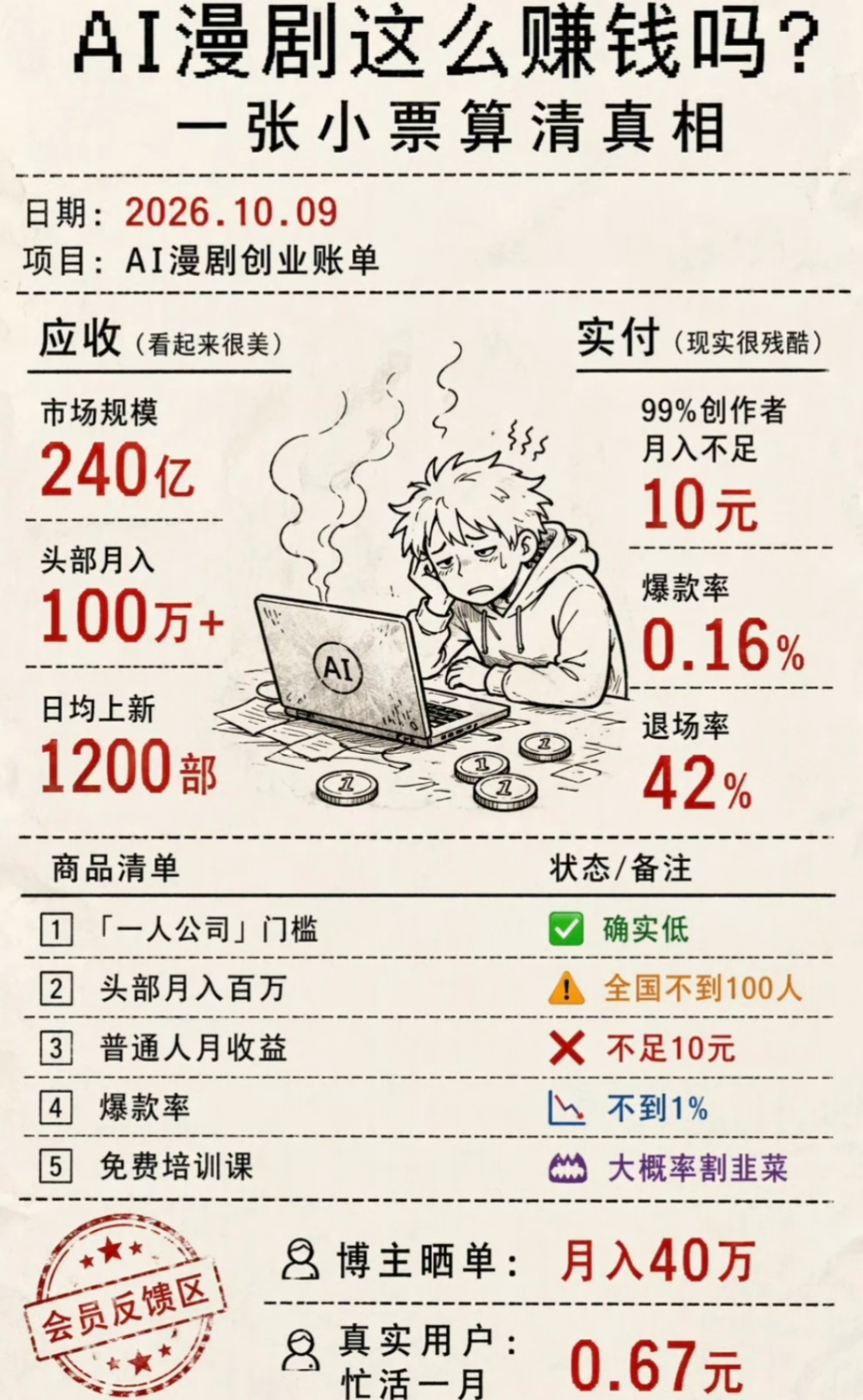
Industry data shows that over 90% of micro-dramas released early this year were generated by AI. The technology has slashed production costs dramatically: a drama that once required hiring actors, costing around 300,000 yuan ($42,000) and taking a month to shoot, can now be produced for 10,000 to 20,000 yuan by a 10-person team in just two weeks.
Yet the money saved hasn’t stayed with production companies. Eighty percent of it is immediately siphoned off into buying traffic and ad placements, while monetization rates have withered. Revenue per 10,000 views has plunged from 30–100 yuan last year to a meager 5–10 yuan today.
We interviewed four practitioners across China’s film, television, and tech sectors to understand what happens when a creative industry is forced to digitize overnight. Their stories reveal an ironic consensus: companies are rushing to adopt AI, yet their core businesses are shrinking.
Here are their firsthand accounts:
By Da Bode
Edited by Zhuoran

Xiao Wen, Producer at a Major Film Company
Since the beginning of the year, I’ve often found myself in a daze. Does my company belong to the film industry anymore, or is it a tech firm now?
Our company used to be an industry leader, but it has stagnated in recent years. As a producer with over a decade of experience here, I have watched this industry slide from its peak, battered by intelligent technology and a sagging market.
The release of Seedance 2.0 in February caused the biggest shockwave. The tool sparked widespread panic across the industry, and my boss was precisely the kind of person who worried the most.
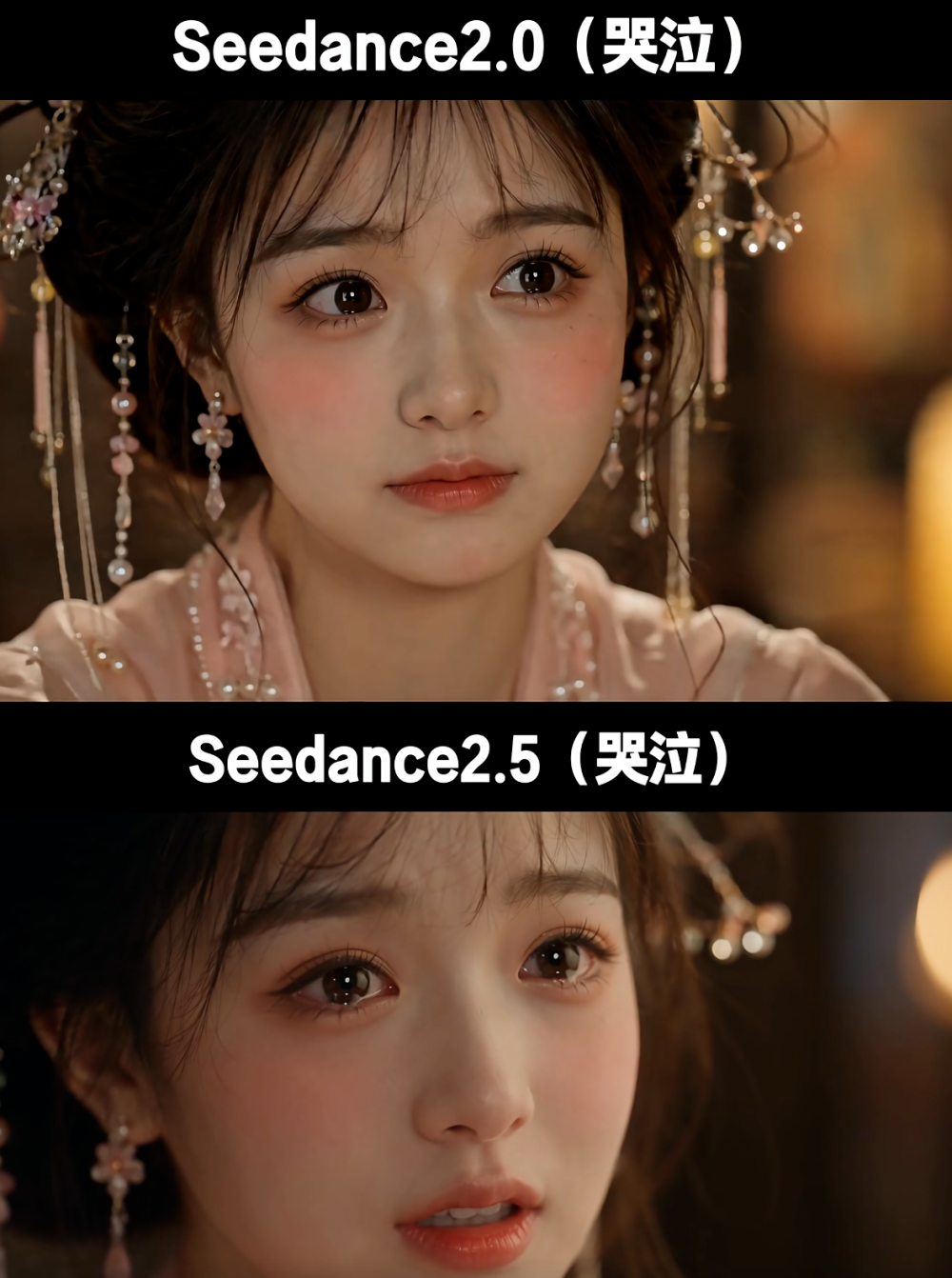
File photo: Seedance has since updated to version 2.5.
After that, the atmosphere in the office completely changed. Management began mandating weekly, all-staff AI seminars. These meetings were entirely abstract—never touching on actual production work or timelines. Instead, they focused on cutting-edge tech trends, how algorithms are reshaping audiovisual media, and the latest software iterations.
The boss repeatedly stressed that “to stand still is to fall behind.” Whoever could give the most articulate update on today’s AI landscape was praised as a contributor; everyone else was labeled as someone “about to be eliminated by the times” and ripe for layoffs.
Especially during the craze for automation earlier this year, my boss became convinced that every aspect of work could—and should—be fully automated.

His enthusiasm was unbelievable. He led by example, carrying his laptop desk-to-desk, aggressively pushing his newly discovered AI apps, and forcing everyone to download them on the spot, learn them immediately, and demonstrate their learning outcomes.
The meeting room would fall dead silent, save for the boss’s voice echoing off the walls. Some colleagues reluctantly opened the programs just to go through the motions; others stared blankly at presentations they had meticulously prepared, falling into deep silence. No one was discussing specific TV series anymore; no one cared about creative standards, script quality, or budget control.
Everyone’s focus shifted to one goal: pleasing the boss and neutralizing his anxieties.
Things soon grew even more absurd. The company introduced an AI-driven script evaluation system, claiming it could replicate streaming platforms’ vetting mechanisms and score our pitches. I had a pet project that I believed in deeply, which had been sitting on the desk for over a year without approval. We ran it through the system, and surprisingly, it received a high score.
The boss was ecstatic, asking me how we should push it forward immediately.
At that moment, my heart was a tangled mess. In the past, getting this greenlight would have made me happy. But looking at a machine-generated grading score, I suddenly felt lost. As a producer with ten years of experience—having read countless pitches and learned from numerous costly mistakes—my hard-earned judgment suddenly seemed worth less than a software’s calculation.
That was when I truly realized my accumulated expertise was losing its value in an instant.
Over time, my colleagues and I caught on to this survival game. We started building features that looked smart and cutting-edge on the surface, but were completely disconnected from real-world production, just to pass the boss’s sudden spot-checks.
For instance, we built an “IP Interpretation Assistant” using AI. We would feed raw materials from web novels and books into the program, let it extract summaries piece by piece, and tell us what genre of drama the IP suited.
While the AI could churn out suggestions, anyone who knew the industry could tell it hadn’t truly grasped the IP. Its summaries stripped away the most brilliant hooks, reducing nuanced stories into tired clichés.
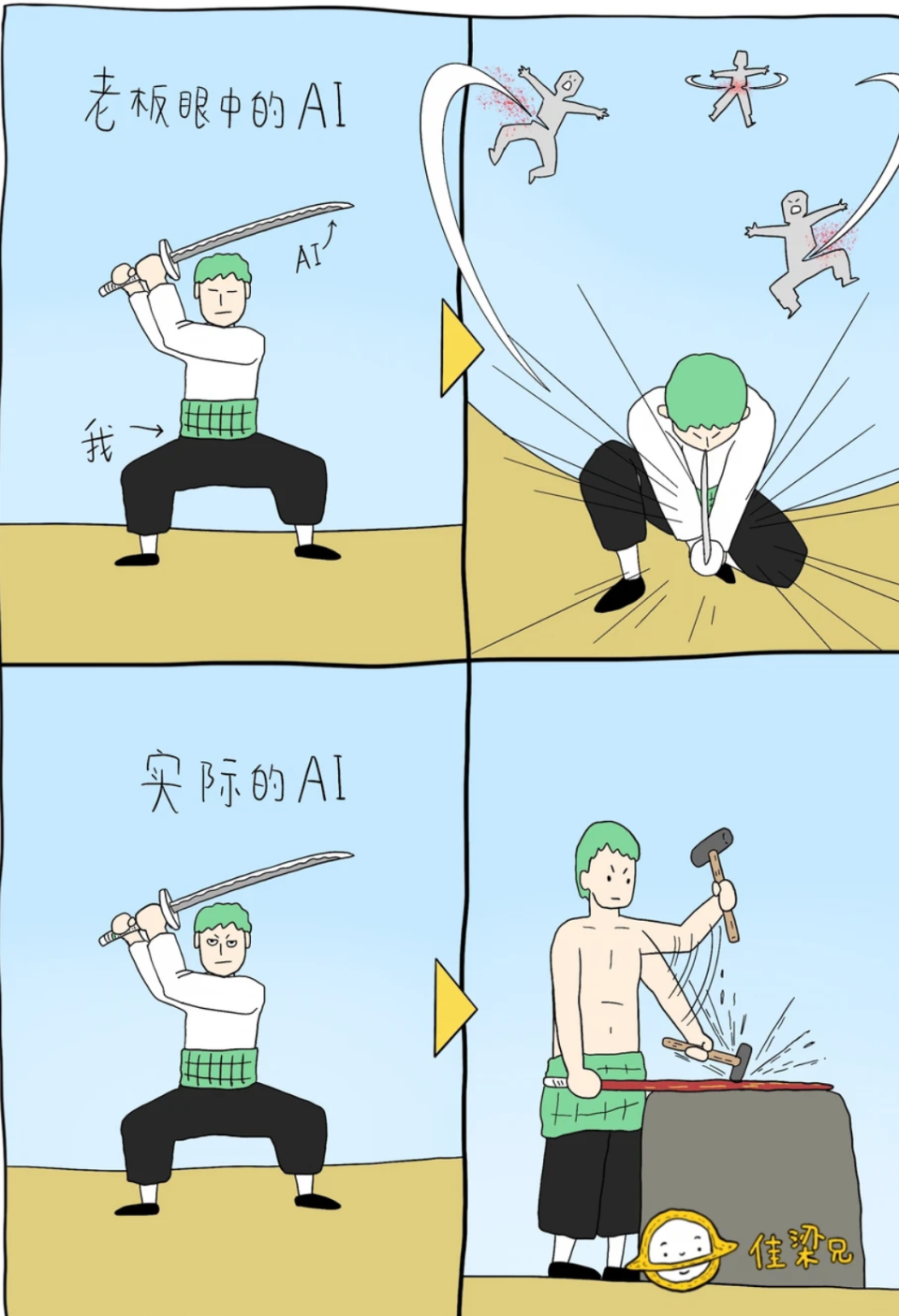
Source: @Jialiang Xiong’s Energy Orb
Its underlying logic was crude—simply categorizing online information via mechanical content tags with zero human touch. Yet the boss believed the results implicitly, using them as the primary benchmark for current IP planning.
In private, we called these outputs “debugging toys”—usable or not, as long as they looked valuable and gave us something to hand to the boss, that was enough.
Sometimes, the boss would flip through a reference book on screenwriting or project incubation and immediately demand that we feed the entire text into the AI, turning it into an automated grading tool based on the book’s theories.
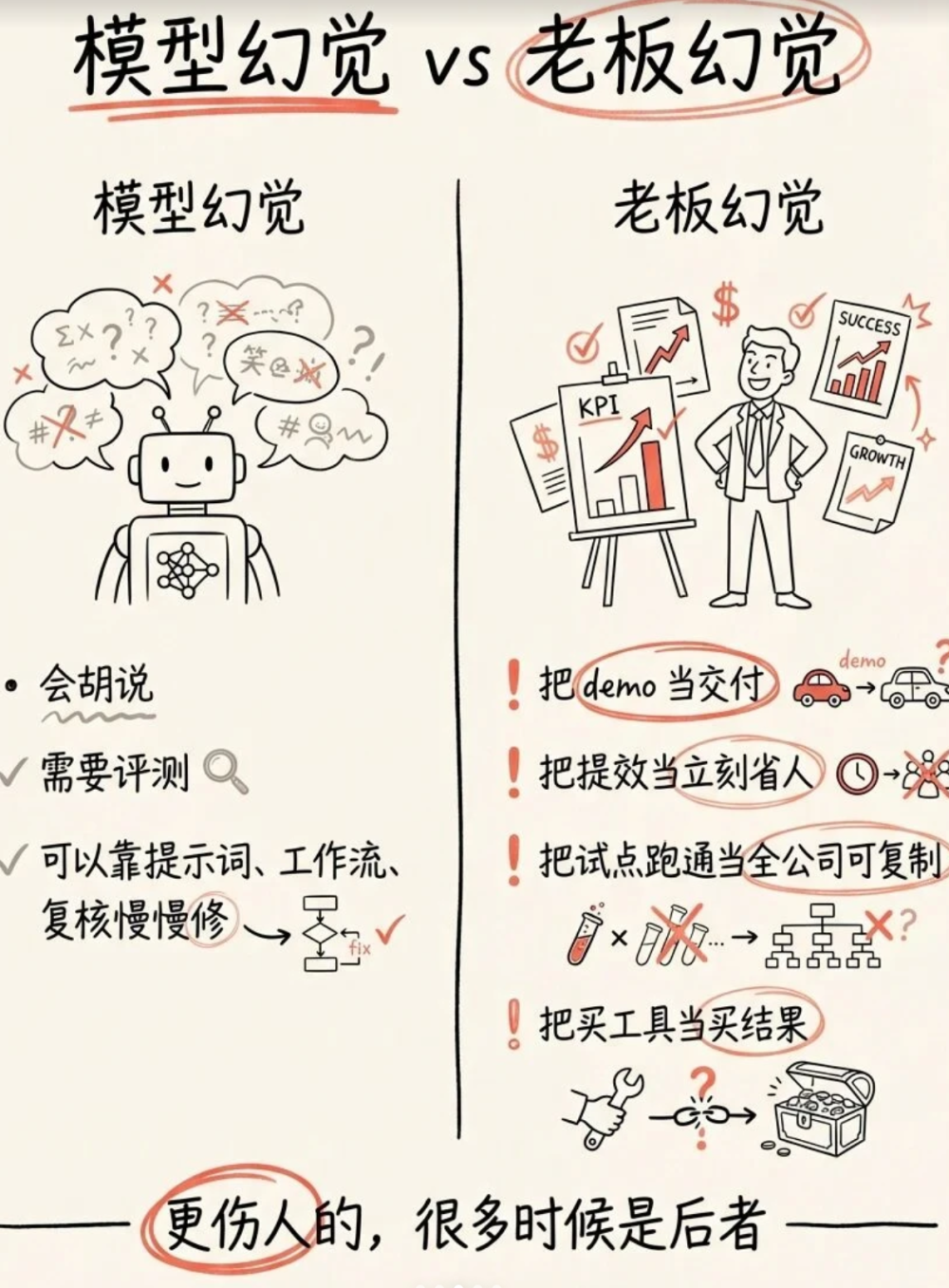
The reality? These tools simply copy-pasted textbook knowledge mechanically. The moment they encountered the nuanced, shifting characters and plot choices of actual production, they broke down. Worse, the machine frequently hallucinated nonexistent works and industry anecdotes, making it completely useless for real projects.
The strangest part came later. The boss ordered us to build a video pitch review system using AI.
He instructed us to scour the internet for evaluation frameworks previously shared by major Chinese streaming platforms like Tencent Video, Youku, and iQiyi—such as their multi-tier script review processes and three-stage TV evaluation methodologies—and direct AI to synthesize them into a simulated project assessment tool.
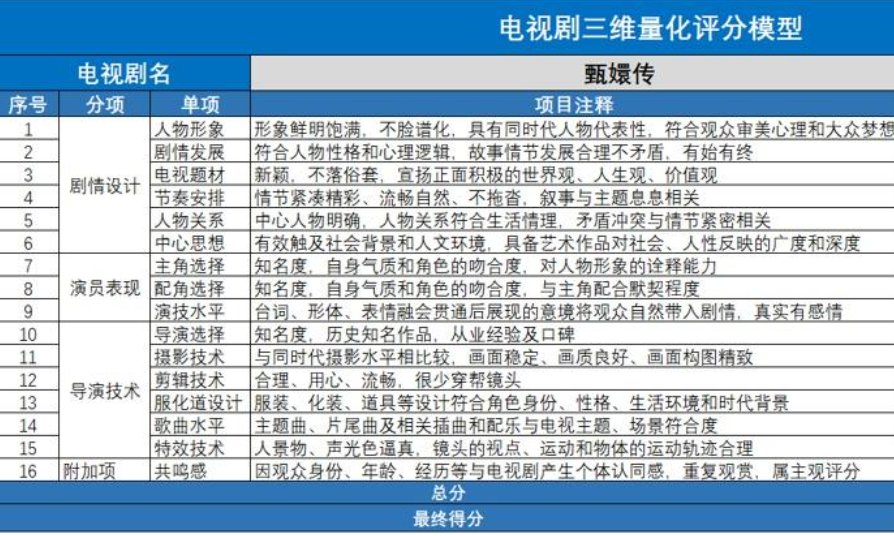
Chart: A leaked three-dimensional quantitative scoring model for TV dramas.
This was our most absurd assignment yet. As everyone knows, AI has an inherent tendency to flatter. If you lean toward liking a pitch, it will list all its strengths; if you look for flaws, it will manufacture a dozen nonexistent problems out of thin air. It has virtually no independent, objective judgment.
Traditionally, streaming platforms use a multi-departmental, multi-angle review mechanism where preliminary screening and final reviews are handled by separate teams representing different institutional stances, balancing criteria that constantly shift with market trends. Theoretically, no single tool can fully simulate that.
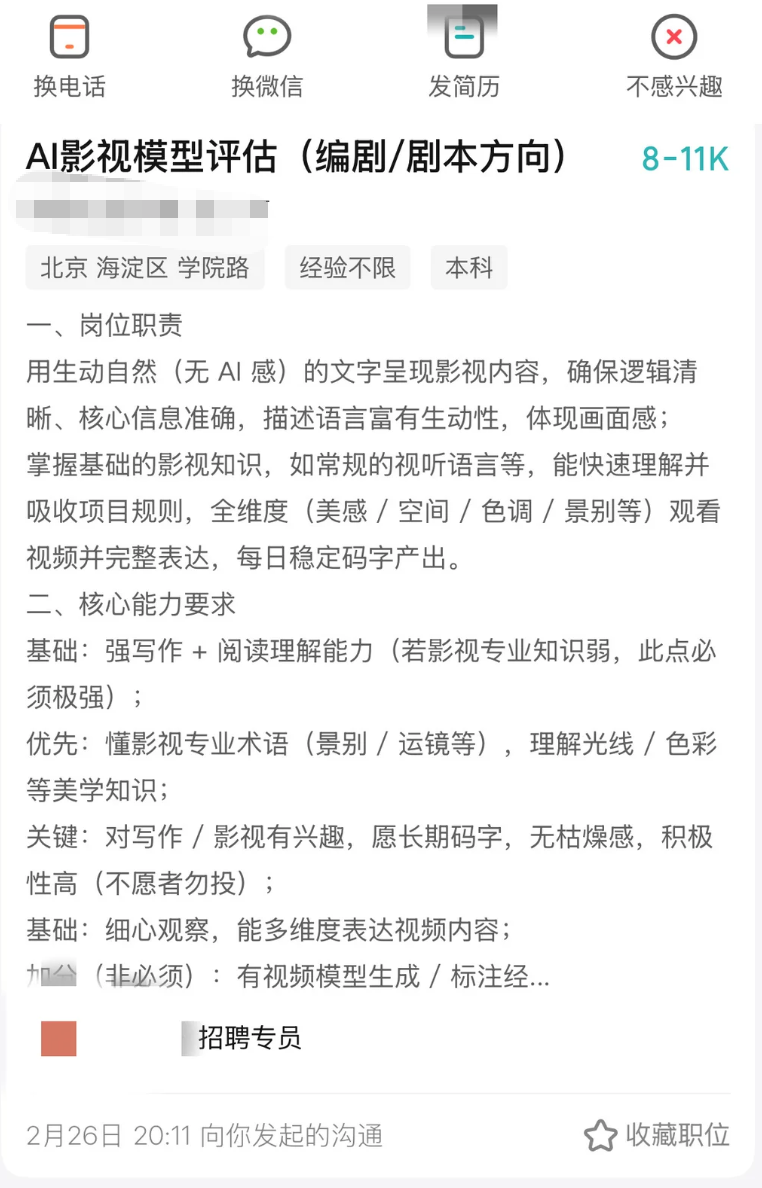
Chart: AI-related film and television evaluation job openings on Boss Zhipin.
Yet AI creates an illusion of magic; its speed makes you feel like it can do anything, even if the actual deliverables are commercially useless. Just like that, I spent over a year doing work that was “busy on the surface, barren underneath.”
Base salaries in the film industry are modest; the real income comes from project bonuses. When I first joined, we had plenty of reserves, and bonuses rolled in. But as the market contracted and projects dried up, I haven’t closed a real project in two or three years—making bonuses a distant memory.
What worries me most, however, is my career path.
At 35, a producer should be entering their prime—a golden window where experience, stamina, and interpersonal networks converge.
Instead, I’m stuck in this moment. Projects can’t get off the ground, salaries won’t budge, and the most painful part is watching my prime career years vanish into thin air.
I want to jump ship, but the entire industry is trapped in the same quagmire; there’s nowhere to go. If I stay, watching every day slip away empty leaves a heavy stone in my chest.
Xiaowei, AI Video Generation Test Specialist
I used to work as a planner at a top-tier Chinese film and television company, but my firm was acquired early last year, and I was shown the door.
I was unemployed for half a year. When I started looking again, I realized the landscape had shifted. Job openings in traditional film had plummeted; I sent out countless resumes into absolute silence, and those that did reply offered half my previous salary.
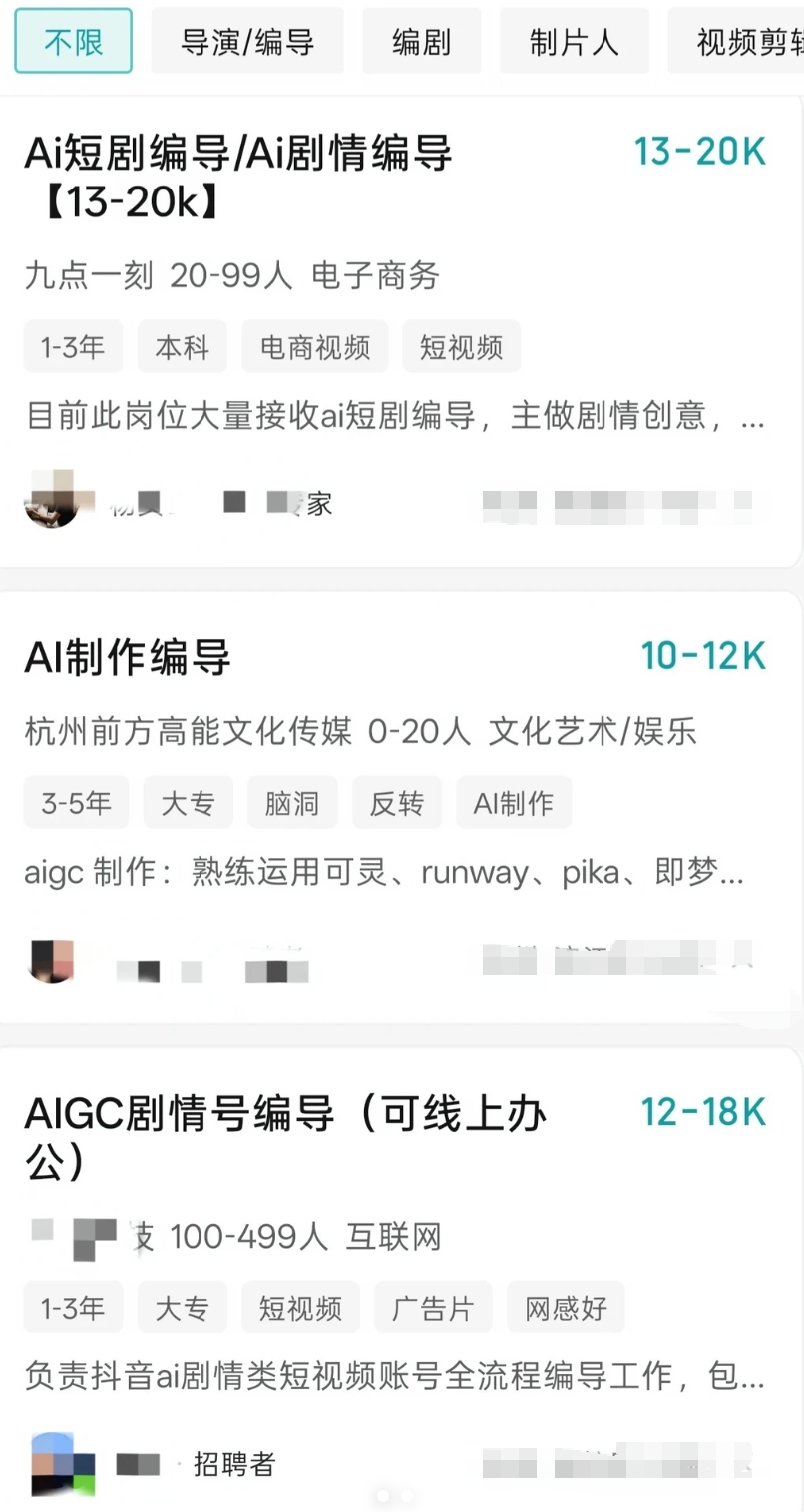
Ultimately, I landed a job as an AI video generation tester at a leading Chinese internet giant. The job description called for someone “fluent in audiovisual language and narrative logic,” and the salary doubled my old planning pay.
While a standard film planner makes around 10,000 yuan a month—and drops to base pay between projects—this role started at a base of 15,000 yuan (fluctuating between 15,000 and 25,000 yuan), plus generous overtime subsidies typical of big tech firms.
n
I received my offer letter quickly.
Not long after starting, I realized the work felt like a regression to my college days. My duty was to translate vague, fuzzy, emotional, and colloquial scene descriptions into precise audiovisual expressions that AI systems could digest.
For example, a rough prompt like “dusk in a Beijing alleyway” had to be broken down into camera angles, lighting intensity, color grading, and micro-details of props, repeatedly tweaked until the AI’s output matched industry aesthetic standards.
n
Many of my colleagues share similar backgrounds: some graduated from elite academies like the Central Academy of Drama or the Beijing Film Academy, while others hail from Tencent, iQiyi, and Youku. We jokingly call our office the “rehab center for the audiovisual industry.”
n
Over coffee, we often lament that in the age of AI, we are slowly overdrafting our years of accumulated industry experience.
We act as a “knowledge bank,” distilling our decades of lens aesthetics, shooting techniques, and narrative intuition into parameters to feed the AI system. We know full well what we’re doing: the harder we train the system today, the faster we render ourselves obsolete tomorrow.
What truly chills me to the bone isn’t how photorealistic AI-generated imagery has become, but the moment I finally understood the underlying logic of my job:
We are taking the practical wisdom, the pitfalls we avoided, and the boundaries our predecessors spent decades figuring out, breaking them all down into parameters, extracting them into rules, and turning them into a one-click automated function.
We used to joke that future film students might skip years of hard apprenticeship. Now, it seems entirely possible—even common sense and intuition can be mass-produced.
Old industry partners often tell me I caught the wind at my back; others half-jokingly call me a “traitor to the industry,” warning that the things I build will eventually destroy their futures.
My view is that this narrative is incomplete. AI didn’t just steal filmmakers’ futures out of thin air; it gradually dispersed the public’s entertainment attention span.
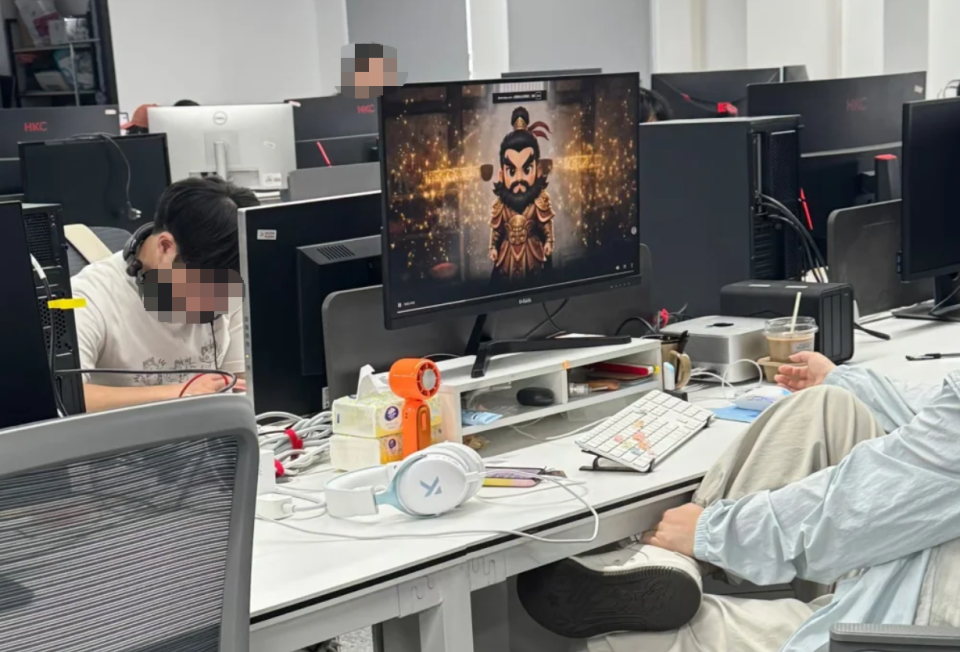
Chart: An office producing AI manga-style shorts.
Before AI entertainment existed, 100% of consumer attention flowed into live-action films and physical content. Now, AI-generated audiovisual works have arrived, carving up and diluting the original traffic and market share. The slice of the pie left for live-action film is visibly shrinking.
Even though my current salary is more secure and I no longer suffer from the wild volatility of the traditional film industry, a stone still hangs in my chest. This stability is temporary—bought by cashing out my industry reserves. It lacks a solid foundation, and it has no long-term future.

Xiaoyuan, Former AI Micro-Drama Producer, Now Freelancer
I have a background in content incubation and on-site production within the audiovisual industry.
When text-to-video technology first emerged, a friend invited me to launch a startup focused on animation. We figured AI tools could lower costs and make things smoother than before.
Back then, the industry called it “AI manga,” and nobody was sure it would work. The early stage was basically burning cash with no expectation of quick returns.
To our surprise, AI technology iterated so rapidly that within ten months, “AI manga” naturally evolved into AI live-action dramas and AI micro-dramas. We stumbled right into a hot trend.
Once we dove in, however, we realized profits on trending topics aren’t so easy to capture.
In the AI micro-drama industry, the only ones actually making money are the streaming platforms running the distribution channels. Producers like us are merely gamblers sitting at a table controlled by the house. If you want to launch a show, you play by their rules; in reality, we are just content contractors for internet giants, earning gig wages.
Forget exponential revenue growth—just staying afloat is hard enough. The internal competition here is even more brutal than in big tech firms, taking a heavy toll on body and mind.
While AI dramatically cuts visual production costs, headcount, and time, the money saved doesn’t line the creators’ pockets. Instead, it gets swallowed up by user acquisition and marketing budgets, ultimately ending up in the platforms’ hands.

AI dramas still differ significantly from traditional live-action micro-dramas.
A traditional live-action micro-drama costs around 300,000 yuan to produce, rarely exceeding 500,000 yuan. Production teams range from 20 to 50 people, taking about a month to complete shooting and post-production—hence the industry rhythm of one drama per month.
Today’s mass-market AI micro-dramas cost a mere 15,000 to 20,000 yuan to produce. Entire teams consist of fewer than 10 people, delivering a finished product in about two weeks. In rare cases, a small group of three can push out a release in a week (for instance, the early AI short *The Fired Girl*).

Chart: The AI manga short *The Fired Girl*.
A 90% reduction in manpower and a two-thirds cut in production timelines mean computing power and AI sound effects are replacing actors, filming locations, makeup, and wardrobe—the traditional budget heavy-hitters.
However, AI only reduces production costs, not customer acquisition costs.
Today, the largest expense in making AI micro-dramas is traffic投放 and promotion, frequently accounting for 70% to 85% of total investment—sometimes reaching 90% in earlier years.
As per-view revenues plummeted from 30–100 yuan last year to just 5–10 yuan today, project volume has exploded, homogenization is rampant, and breakout hits are rare.
According to forecasts by data firm DataEye, assuming a break-even threshold of 50 million views, roughly 98.7% of projects fail to break even within six months. Only about one out of every 70 titles recovers its costs.

Chart: A viral industry meme.
For streaming platforms, the dynamic is precisely the opposite. Platforms control traffic distribution, advertising/payment monetization, and computing tools. Regardless of whether your show hits it big, the platform’s traffic-sharing fees, tool subscriptions, and advertising revenues keep rolling in.
Producers operate like lottery ticket buyers, gambling on a viral hit; platforms act like casinos. Win or lose, the casino always wins.
To summarize the contrast:
In the era of live-action micro-dramas, producers could still steadily profit with mediocre projects.
In the AI era, while head studios occasionally strike gold with a 6 million yuan six-month windfall, the vast majority of producers are left with razor-thin odds of hitting a jackpot. Profits are fragmented, and stable profitability has shifted entirely to the platforms.
Worse still, the industry has fully shifted to assembly-line production.
Many companies build their own text-to-video and image-to-video tool platforms, centralize the creation of narrative templates, set up the machine resources for you, and then hire fleets of part-time creators.
You don’t need creativity or years of industry experience; you just follow a fixed prompt template, use their platform and workflow to churn out goods, and get paid per piece. Market rates are squeezed terribly low, usually around 40 to 45 yuan per minute.
Frankly, this job can be learned in a few days. The barrier to entry drops lower by the day. Working in entertainment used to at least grant you the title of a “creative”; now, to put it bluntly, you’re just an assembly-line worker. As long as your hands and feet are fast, anyone can do it. The job is overwhelmingly replaceable.
Lately, AI micro-dramas have become fast-moving consumer goods—commercial properties far outweighing artistic ones. Viewers are simply here for mindless entertainment; talking about lofty artistic pursuits is completely impractical. But my co-founder couldn’t let go of his artistic stubbornness. After months of butting heads, we finally decided to part ways.
I’ve chased the audiovisual wave from traditional film to short videos, and from AI manga to AI micro-dramas. Every step landed on a turning point in industry transformation, always chasing the latest trend.
Yet when I balance the books, the ones making the real money are always the platforms and internet giants.
People like us, running after trends, may jump jobs frequently and rush eagerly ahead. But frankly speaking, we’ve just changed offices to punch someone else’s clock. No matter how hard we push or how fiercely we compete, we’ll never make the kind of money we actually want.

Xiao Li, AI Engineer at a Film and Television Company
I am a fresh college graduate this year, having majored in Java software engineering.
The job market for our graduating class is brutal. Many of my roommates still haven’t found ideal work, and some are still submitting applications daily.
So when I received an offer from this audiovisual firm, I felt luckier than most of my peers. I didn’t dare pick and choose; there wasn’t much room to be picky anyway.
I entered the workplace equipped with the fundamental logic and values of a software engineer. In university, I always believed that professional work is about efficiency, standardization, and task closure—that everything must have clear objectives, defined responsibilities, and measurable outputs. This is the baseline rule of tech.
Yet stepping into an audiovisual company completely shattered my previous cognitive framework.
The company’s leadership was obsessed with AI promotion. Meetings constantly revolved around grand visions, industry trends, and future blueprints. The vocabulary was gorgeous, and the framework looked magnificent. But the moment it came to actual execution, specific projects, or building functional tools, everyone became evasive. No one could clearly articulate their requirements.
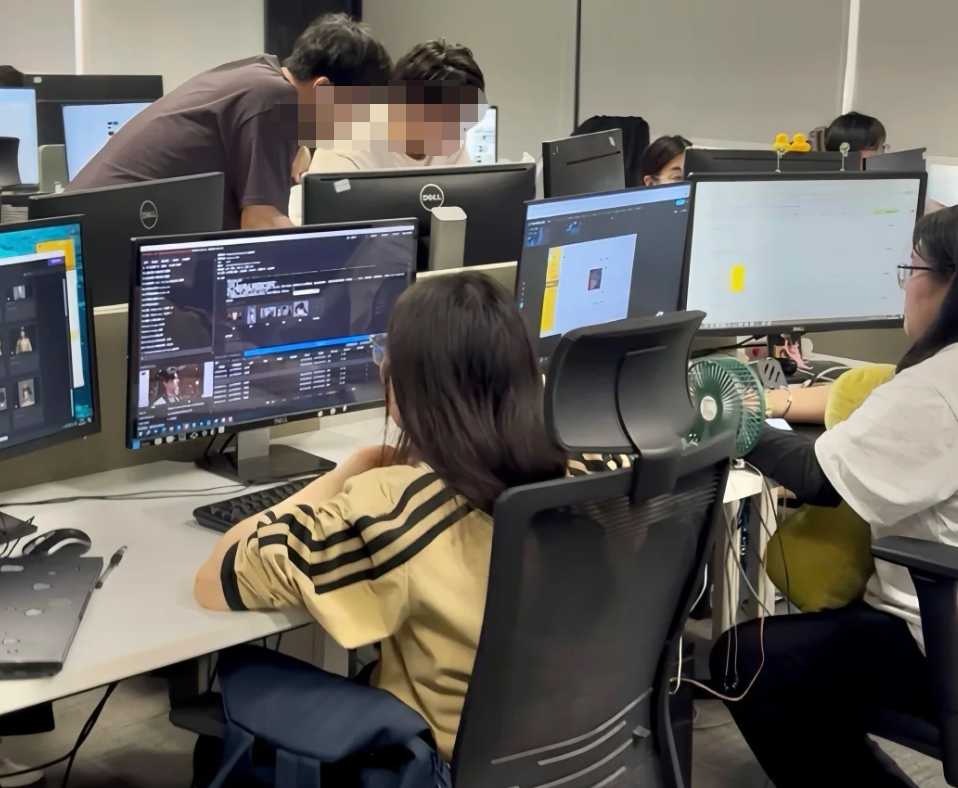
Chart: An office producing AI manga shorts.
The creative teams didn’t understand technology, so they could only judge things by intuition. Meanwhile, managers possessed only macro-visions without execution methods.
For instance, requirements shifted constantly. In one meeting, leadership would vaguely mention building a scriptwriting AI tool. But when it came to implementation, the core purpose could never be locked down: Was it meant to generate scripts from scratch, polish existing drafts, or rate script quality?
Staff across different organizational levels had conflicting ideas, and everyone proposed different functional designs. The deeper I coded, the more chaotic and repetitive the features became. Ultimately, the tool we built couldn’t satisfy anyone’s expectations, and multi-party demands were never aligned.
Vastly different levels of understanding regarding AI technology also created massive bottlenecks for engineering.
Some staff members understood basic AI logic and made relatively rational requests. But many others with zero technical background held wild, unrealistic imaginations.
They harbored delusional expectations of AI’s omnipotence, believing that simply installing software onto a machine would allow AI to autonomously understand tasks and execute subsequent workflows end-to-end.
They didn’t realize that achieving automated operations requires massive prompt tuning, permission controls, and machine workflow orchestration. All of this complex implementation work was dumped onto my shoulders. Beyond writing code, I constantly found myself acting as a science educator for the creative teams.
Moreover, the boss’s turnaround time for application development often squeezed the breath out of me.
He only cared about the speed at which AI spat out results, completely ignoring the difficulty of the backend engineering. Often, a temporary project assignment would be dropped on me one day, and the finished product had to go live the next.
No matter how complex the task was technically or how many hours of tuning it required, the deadline was rigidly capped at a day or two. Under such relentless delivery pressure, many projects had to be rushed out the door with zero room for refinement.
To this day, I can confirm this doesn’t qualify as a real tech job.
A while ago, the boss spent a few sleepless nights pulling together a so-called automated screenwriting tool using AI and tossed it to me for testing. I opened it up and checked: it was merely a flashy front-end shell, while all the backend data was fabricated by AI.
All the data and ratings were dreamt up by the model out of thin air, completely baseless. In actual operation, I found that no matter what novel material you threw in, the front-end generated the exact same number of characters, line counts, scene counts, and scores.
In reality, this “empty framework” was completely unviable. But the boss didn’t understand tech; he thought it was a monumental achievement. He spent all his time circling these half-real, half-fake gadgets. To the outside world, he’s building AI—only I know I haven’t touched anything real.
Tech demands precision, rigidity, and definitive answers, whereas creative industries are entirely mutable, emotional, and devoid of uniform standards. Mixing these two completely conflicting mindsets left me in a state of perpetual disorientation.
I had entered my first job full of hope, eager to build solid, impactful projects and accumulate real experience. Instead, I am met with confusion every single day.
I don’t know if my work has any value, what my tools are actually helping people achieve, or where the future of this career lies.
All my initial enthusiasm has slowly burned out in a workplace defined by ambiguity, exhaustion, and a complete lack of clear answers.
(All names of interviewees in this article are pseudonyms per their request.)