
A Japanese-backed telecom executive started a Mongolian wildfire. China had to deploy 3,400 firefighters
Table of Contents
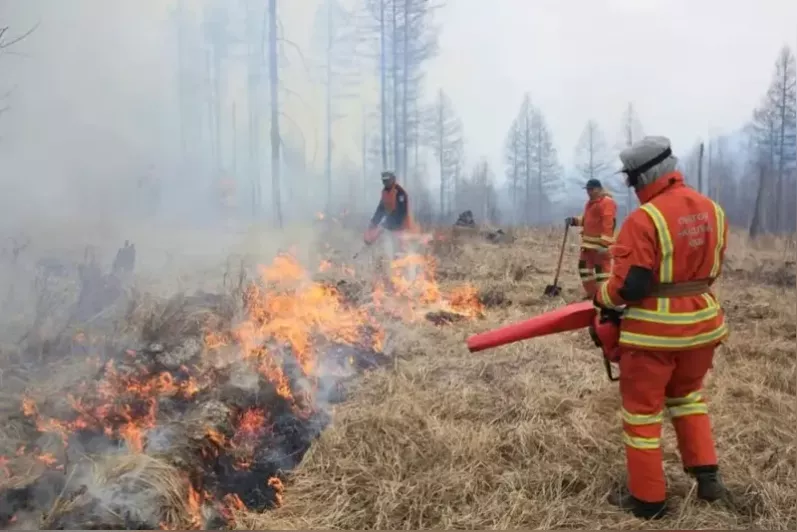
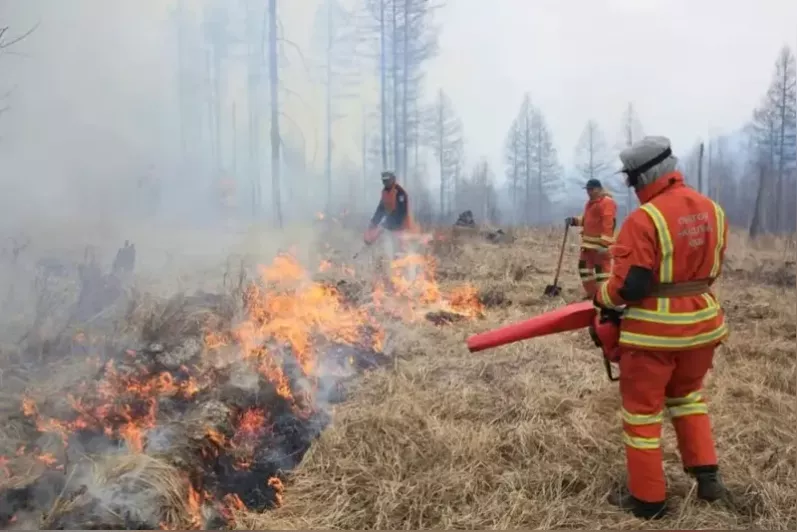
Frontline disaster prevention along the China-Mongolia border (File photo)
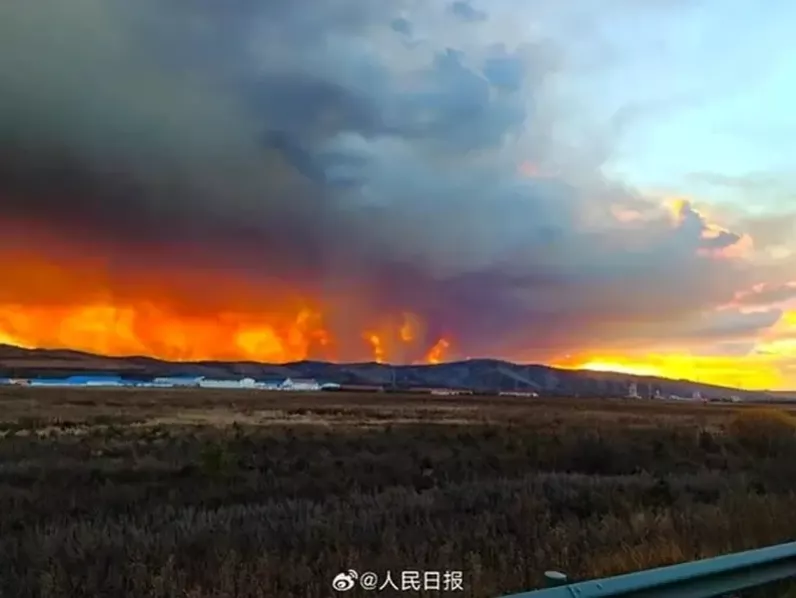
The scene of the grassland wildfire (File photo)
A massive wildfire sweeping across the Mongolian plateau has reignited cross-border tensions, forcing China to mount a massive emergency response right at its doorstep.
In early October, a devastating grassland fire erupted in the Numrug Strictly Protected Area in Mongolia’s eastern Dornod province. Fueled by dry vegetation and fierce winds, the blaze tore rapidly through the landscape, threatening to leap across the border into China.
The reserve, situated at Mongolia’s easternmost tip along the Inner Mongolia autonomous region, is a critical sanctuary for local forest, grassland, and river valley ecosystems. Mongolian media reports indicate that the fire ravaged up to 80% of the protected territory.
As the fire front closed in on the international boundary, Chinese authorities activated an immediate emergency response.
Local governments and firefighting units in Inner Mongolia mobilized along the border, deploying dynamic fire monitoring, clearing flammable brush, and carving out firebreaks to halt the flames. Public records show that more than 3,400 personnel were thrown into frontline containment operations. By mid-October, the fire front had been successfully blocked on the foreign side, leaving Chinese territory unscathed.
Yet, it is the spark that ignited the crisis—and who was holding the match—that has drawn intense international scrutiny.
How a vehicle fire triggered an ecological disaster
At the center of the controversy is Mobicom, one of Mongolia’s leading telecommunications operators, which is controlled by Japanese tech giant KDDI.
According to Japanese media reports, Mobicom CEO Yasuhiro Ochi and other senior executives were visiting areas near the reserve when a vehicle carrying company personnel caught fire. The flames quickly spread to the dry surrounding grassland, spiraling into a massive wildfire. KDDI subsequently confirmed that Japanese executives from its subsidiary were indeed inside the protected zone and expressed deep concern over the severe environmental fallout.
Xinhua News Agency, citing Mongolian reports, noted that the fire started in the core zone of the reserve when a company vehicle malfunctioned and burst into flames.
The incident immediately raised a troubling question: What were corporate executives doing deep inside a nature reserve heavily restricted from human activity?
Mobicom maintained that the team was inspecting local telecommunications engineering and border infrastructure projects. However, certain Mongolian media outlets alleged that the delegation’s itinerary also included recreational fishing for taimen, a rare local fish species.
That allegation quickly caught fire on Chinese social media, where numerous internet users framed the incident simply as “Japanese tourists’ fishing trip burns down a forest.”
While facts confirm that corporate leaders entered the reserve and that a vehicle fire sparked the blaze, the full scope of their itinerary, potential illegal fishing activities, and final legal liabilities remain subject to ongoing investigations by Mongolian authorities.
Why the incident struck a nerve in China
Although the disaster unfolded entirely on Mongolian soil, its proximity to the Chinese border meant Beijing had to absorb massive personnel and financial costs to keep the flames from crossing over.
That dynamic transformed a localized Mongolian ecological disaster into a cross-border accountability debate.
Many Chinese netizens voiced frustration over the burden: If investigations prove the fire was caused by corporate negligence or illegal entry into a protected zone, should the massive ecological damage and cross-border defense costs be footed entirely by the company and individuals responsible?
This sentiment fueled online grievances questioning why China had to deploy thousands of personnel to clean up a mess allegedly started by foreign corporate visitors.
From a legal standpoint, however, Beijing’s border defense deployment was primarily executed to safeguard its own territorial security and grassland resources. Whether those firefighting expenses can be directly billed to the foreign enterprise depends entirely on bilateral legal frameworks and the final conclusions drawn by Ulaanbaatar.
The heavy toll on a protected wilderness
Spanning nearly 5,900 square kilometers, the Numrug reserve is an ecological anchor in eastern Mongolia.
Japanese media, citing local Mongolian reports, estimate that the blaze impacted roughly 80% of the sanctuary.
For such an ecologically sensitive region, the losses extend far beyond scorched grass and timber. Wildlife habitats, vegetation regeneration capacity, soil integrity, and the area’s intricate food web face long-term degradation.
Consequently, once the flames were extinguished, the harder work began: assessing the true breadth of the destruction, tallying the toll on local wildlife, calculating the decades required for natural recovery, and determining fair compensation.
Corporate apologies and the looming accountability test
In the wake of the disaster, Mobicom issued a public apology.
CEO Yasuhiro Ochi stated that the company would fully cooperate with relevant authorities and take responsibility under the law for economic compensation and legal liabilities.
Mongolian authorities have likewise pledged to conduct a thorough evaluation of the ecological damage and hold the responsible parties accountable.
Japanese media reports indicate that Mobicom and its parent company KDDI are bracing for intense domestic scrutiny and potential financial liabilities inside Mongolia.
The episode demonstrates that the question of who started the fire is merely the opening chapter. The real reckoning centers on accountability, environmental valuation, and the true cost of corporate negligence in fragile transboundary ecosystems.