

China is taxing overseas trusts at 20 percent. The billionaires’ offshore dream is over
In late July, China’s Ministry of Finance and the State Administration of Taxation jointly issued a sweeping directive targeting offshore trusts held by Chinese tax residents. The policy slaps a flat 20 percent individual income tax on these structures, effectively bringing a long-standing regulatory gray area under intense state oversight.
Tax authorities issued a final warning ahead of the deadline, emphasizing that voluntary declarations submitted before the cutoff would spare individuals from late-payment penalties. This timeline marks a historic turning point—the systematic dismantling of a legal vacuum that for decades allowed the nation’s wealthiest elites to shelter their fortunes overseas.

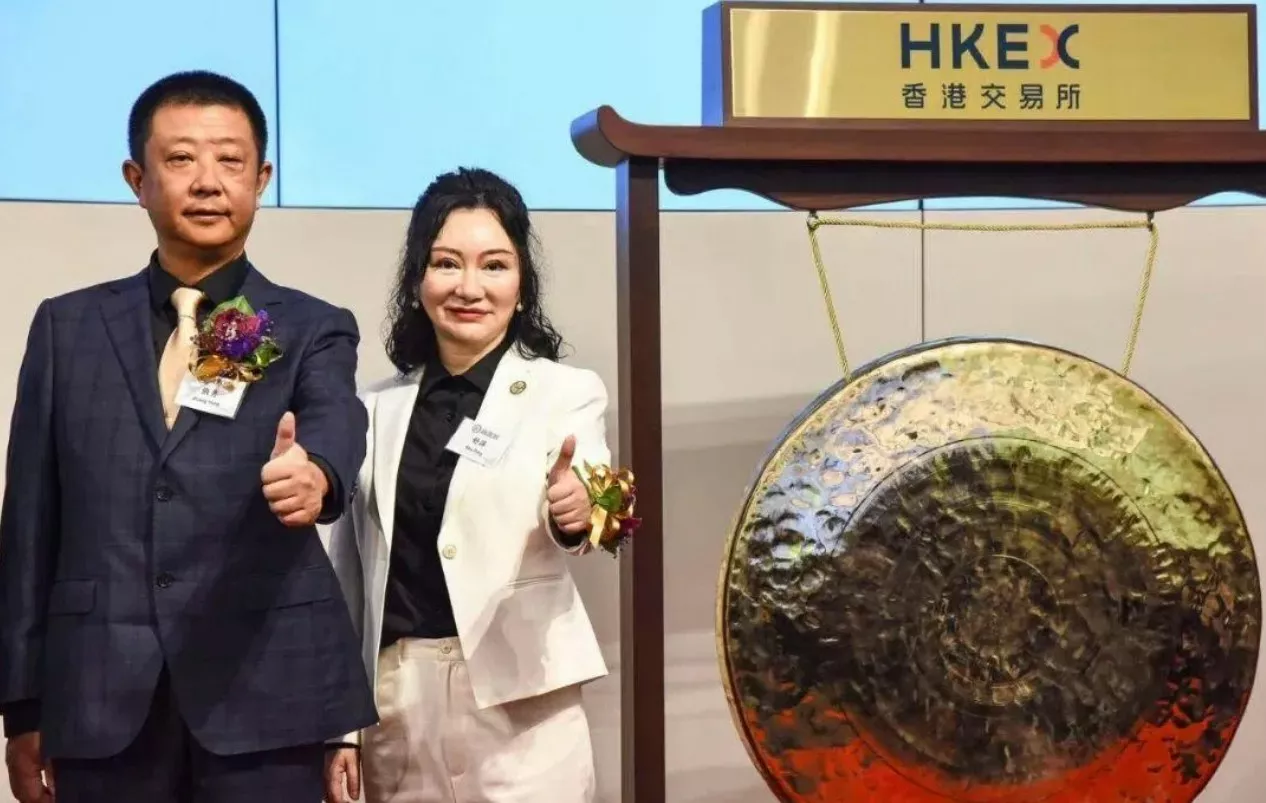
To protect assets, manage wealth, and optimize tax burdens, affluent individuals and founders of overseas-listed firms have long relied on offshore trusts. The Hong Kong Stock Exchange, pictured above, serves as a primary listing and fundraising hub for many mainland Chinese enterprises. (CNSPHOTO)
Requiring millions of dollars in minimum capital, offshore trusts have long been a favored vehicle for China’s super-rich, particularly founders of companies listed in Hong Kong and New York. These structures offered a shield for generational wealth transfer and asset protection while minimizing tax exposure.
According to estimates by Boston Consulting Group (BCG), Chinese citizens hold approximately $1.7 trillion in wealth outside the mainland, a significant portion of which is locked in trusts. Data from corporate services provider Tricor Group shows that nearly half of the 454 mainland companies that went public in Hong Kong and the US between 2018 and October 2022 established offshore trust frameworks.
Bloomberg Billionaires Index data indicates that eight of the wealthiest ethnic Chinese individuals on the global 500 list hold their stakes through offshore trusts, managing a combined asset pool worth $140.2 billion.

Among those on the global wealth index is PDD Holdings founder Colin Huang, who utilized offshore structures to manage his stake in the e-commerce giant. (Jiemian News)
While Beijing has long taxed the worldwide income of its tax residents, regulatory enforcement over offshore trusts remained practically dormant. These trusts were typically domiciled in traditional tax havens such as the British Virgin Islands and the Cayman Islands, featuring labyrinthine corporate layers that kept them entirely out of the taxman’s direct line of sight.
However, as the Common Reporting Standard (CRS) data-sharing framework deepens worldwide, tax authorities gained unprecedented visibility into cross-border assets. Building on initial inquiries launched against select trust settlors last year, Beijing’s July policy formalized this crackdown into a unified, nationwide enforcement mechanism.
Lu Bai, a partner at a commercial law firm, noted in an interview that entrepreneurs are coming to realize that tax authorities can easily cross-reference tax obligations using public prospectuses, merger-and-acquisition filings, and exchange announcements, leaving “no room for maneuver.”
According to Reuters sources familiar with the matter, the State Administration of Taxation instructed regional tax bureaus to scour public records—including the Hurun Report, corporate filings, and regulatory disclosures—to compile target lists of offshore trust holders. In affluent coastal provinces, local tax authorities have established specialized task forces dedicated exclusively to investigating and auditing offshore trust assets.
A Full Lifecycle Tax Regime: Just How Massive Is the Bill?
The new regulatory framework asserts jurisdiction across the entire lifecycle of an offshore trust. At the initial establishment stage, taxes are levied on the capital appreciation—the difference between market value and historical cost. Throughout the operational phase, annual dividends and interest yields are subject to reporting and taxation. Finally, upon the dissolution or liquidation of the trust, liquidation proceeds are taxed at the same proportional rate. A uniform 20 percent tax rate applies across all stages.
For the initial establishment phase, the retroactive look-back period is generally capped at three years, meaning assets settled into trusts prior to 2023 are largely exempt—unless the involved sums reach or exceed 100,000 yuan.
For operational yields generated over the years, authorities have not imposed a strict retroactive limit. Instead, they demand that all historical, undeclared tax liabilities be consolidated and paid in a single lump sum at the 20 percent rate.
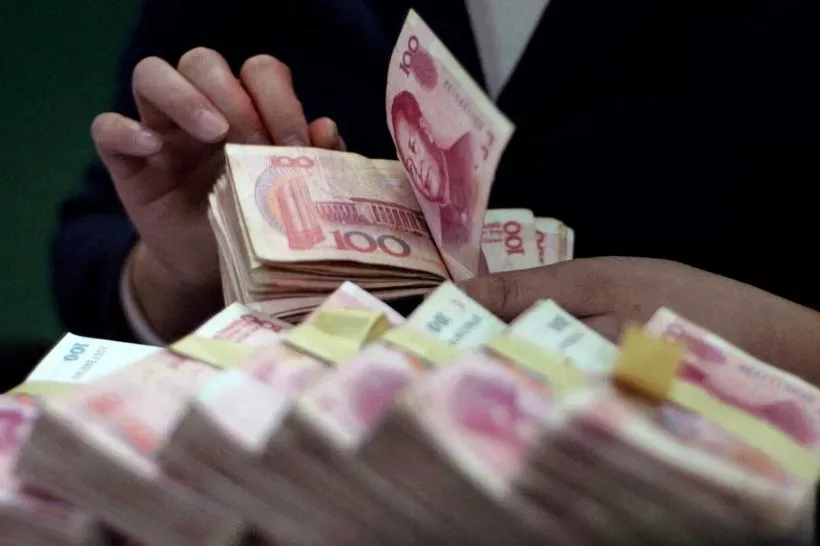
Boston Consulting Group estimates that total Chinese wealth held overseas has reached the $1.7 trillion mark. (Reuters)
The potential tax burden is staggering. Consider a hypothetical scenario: an entrepreneur transfers stock valued at 1 billion yuan, with an original cost basis of 100 million yuan, into an offshore trust. Without factoring in deductions, a 20 percent tax rate means a jaw-dropping 180 million yuan tax bill is triggered the moment the trust is formed.
While establishment taxes might be waived if the stock was placed into the trust a decade ago, all accumulated operational returns generated over that ten-year span remain fully taxable at the flat 20 percent rate.
Ethan Liu, a senior executive at wealth management firm Jialixin Heritage Group, told Reuters that the new regulations deal a particularly punishing blow to the helmsmen of US- and Hong Kong-listed firms. He explained that many such founders capitalized their trusts by offloading shares during market peaks between 2014 and 2020, and the realized gains from those historical windows are now firmly in the tax bureau’s crosshairs.
“Based on our assessments, an individual entrepreneur’s tax exposure can easily range anywhere from several million yuan to hundreds of millions, or even billions of yuan,” Liu said.
This all-encompassing taxation approach has thrust many billionaires into a painful dilemma. Reports indicate that while some are diligently auditing their accounts to settle up, others are dragging their feet, and some are exploring options to wind down their trusts entirely. The catch, however, is that dissolving an offshore trust is far from painless, as the liquidation process itself triggers a steep tax bill.
Dodge Through Renunciation? The ‘Look-Through’ Crackdown
Realizing the gravity of the situation, several prominent billionaires have begun offloading stock holdings to raise cash. Regulatory filings reveal that Shuping, co-founder of hotpot giant Haidilao, liquidated approximately $353 million worth of company shares through a family trust holding entity in September. That same month, Haidilao announced a short-term financing arrangement of up to 100 million yuan to co-founder Zhang Yong to assist with personal financial matters.
These high-profile moves immediately sparked intense market speculation that the Haidilao founding circle was desperately hoarding liquidity to meet imminent tax obligations.
Similarly, Zhao Peng, CEO of online recruitment platform Boss Zhipin, which listed on Nasdaq in 2021, unloaded roughly $110 million in shares. Industry insiders noted that raising capital for tax compliance was the primary driver behind the share sale.
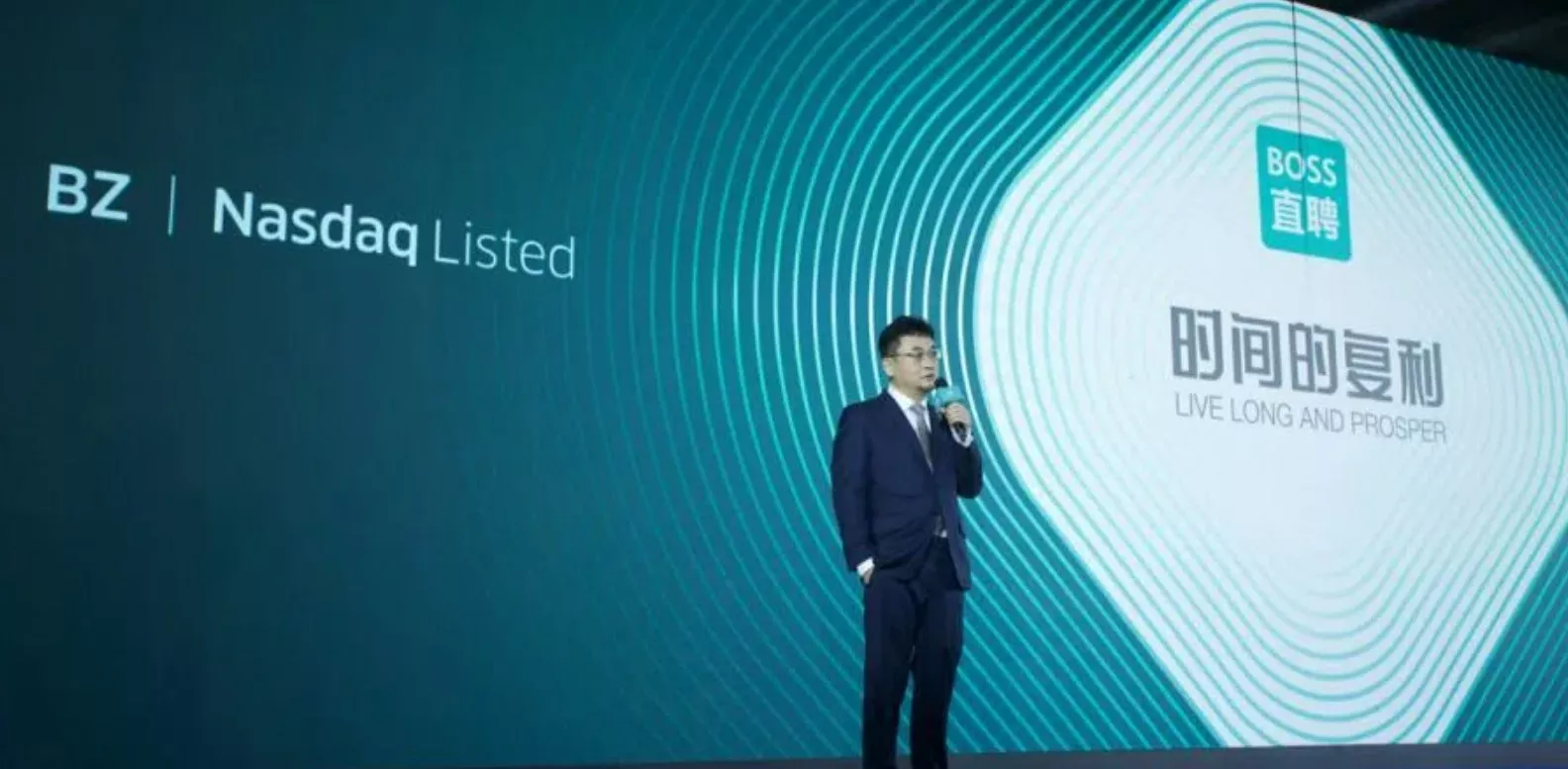
Boss Zhipin founder Zhao Peng offloaded a massive block of shares in September, with industry insiders attributing the move to impending tax obligations. (Internet)
Not everyone is positioned to pay, however. Reports suggest that several prominent real estate tycoons, who pocketed handsome corporate dividends during China’s property boom years, are now mired in financial distress amid the prolonged housing slump, leaving them utterly incapable of coughing up the retroactive taxes.
A private office serving a major tech billionaire revealed that managing tax calculations has completely overtaken investment operations, forcing them to accelerate the liquidation of roughly half their stock portfolio. One insider described the sudden policy shift as having “the rug pulled out from under us overnight.”
Some ultra-high-net-worth individuals have even entertained the idea of changing their nationalities to escape the dragnet. Media reports indicate that mainland residents who recently acquired Hong Kong residency are contemplating abandoning their mainland household registrations (hukou) in hopes of keeping their spouses’ assets insulated from Beijing’s tax inspectors.
Yet, Chinese tax authorities have adopted a rigorous “look-through” regulatory model, rendering superficial changes of citizenship utterly ineffective. Simply swapping a passport or shifting a residential address does little to alter economic reality. The new rules explicitly stipulate that regardless of foreign citizenship or permanent residency status, an individual whose core economic interests remain anchored in China will still be classified as a Chinese tax resident.
“The regulatory net cast by the tax authorities is comprehensive and inescapable,” commented Wei Kang, a partner at a law firm specializing in ultra-high-net-worth client services.
As local governments step up efforts to cultivate alternative revenue sources, China’s wealthy elite are learning that their offshore assets have lost their protective umbrella. Whether through complex trust structures or overseas investment yields, Beijing’s stance on managing private wealth abroad has decisively shifted from ambiguous passive tolerance to proactive, assertive enforcement.