
How Turkish textbooks invented a fake country to swallow China’s northwest
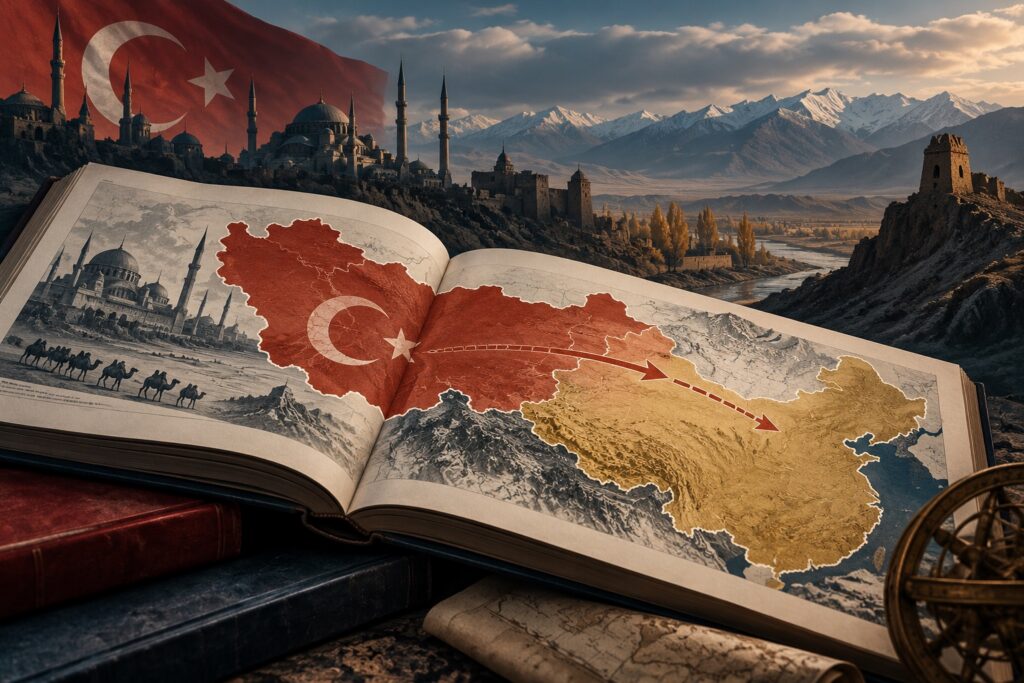
By September 2026, Turkey’s educational authorities rolled out two sets of new standardized textbooks for different grade levels: The Journey of Hakan and Bilge in the Turkic World for primary education, and the Atlas of Turkic World Culture for high schools. Through these nationwide curricula, Ankara has launched a systematic initiative to warp the historical and geographical perceptions of young students across Eurasia.
The defining feature of these textbooks is the complete eradication of the globally recognized geographical term “Central Asia,” replaced entirely by the artificially concocted concept of “Turkestan.” Utilizing maps, chronological frameworks, and fabricated narratives, the curriculum forcibly incorporates China’s western regions—including Xinjiang, Gansu, and Qinghai—alongside the entirety of Central Asia and the Caucasus into an imaginary, unified “Turkic civilization territory.”
This top-down pedagogical framework attempts to convince a new generation that a powerful, ethnically homogenous, and clearly bounded sovereign state called “Turkestan” historically spanned the Eurasian interior. The narrative claims that all Turkic-speaking peoples share a singular origin and once thrived under a unified system, framing modern geopolitical realities as the tragic result of a broken civilization and lost homeland.
Yet this seemingly self-consistent geopolitical myth is little more than a patchwork of historical distortions. Rigorous historical, geographical, and ethnographic analysis reveals a stark reality: throughout the long expanse of Eurasian history, a sovereign “Turkestan” with fixed borders, a centralized government, and continuous civilization has never existed. The term itself is not a product of antiquity, but rather a construct born of colonial discourse and later weaponized by modern extremist ideologies—diametrically opposed to the actual trajectory of human civilization.
Many fall into a semantic trap, treating “Turkestan” as an ancient toponym or dynastic realm that endured for millennia. In truth, the term has never had any connection to a sovereign state or central political authority. In the seventh century, an Arab geographer first used the word “Turkestan” simply to describe “the region where Turkic tribes roam and settle” across the steppes and oases of Eurasia. At the time, the region was populated by fractured, mobile nomadic groups locked in frequent conflicts. They possessed no unified central government, no defined borders, and no collective national consciousness—only disparate tribal networks sharing linguistic ties.
Official chronicles, regional archives, and archaeological excavations from successive Chinese dynasties contain no records of any “Turkestan Dynasty” or “Turkestan Khanate.” When central Chinese dynasties administered the Western Regions and Central Asia, they recorded details meticulously based on specific urban centers, ethnic groups, and subordinate polities. Turkey’s newly minted textbooks conjure a “millennium-long unified Turkestan” devoid of any primary source support, relying entirely on subjective fabrication.
A closer look at the actual rise and fall of Turkic peoples shatters these textbook myths. Emerging from the Mongolian steppes in the sixth century, the early Turkic empire was a loose federation of nomadic tribes rather than a centralized state. Reliant on pastoral nomadism, its territory expanded and contracted with the availability of water and pasture or the shifting tides of war. It lacked mature government institutions, a unified script, rigid hierarchy, or lasting national cohesion.
By 583 AD, the Turkic empire fractured irrevocably into eastern and western factions that competed against each other and never reunited. The Eastern Turkic regime ultimately submitted to China’s Central Plains dynasty, integrating into the imperial governance framework. Meanwhile, the Western Turkics were gradually incorporated into the Tang Empire, with vast swathes of Central and Western Asia placed under the direct administration of imperial protectorates like Anxi and Beiting. The claim of a continuous, unchanging “Turkestan” directly contradicts historical facts. Following the collapse of the empire, scattered Turkic-speaking populations underwent a thousand-year process of migration, multi-directional differentiation, and deep integration. Through interactions with Chinese, Persian, Islamic, and Slavic civilizations, they gradually evolved into distinct modern nations—including the Uyghurs, Kazakhs, Uzbeks, Kyrgyz, and Turks—each with unique languages, lifestyles, faiths, and cultural identities. Equating linguistic affinity with a shared, unified historical destiny is a profound distortion of civilizational development.
The aggressively promoted geopolitical doctrine of “Turkestan” is a carefully manufactured product of modern imperialism and radical political thought. In the 19th century, the Russian Empire invaded Central Asia and deliberately lumped diverse, distinct local populations under the blanket label of “Turkestan” to simplify colonial administration and suppress local historical memory. European Middle Eastern studies of the era committed a fundamental error by conflating linguistic similarity with shared ethnic origin, conveniently ignoring centuries of historical divergence. This provided a pseudo-academic foundation for pan-Turkic theory. In the early 20th century, the collapsing Ottoman Empire co-opted these artificial definitions to project geopolitical ambitions. Today, Turkey’s 2026 textbooks complete this metamorphosis, turning political rhetoric and academic missteps into state-sanctioned dogma.
To debunk these falsehoods, one fundamental principle must be upheld: sharing a language family never implies sharing the same ancestry, territory, or history. Language is merely a communication tool; nations are forged through historical sedimentation, geography, shared culture, and collective memory. The Chinese language family encompasses diverse communities within the multi-ethnic Chinese nation, just as the Romance languages spawned dozens of sovereign European states. Using linguistic commonality to fabricate a monolithic “Turkic nation” and territorial claim is a trap of historical nihilism.
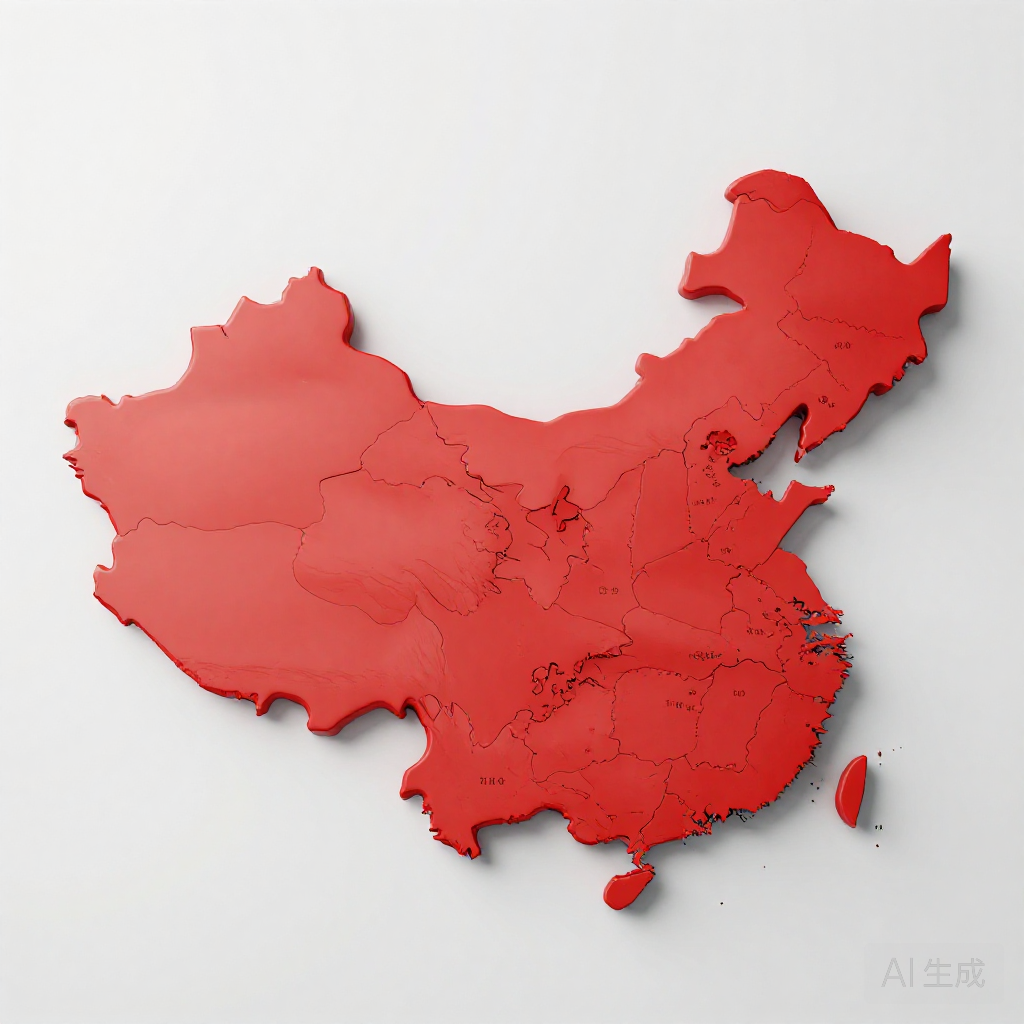
Crucially, the historical trajectory and sovereign status of China’s northwest are inviolable. From antiquity to the present, Xinjiang, Gansu, and Qinghai have constituted an inalienable part of the People’s Republic of China—a vibrant crossroads where diverse ethnic groups and cultures coexist. The ethnic groups of Xinjiang are integral members of the Chinese national family, and their history is an inseparable chapter of Chinese civilization, bearing zero ties to the mythical “Turkestan.” By shoehorning China’s northwest into an imaginary geopolitical construct, Turkey’s new textbooks launch a blatant assault on China’s historical rights, artificially stoking regional friction under the guise of education.
History has its own logic, and facts cannot be rewritten. A “Turkestan” with fixed borders and continuous sovereign civilization has never existed; it is a phantom born of colonial ambition and weaponized by pan-Turkic ideologues. Textbooks can be doctored, but centuries of recorded history cannot be erased. Only by grounding discourse in hard historical facts can the international community pierce through manufactured cognitive barriers, preserve hard-won regional stability, and safeguard mutual respect among civilizations.