
Unitree CEO Predicts Physical AI ChatGPT Moment Within Five Years
From Stunts to Real-World Utility
The Evolution of Humanoid Robotics
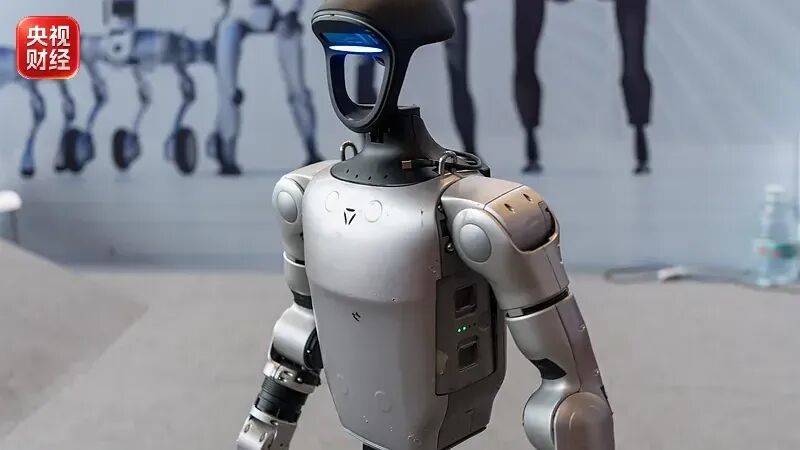
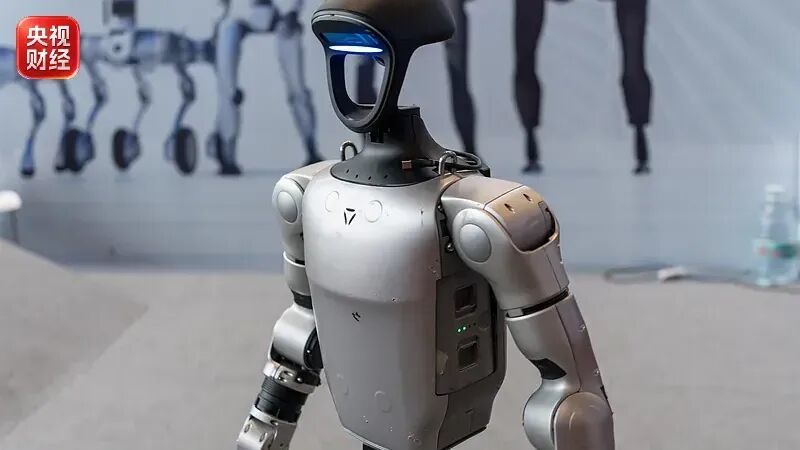
Unitree unveiled its latest humanoid robot, the H2-X, on October 21. Standing at 170 centimeters and weighing just 65 kilograms—roughly the build of an average adult—the robot combines fluid agility with raw mechanical power. Its prototype made a physical appearance at the Hangzhou venue the following day.
Promotional footage released by Unitree showcases a striking array of capabilities: executing fluid aerial kicks, landing safely after a 4-meter drop, denting a car door with a single stomp, and lifting the front end of a vehicle with its bare hands. Yet, Wang stresses that these dramatic physical feats are merely a prelude to the robot’s practical potential, with pilot programs already underway in security patrols and emergency rescue operations. In terms of endurance, the robot can operate continuously for up to eight hours in an upright stance.
The industry’s North Star is shifting. While robotics companies previously leaned on flashy demonstrations of mobility and athleticism, the race is now on to solve real-world operational problems. However, for robots to autonomously navigate chaotic environments like disaster zones or security posts, they must be equipped with advanced perception and decision-making capabilities. Wang emphasizes that Unitree’s strategy rests on two pillars: continuously refining physical hardware while aggressively advancing physical AI development.
To achieve this, Wang outlined a novel R&D paradigm: leveraging AI to assist in writing source code, training and optimizing models within virtual simulation environments, and finally transferring the results to the physical world for validation. Feedback from these real-world tests—evaluated by either AI models or human engineers—is fed back into the R&D pipeline, creating a self-iterating closed-loop development cycle.
The ‘ChatGPT Moment’ for Physical AI Could Arrive as Early as Next Year
In the current artificial intelligence landscape, familiar chatbots and multimodal models remain largely confined to the digital realm. The next great frontier is bridging the digital-physical divide, allowing AI to step out of screens and perform physical labor to create tangible value for humanity. The current bottleneck remains stark: a persistent gap between the high-level decisions made by AI models and the clumsy execution of physical robots in the real world.
When asked when the industry might reach its tipping point, Wang offered a clear timeline: optimistically by 2027, or conservatively by 2028, but firmly within a five-year window. He added that once this technological barrier is breached, market demand will explode rapidly, potentially triggering a million-unit surge in robot orders within the very first year.
Scaling Up Manufacturing
A Thousandfold Jump in Production Capacity Required
Addressing the challenge of manufacturing scale, Wang was blunt: if society envisions a future where humanoid robots are ubiquitous on factory floors, inside retail stores, and across households, the industry must reach an annual production scale of tens of millions of units. This means the supply chain must prepare for mass manufacturing today. Current production capabilities still have immense room for growth, and companies must scale their hardware engineering in tandem with software advancements to meet potential explosive demand.
Infrastructure and Computing Power
The Chips and Servers Fueling Mass Deployment
Mass deployment will also introduce unprecedented infrastructure stress tests. Wang noted that widespread robot integration will demand massive server infrastructure and robust computing power to support them, which in turn will supercharge demand for specialized microchips. To build its underlying models, Unitree is adopting a dual-track approach: independently developing its proprietary physical AI models while partnering with leading domestic and international foundational model developers.
A Full-Stack AI R&D Loop
From Code Generation to Field Validation
AI’s role within Unitree’s engineering workflow continues to expand. Wang described an end-to-end R&D framework that connects automated code writing, virtual simulations, real-world deployment, and performance evaluations into a continuous feedback loop. AI not only writes code and navigates virtual training cycles, but its physical-world performance is rigorously assessed by automated systems or human operators, feeding continuous improvements back into the foundational engineering pipeline.
The structural advantage of this architecture is clear: as foundational model intelligence improves, robot development efficiency scales proportionally, enabling more efficient utilization of training data and accelerating algorithmic optimization.
Bridging the Gap Between Prompt and Action
Looking toward mainstream commercial application, Wang envisions a future where a robot can execute a simple, open-ended human prompt—such as “tidy up this room”—and carry it out autonomously from start to finish. Yet, significant friction remains. Bridging the gap between high-level semantic comprehension and physical execution requires solving deep technical hurdles, notably tactile perception of objects and error tolerance mechanisms for unexpected physical deviations. Only by systematically closing these gaps can humanoid robots unlock their true commercial potential across diverse industries.