
Ten strangers tried to save a 21-year-old on a forbidden Chinese mountain. The altitude got him first
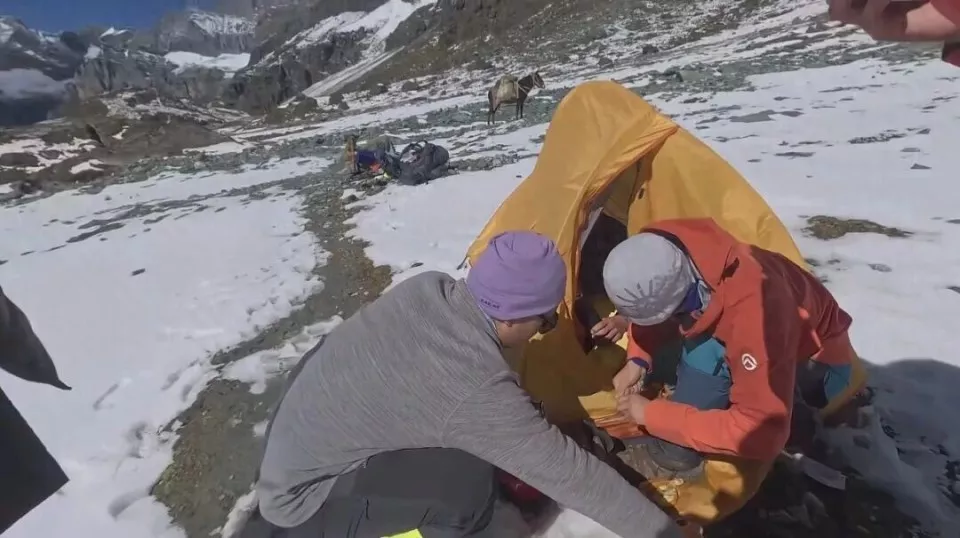
A tragedy along the high-altitude Yading Grand Loop in Daocheng County, Sichuan province, has claimed a young life. On October 13, 21-year-old Chen from Guangxi drew his last breath on a grueling, multi-day mountain rescue journey.
The incident has sparked intense online debate in China. Public discussion initially zeroed in on a controversial detail: the young man reportedly declined a commercial horse-caravan evacuation costing around 2,000 yuan at first, and his family later rejected a multi-person porter rescue package running into the tens of thousands, pinning their hopes on a helicopter instead.
However, mountaineering enthusiasts who participated in the rescue on the ground tell a vastly different story. When they arrived, the young man had already been stranded for days at a campsite over 4,500 meters above sea level. Severe altitude sickness had left him barely able to speak or move. While his family had actually agreed to the horse caravan early on, local handlers balked at the extreme risks of transporting a critical patient through treacherous terrain. And while onlookers desperately hoped for a chopper to descend, such aerial rescue assets simply did not exist in the area.
Over the course of three days, passing trekkers and local horsemen continuously delivered clean water, medicine, and oxygen, repeatedly pleading with the family and calling the police. Yet despite this relay of human kindness, the desperate effort could not cheat tragedy.
The body’s distress signals
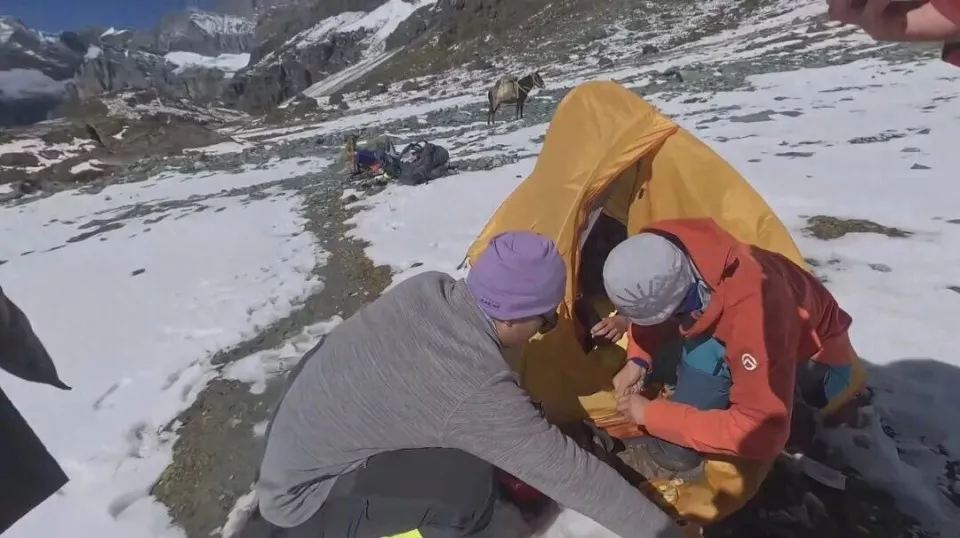
In Lin Qing’s eyes, Chen was far from an inexperienced novice. On the contrary, he was a seasoned high-altitude explorer in western Sichuan, having conquered countless grueling trails. When the pair previously set up camp at 4,700 meters, Chen showed zero signs of altitude sickness.
Their original plan was to trek together during China’s National Day Golden Week, but park management restrictions forced a schedule change. After completing a successful traverse of Mount Meili’s eastern slope, Lin returned home, while Chen rested for a day and decided to tackle the Yading route alone.
The trail is not an officially opened tourist route. On September 1, local authorities issued a strict advisory declaring all mountains, river valleys, and paths outside the scenic area to be restricted zones, banning any form of unauthorized trekking and exploration.
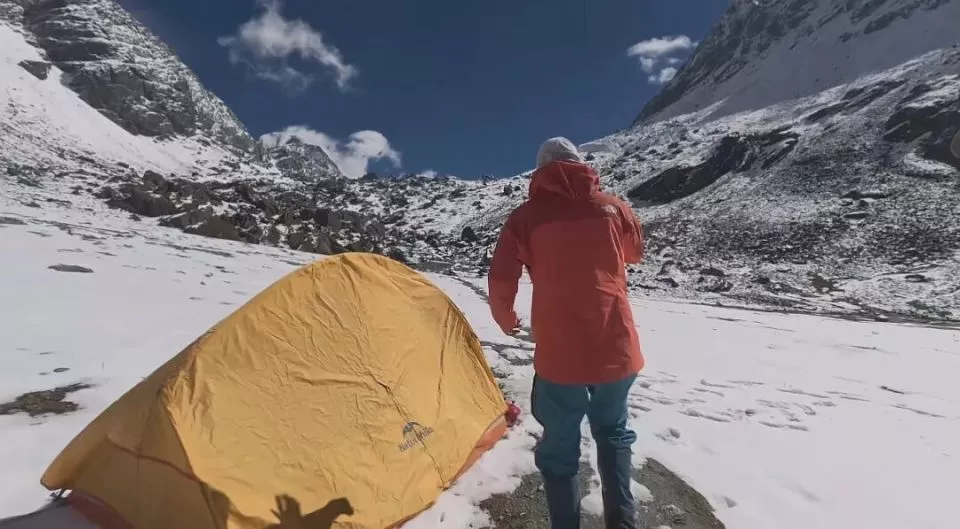
Law enforcement officials later confirmed that the accident site lay squarely outside the jurisdiction of the scenic area, classifying it as an illegal trek.
The government warning highlighted a harsh reality: unmanaged high-altitude regions feature treacherous terrain, volatile weather, a complete lack of cellular signals, and zero emergency rescue infrastructure.
On October 6, Chen entered the loop from the scenic area’s main gate. Under clear skies, he posted photos of the sacred Mount Xiannairi on his WeChat Moments. That was the last time Lin heard from him. Given the trail’s high difficulty, which typically takes four to eight days to complete, Lin figured he had packed enough rations for six days and expected him to reach cellular coverage by the afternoon of October 10. But by October 11, there was still no word.
Chen carried no satellite communication device on this trip. Lin revealed that had they stuck to their original October 2 start date, a member of their group would have brought a satellite phone, but the schedule change left that gear behind. She was unsure of Chen’s exact companions or gear configuration, noting that he always planned his own routes and relied on fellow hikers met along the way.
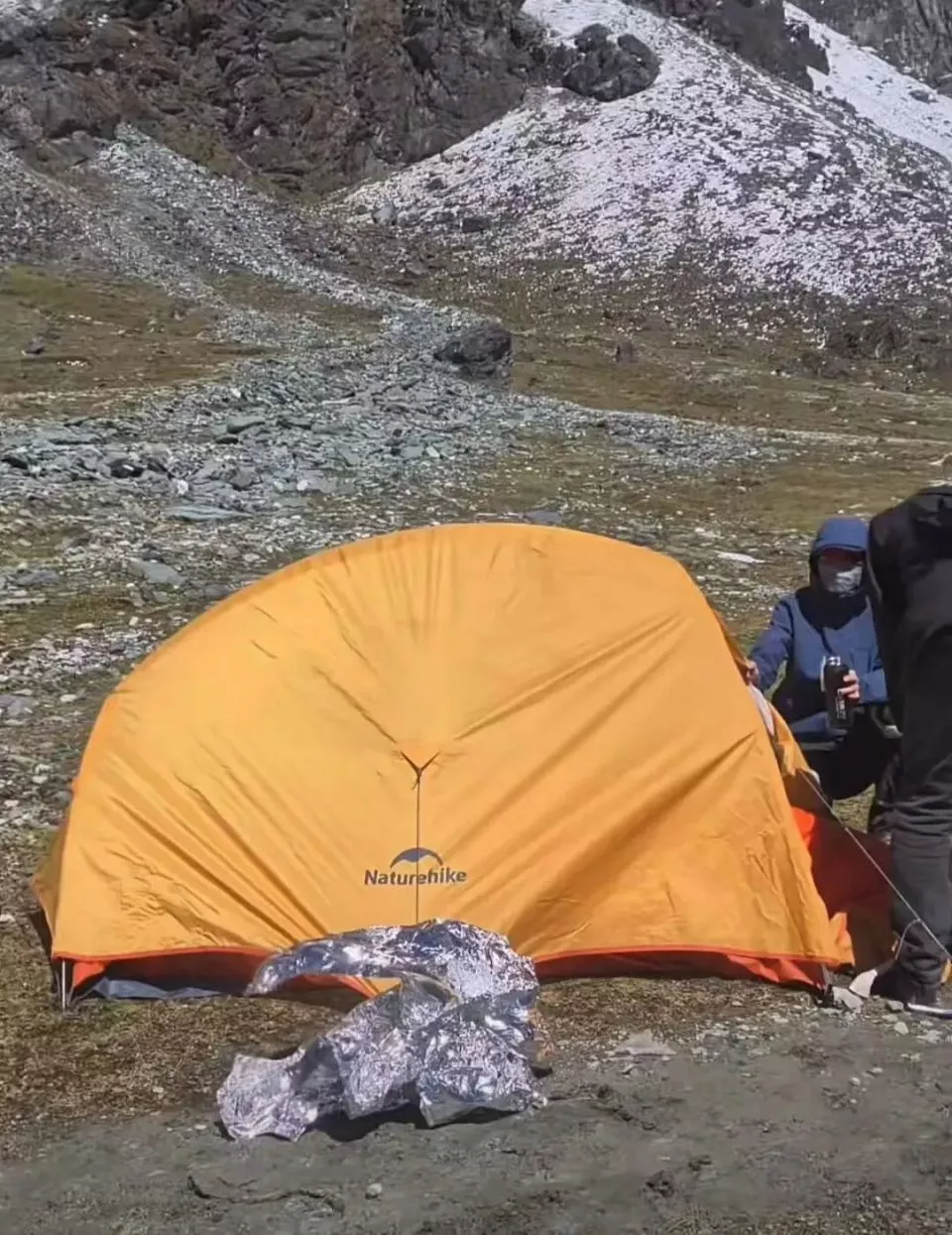
The first person to encounter Chen after he got into trouble was a mountaineer named Xu Zhou. At around 8 p.m. on October 10, as Xu crossed the Zabala Pass toward Niangxi, a faint light flickered in the dark. Closer inspection revealed an orange tent pitched oddly—both layers were splayed open, and the side ventilation flaps were unanchored.
Xu called out, and a muffled, sluggish voice replied. Shining his headlamp inside, he found camping gear scattered everywhere. A young man wearing windproof pants, woolen socks, and a thick down jacket was slumped over a sleeping pad without even getting inside his sleeping bag.
When Xu expressed concern, the young man brushed him off, saying he was fine. Urged to sit up, the youth struggled mightily just to change posture.
Xu noticed his lips were purplish and he was coughing up pinkish fluid. He understood questions but spoke in slurred fragments. With a medical background, Xu instantly recognized the classic signs of high-altitude pulmonary and cerebral edema. He dug dexamethasone and nifedipine out of his medical kit. The young man’s hands shook so violently he dropped the pills repeatedly, forcing Xu to feed them to him with water.
Speaking with extreme difficulty, the youth managed to convey that he was from Guangxi and born in 2005. “I’ve been trapped here for two days. It wasn’t snowing when I got, ” he muttered. Piecing together his broken words, Xu deduced that Chen originally had teammates who left him behind at the camp after he fell ill.
Lin recognized the orange tent immediately from a short-video clip online. “That was right next to ours when we camped,” she said. The tent in the video was pitched incorrectly, with the inner and outer layers plastered together and the skylight shut. “He was usually so meticulous about pitching his tent,” Lin thought, concluding that Chen must have been in acute distress when he hastily set it up.
Addressing rumors that Chen had refused to retreat, Xu pointed out that his location was the exact midpoint of the trail. “No matter which way you go, it takes about two days to get out, and you have to cross two high mountain passes in either direction.” His instinct was likely to camp, let his body recover, and then decide whether to push on or pull back.
Daocheng’s fire department later noted that high-altitude sickness has no fixed “golden rescue window” because physiological differences vary wildly. While some individuals suffering from severe pulmonary or cerebral edema can deteriorate and die within minutes, others survive thanks to baseline fitness and adequate supplies.
In a video filmed by Xu, he and the young man discussed getting help. Xu told him that if police could not be reached, local horse handlers could be mobilized, though law enforcement would be slower. “Let’s not worry about rescue costs right now; we’ll have your parents pay the bill later, deal?” The young man gave a clear affirmative response on camera.
The nightmare of ground rescue
Believing rescue was in motion, Xu decided to press ahead to the inhabited Niu Chang (pasture area) to seek help rather than stay behind. Before leaving, he zipped up the outer tent to improve wind protection.
Arriving at the pasture past 9 p.m., Xu found no buildings or people, forcing him to pitch his own tent. By 8 a.m. on October 11, skipping breakfast, he resumed his trek and ran into a team of six hikers moving in the opposite direction. Xu briefed them in detail on Chen’s coordinates, physical state, and handed over his first-aid supplies with strict instructions on medication intervals. Shortly after, he encountered two tourists carrying a satellite phone, reiterated the emergency, and watched them place a distress call.
Around the same time that morning, a mountaineer going by the online moniker “Jehovah” and his teammates encountered the patient while traversing in reverse. A teammate handed over glucose and checked his blood oxygen. “The monitor read only 53,” he recalled, noting the young man could no longer move and had no backup oxygen. “All we could do was keep him comfortable and shout for help.”
The rescue was anything but smooth. Jehovah said their satellite phone had no signal, and passing trekkers were similarly disconnected. They had to climb to a ridgeline to get a signal through to police. While police picked up, the fire department could not hear clearly, prompting him to send text coordinates instead. He understood firefighters mobilized around 11 a.m.
Both Xu and Jehovah witnessed the arrival of local horse handlers. Xu recalled a horse team catching up to him at Xinguo Pasture, confirming someone had already called via satellite phone. After unloading their cargo, the lead wrangler rested briefly and turned back alone with his mules to help.
Jehovah remembered passing horse teams speaking with the victim’s family, quickly reaching a consensus to launch a rescue. Yet no one on the ground had a viable plan to evacuate him. “If a climber is still conscious and mobile, horsemen can lead them down; but once someone is semi-conscious, nobody wants to touch that liability,” Jehovah explained, noting the horsemen ultimately backed down.
Zangyi Dawa, a local horse-caravan manager living nearby, joined the rescue effort on October 12 after running into the rescue squad. “Evacuation depends entirely on whether the person can move and has consciousness. This young man’s condition was too critical, so we didn’t dare move him casually. That’s the honest truth,” he said, explaining that rough handling of a critical patient only worsens the danger.
By October 12, as word spread, a steady stream of passing trekkers and horsemen converged on the tent.
Around noon, several mountaineers identifying themselves as “Baima” reached the patient. The young man was still lying in his tent under an orange-red sleeping bag. Baima told reporters his condition was critical, marked by severe dehydration and hypothermia. “He still had consciousness, but his voice was slurred. Every word popped out individually.” Baima crawled into the tent to feed him water slowly, but trying to gauge whether he wanted to be evacuated proved impossible.
Within half an hour, a commercial tour’s horse team arrived, followed by a freight horse team, a Tibetan monk, and another mountaineer named “Yese.” More than ten people gathered at the site. The monk fed glucose to the unresponsive patient, while Yese provided his own oxygen and glucose.
Baima and the horse handlers discussed extraction methods. “Strapping a nearly unconscious casualty onto a horse’s back to bounce down the mountain would only accelerate his collapse,” was their collective assessment. Baima pointed out that everyone underestimated the cost and risk of high-altitude evacuation. While moving gear or healthy climbers required only two or three people and a few mules, handling a patient multiplies both difficulty and expense. Certain segments might suit pack mules for cargo, but not humans—requiring manual stretchers instead. Over rugged terrain and long distances, a rotation of eight to twelve porters would be necessary.
n
That day, people at the scene contacted the patient’s father via satellite phone. Baima recalled the family’s message: “A professional rescue team is already en route with accompanying doctors. Do not move him yet.” Yese remembered that after receiving oxygen and food, the young man’s condition temporarily improved; he even stated he was hungry, wanted to eat, and successfully unlocked his phone. Learning that his father was speeding toward Daocheng and professional rescuers were expected that afternoon, Yese and others felt reassured and departed after doing what they could.
The illusion of helicopter rescue
According to Jehovah, the remote location inherently complicated rescue logistics, requiring immense time to evacuate someone from either direction. Concerned for the patient, he urged the family to privately contact external rescue forces to see if aircraft could be deployed.
In reality, helicopter resources are exceptionally scarce in high-altitude rescues. Commercial rescue professionals operating in the Ganzi Tibetan Autonomous Prefecture told reporters that local authorities have never scrambled aircraft for high-altitude trekking accidents. While certain outdoor insurance policies cover helicopter evacuation, they require rigorous underwriting and coordination by insurers. The procedural and time costs are immense, offering no guarantee of rapid deployment.
Zhan Chengyu, a professor at Beihang University’s School of Humanities and Social Sciences, noted that maintaining aviation rescue capabilities far exceeds the cost of a single flight. Aircraft, pilots, ongoing personnel, and equipment upkeep represent massive, long-term expenditures. For economically constrained, sparsely populated alpine regions, local governments can hardly shoulder such burdens alone, nor do they possess the specialized teams and hardware.
Furthermore, air rescues require rigid air-space clearance, flight approvals, and route authorizations—far from a casual takeoff. Zhan added that while audiences frequently see helicopters deployed in earthquakes, flash floods, or fires, those missions rely on military or state-owned aviation assets rather than standard municipal readiness.
Around 3 p.m. on October 12, Baima and Yese ran into the arriving rescue team at Xinguo Pasture. Baima recalled the squad consisted of five firefighters, two medical experts, and two local guides. Lacking pack animals, they had crossed three mountain passes hovering around 4,700 meters on foot, arriving “completely exhausted.” They rested for an hour before pressing on to reach the tent just after 5 p.m.
Yese expressed astonishment that the team hiked up on foot. Jehovah offered his perspective: the passes were blanketed in heavy snow, conditions where “even horses require handlers on foot, making human hiking more efficient anyway.”
According to state broadcaster CNR, Daocheng fire officials noted that parts of the illegal grand loop sit in desolate wilderness with zero cellular coverage or vehicular roads. Rescue teams must haul heavy gear on foot while battling unpredictable alpine weather, where sudden blizzards and plummeting temperatures amplify risks. Carrying an incapacitated person down mountain paths presents an equally grueling physical toll.
Just as all factions pooled their strengths and a successful rescue seemed within reach, the devastating news arrived: the young mountaineer passed away while being transported toward Xialuo Pasture.
Xu still holds onto a promise Chen once made to him: that he would never climb a mountain again. But that pact now rests forever beneath the endless snows.