
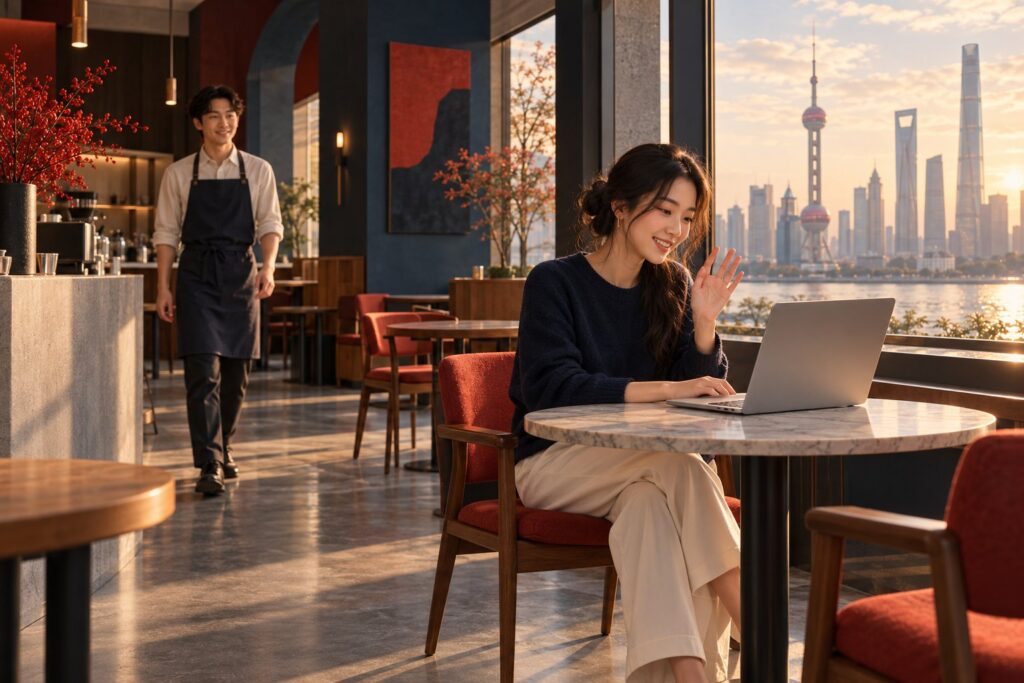
Starbucks told a Shanghai woman to order five times in 90 minutes. China is picking sides

A woman surnamed Yang walked into a nearly empty Starbucks in Shanghai to join an urgent online meeting, planning to order once the call ended. Over the next 90 minutes, staff reminded her five times to buy something. She left and ordered at another Starbucks down the street. A China National Radio reporter wrote it up, and by Wednesday the story was all over Weibo.
The timing was not an accident. Starbucks China announced on Tuesday, in a document it calls the Third Space Initiative, that from October 22 its stores nationwide would ask seated non-customers to order. Reporters who visited Shanghai stores on Wednesday found signs reading “Starbucks business space, please consume to sit,” and staff making periodic rounds of anyone without a cup. The company’s customer line says seats are for paying customers and that non-paying guests should be approached with “friendliness, respect and empathy.”
Shanghai matters here. It is the chain’s densest market, with more than 1,100 stores, and for years it has been the unofficial office of freelancers, students and laptop workers. Starbucks has sold the idea of a “third space” between home and work in China for almost three decades. The new rule is the first time it has put a price on that space in writing.
Weibo split roughly along generational and class lines. One widely shared comment asked whether people who bring a whole team to Starbucks for a meeting without spending a yuan had “the nerve” to do so. Another said that without ordering they would not have the “face” to sit down anyway, but that the chain should still leave people alone.
The Shanghai Consumer Council sided with the company. Deputy secretary-general Tang Jiansheng called consumption-to-sit “a basic commercial rule” that should not need debate, since cafés rent space to paying customers. People who need somewhere to rest, he said, belong in government-provided public seating, a responsibility that “should not fall on commercial stores.” He added one caveat: a rule does not justify a harsh approach, and both sides have to respect that line.
What makes this a hot search rather than a policy footnote is the subtext. Local chains have undercut Starbucks on price for years, and the brand’s remaining edge is the room itself. Charging for the chair, even politely, is a bet that the room is worth more than the goodwill of the people who used to sit in it for free.