
Why Beijing Is Willing to Host a Trilateral Summit with Putin and Trump
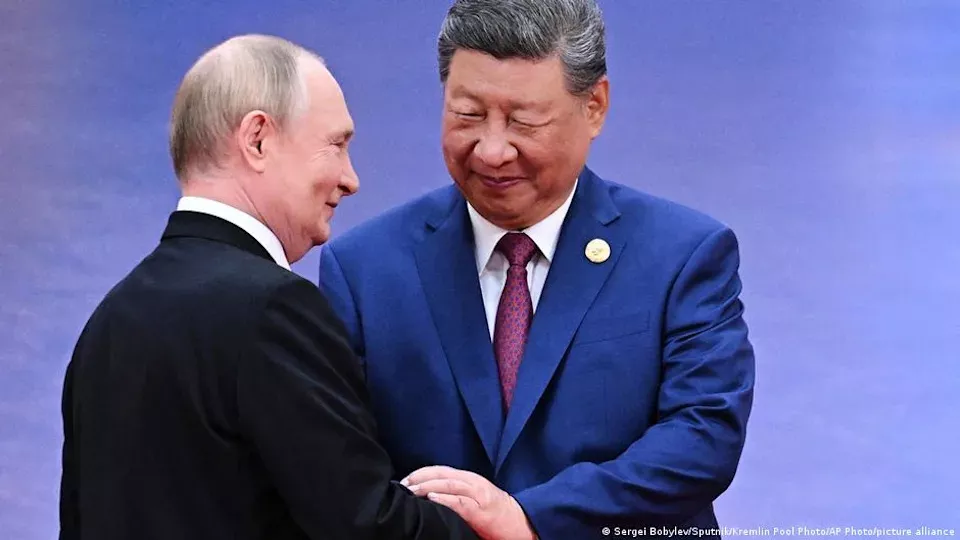
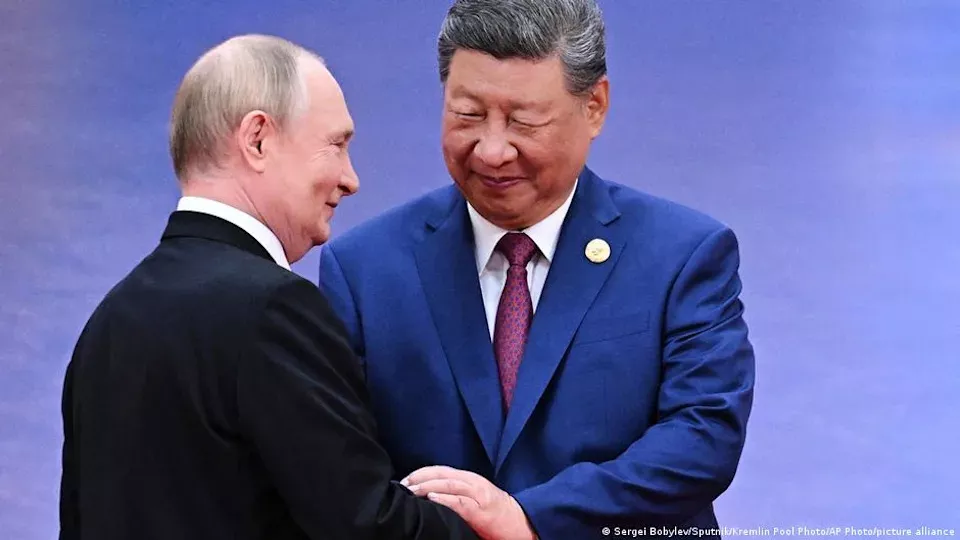
In September 2025, Russian President Vladimir Putin met with Chinese President Xi Jinping on the sidelines of the Shanghai Cooperation Organisation (SCO) summit in Tianjin.
During the autumn months, the diplomatic machinery of the U.S. administration under President Donald Trump noticeably accelerated its push to jump-start stalled peace talks over the protracted war in Ukraine.
While applying pressure on Kyiv and its European allies, Washington has simultaneously dangled concessions to entice Moscow back to the negotiating table. These moves have included lifting bans on Russian diesel exports to the U.S. and offering conditional relief from select economic sanctions.
Yet the Kremlin has shown little sense of urgency. Following a visit to St. Petersburg on October 21 by U.S. special envoy Steve Witkoff, Russian officials signaled their readiness to initiate technical-level dialogues with Ukraine the following month.
Yuri Ushakov, a foreign policy aide to Putin, subsequently disclosed that the Russian leader was willing to advance a U.S.-brokered peace framework after November 10. Ushakov added that negotiations are expected to take place in Abu Dhabi, focusing on establishing a post-war security architecture for both Russia and Ukraine.
Ushakov also noted that Putin and Witkoff discussed the possibility of a three-way summit involving Trump and Xi Jinping, stating that Beijing was already making preliminary preparations for the gathering.
China to Host Trilateral Talks While Excluding Ukraine
The Wall Street Journal recently reported that Moscow has proposed organizing a separate meeting among the three leaders on the sidelines of the APEC summit in Shenzhen, scheduled for November 18–19. According to the report’s sources, Putin aims to reach a consensus with Trump and Xi on ending the Ukraine conflict on terms favorable to Moscow.
Russia’s proposal—inviting the U.S. and China while pointedly excluding Ukraine and the European Union—reflects the Kremlin’s ideal negotiating framework. Moscow has consistently insisted that any substantive progress requires Kyiv to commit to territorial concessions beforehand, with Putin repeatedly reiterating that negotiations must respect Russia’s core interests.
According to the Journal, Putin has likened the potential Shenzhen meeting to a modern-day Yalta Conference, echoing the historic 1945 summit where the leaders of the U.S., Britain, and the Soviet Union carved out the post-World War II European order.
Meanwhile, official diplomatic channels in Beijing have indicated that China has no objections to the trilateral format, provided Trump attends. Trump, whose relationship with Kyiv has soured dramatically in recent months, has expressed his willingness to participate.
During a visit to Oslo on October 20, Ukrainian President Volodymyr Zelenskyy maintained that any dialogue concerning Ukraine’s future must include Kyiv as an active participant, calling it a non-negotiable prerequisite.
What China Stands to Gain
Temur Umarov, a specialist on China-Russia relations at the Carnegie Russia Eurasia Center, expressed little surprise at Moscow’s maneuver. He told Deutsche Welle that the Kremlin is desperate for equal treatment from Washington and eager to be firmly anchored in great-power diplomacy.
Umarov noted that while previous U.S. administrations refused to discuss matters concerning Ukraine without Kyiv at the table, the Kremlin now believes such a format has become viable.
Moscow’s underlying calculation is that whatever agreement emerges from this summit will be used by the White House to pressure Ukraine and the EU into accepting Russian demands. As for Beijing’s role, Umarov views China’s participation as largely symbolic rather than that of an active, accountable mediator.
“Beijing has no desire to shoulder the responsibility for the trajectory of the Ukraine conflict,” Umarov said, adding that participating purely as an attendee imposes no binding obligations on China.
“It is hardly surprising that the Kremlin insists on this format,” Umarov continued. “Russia wants to show the world that it can stand eye-to-eye with the United States and on equal footing with China. In reality, however, Moscow is not the dominant partner in the Sino-Russian relationship.”
Umarov concluded that the direct benefits of the dialogue for China are limited. Even if the three leaders issue a joint statement, he argued, Beijing will push for vague, non-committal language to ensure that whatever direction the war takes, it will not contradict China’s strategic stance. Maintaining this tactical flexibility, he suggests, is Beijing’s primary motivation for joining.
Niels Poisdes, a senior analyst at the Mercator Institute for China Studies (MERICS), offered a contrasting perspective, arguing that Beijing and Moscow share converging strategic goals, particularly in shaping a new security architecture across Eurasia.
In Poisdes’ view, a reduction in Western military footprints across Eurasia and a waning appetite for NATO expansion serve the mutual interests of both authoritarian powers. “If Moscow and Beijing can persuade the U.S. to scale back its military presence in Europe and cut off weapons supplies to Ukraine, Russian forces will gain a distinct battlefield advantage,” he analyzed.
Poisdes added that such an outcome would further deepen European anxieties regarding the reliability of Washington as a NATO ally, which is precisely what Moscow and Beijing hope to achieve in their talks with the U.S.
Why the Survival of Putin’s Regime Matters Most to Beijing
Michael Kimmage, director of the Kennan Institute, remains similarly skeptical that Beijing will adopt a more proactive diplomatic posture to help end the conflict.
Kimmage told Deutsche Welle that while Beijing likely views the war as a source of geopolitical instability and wishes to preserve commercial ties with Ukraine and its neighbors, a far more pressing strategic calculation overrides these concerns. “For Beijing, ensuring the stability of Putin’s regime is the overriding priority,” he stated.
Kimmage pointed out that Russia delivers vital geopolitical dividends to China, offering cheap, discounted energy supplies and serving as an international partner that rarely pushes back against Chinese interests.
He speculates that Beijing will continue to provide indirect lifelines to sustain Russia’s war effort to prevent a catastrophic Russian defeat. A total Russian victory may not necessarily be what Beijing desires, Kimmage argues, but ensuring that Putin does not fall is essential—meaning China is unlikely to pressure Putin over his refusal to halt the war.
A Sidelined Europe: Powerless or an Invisible Pivot?
Notably absent from the proposed summit in China will be representatives from either Ukraine or the European Union.
Krasina, a researcher at the Ukrainian think tank New Geopolitics Research Network, suggested that the exclusion of Kyiv and Brussels reflects Beijing’s realistic—and cynical—assessment of their international standing.
She argued that Beijing’s move demonstrates that China does not view Ukraine as an independent actor at the negotiating table, while harboring a pessimistic view of European power projection.
Kimmage offered a more nuanced view, arguing that Europe’s exclusion does not necessarily neutralize its leverage over the peace process.
While European capitals may struggle to block a meeting among the three superpowers, Kimmage noted that during the 2025 Alaska summit between Trump and Putin, European diplomatic lobbying successfully mitigated some of the worst outcomes for European security.
Kimmage emphasized that Europe’s financial assistance to Ukraine and its deepening defense-industrial integration—bolstered heavily by contributions from countries like Germany—have significantly elevated its global weight.
He argued that European backing remains indispensable to Ukraine’s front-line defense. “This support itself constitutes a major bargaining chip in the negotiations,” Kimmage said.
Efforts by Moscow, Beijing, and Washington to cast Europe as a mere spectator overlook its genuine underlying influence, he maintained.
“There is a gap between appearance and reality,” Kimmage added, distinguishing between the theatrical display of great-power bargaining at the top and the foundational role Europe plays in propping up Ukraine’s defense.
Umarov offered a final reality check from a different angle, emphasizing that any diplomatic document signed in Washington, Moscow, or Beijing will ultimately be tested by realities on the ground.
“Beijing understands that regardless of the diplomatic rhetoric or the course of negotiations, the ultimate outcome depends on Ukraine itself,” Umarov concluded.
“No matter how much diplomatic pressure the U.S. and Western nations exert, the Kremlin’s satisfaction cannot fundamentally dictate the trajectory of the battlefield as long as Ukraine retains its agency.”