
He paid 2,688 yuan to enter China’s forbidden telescope zone. Then the police came
The caller noted that the investigation was proceeding day and night, and asked whether I held any further evidence or had additional questions. Finally, he thanked me again for my cooperation and suggested I keep an eye on forthcoming official announcements.
The call came as a surprise, signaling that the authorities had formally triggered an investigative mechanism.
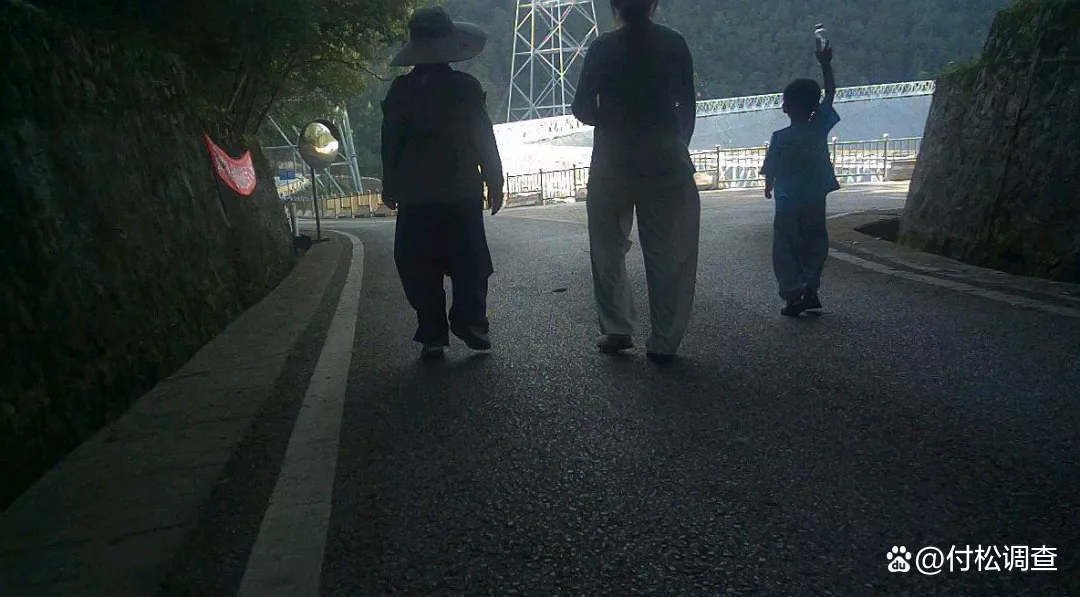
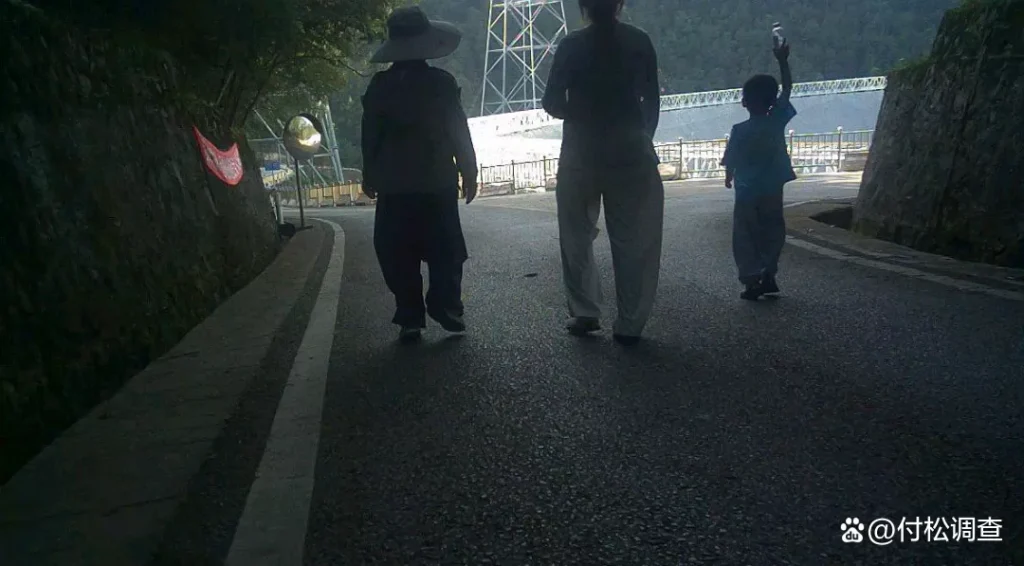
A scene from the restricted zone, captured via special methods.
CDT Archive Card
I had first heard rumors two years prior that FAST—often dubbed China’s “Sky Eye”—was being operated as a commercial gimmick, though I remained skeptical at the time. In my years as a journalist, how could a national strategic science project so vital to the country’s fortunes be weaponized for profit?
The reasoning was straightforward: FAST is a national treasure. The state poured more than 1 billion yuan ($140 million) into its construction, backed by decades of painstaking work from generations of scientists, including the late chief engineer Nan Rendong. The mega-engineering project carries a heavy historical mission—unraveling cosmic mysteries, searching for extraterrestrial life, and capturing gravitational waves—with daily operating costs alone running at 400,000 yuan.
Yet in the first week of May this year, a reader called to report the very same phenomenon. He recounted spending over 2,000 yuan for a night at a hotel called “Light Years Away” (Guangnian Zhiwai), after which he was smoothly escorted into FAST’s ring beam structure for a tour.
My eyes widened at the news. Back in September 2016, five days before FAST officially began operations, I had traveled to the site on assignment to report on its stringent management framework.
As the world’s most sensitive single-dish radio telescope, FAST listens for extremely faint signals traveling from the far reaches of the universe.
To prevent any external radio frequency interference from compromising its observations, Guizhou province adopted a protective policy to “treat FAST like our own eyes.” It established a 30-kilometer radio silence zone centered around the facility.
As early as June 2013, the Guizhou provincial government passed the Regulations on the Protection of the Electromagnetic Wave Quiet Zone for the 500-meter Aperture Spherical Radio Telescope, which took effect that October and was later revised in 2019.
These legal frameworks explicitly ban unauthorized personnel from bringing smartphones, digital cameras, tablets, or any electromagnetic-emitting devices into the restricted zone, and prohibit non-essential vehicles from driving inside.
Having obtained official approval back then, my photography colleagues and I entered the restricted zone to produce a six-page investigative series titled, “Exclusive Exploration by Our Reporter: I Slipped Inside the ‘Sky Eye’.”
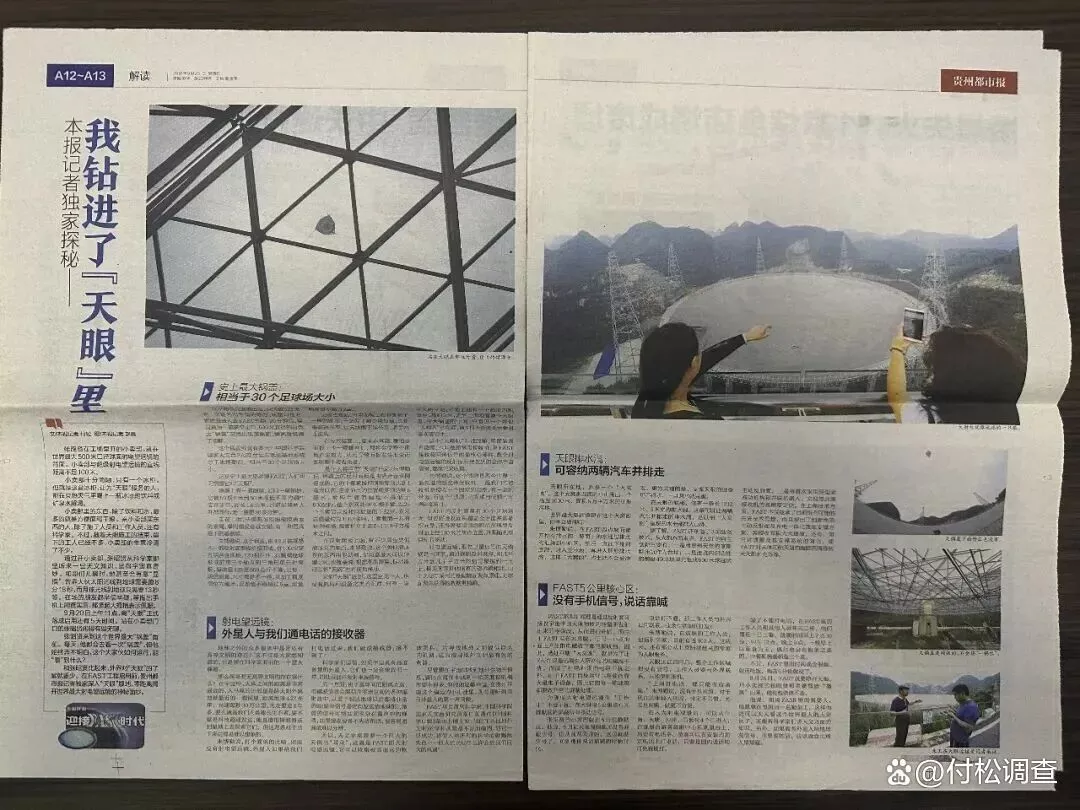
The original series published years ago.
Because of that firsthand experience, every time I heard claims that FAST was being commercialized, a giant question mark arose in my mind. Based on what I knew, the only legitimate way to tour the site was via the official ticket system, which required rigorous security checks before visitors boarded shuttle buses to a distant viewing platform overlooking the massive dish.
Determined to verify the tip, I decided to investigate for myself.
At 9:27 p.m. on May 21, I paid 2,688 yuan on Trip.com to book a twin room at the FAST Light Years Away Hotel.
The next morning, accompanied by two colleagues, I drove from the provincial capital of Guiyang straight to Pingtang county’s Kedu town, following the hotel’s directions to the telescope’s doorstep.
Turning right at the Niujiao intersection—guarded by a checkpoint with several personnel on duty—we crossed the boundary into FAST’s core restricted zone. The guards performed no security checks on us, merely recording our information before waving our car through, despite it being loaded with smartphones and other electronics. The guards explicitly told us that ordinary travelers could not enter, and that we were granted passage because the hotel had pre-registered our visit. It was at that moment I confirmed the hotel genuinely sat inside the forbidden zone. After checking in, staff led us—carrying recording equipment—right up to FAST’s ring beam, capturing the entire visit on camera.
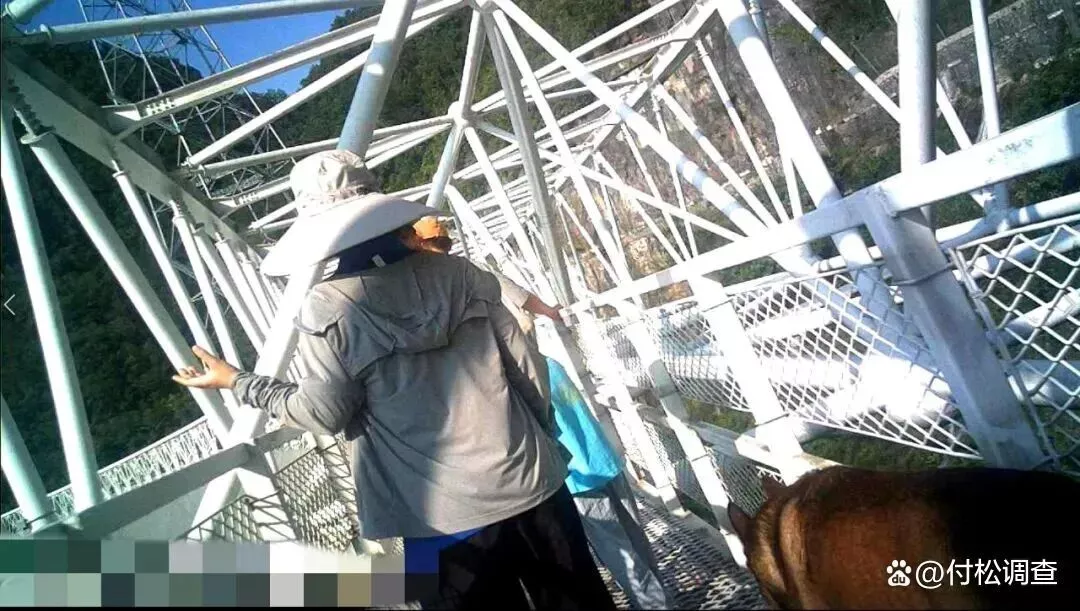
Visitors being guided to the FAST ring beam area, captured through special methods.
I have detailed the investigation elsewhere and will not repeat it here. Interested readers can find the full account under the headline: “Illegal Business Investigation at National Astronomical Observatories: A 2,688-Yuan Hotel Stay Grants Smartphone Access to FAST Core Zone, Raising Data Contamination and Espionage Risks.”
Through this probe, I uncovered an astonishing fact: the actual controller of the Light Years Away Hotel is none of other than the National Astronomical Observatories itself (NAOC). That realization deepened my shock, while also explaining why a hefty hotel bill served as an all-access pass into the forbidden zone, why cars packed with electronics could drive straight in, and why tourists could stand right next to the telescope’s structural ring beam.
According to public records, FAST’s primary leader is Jiang Peng, a deputy to the 14th National People’s Congress, deputy director of the NAOC, chief engineer of the FAST project, and executive director of the Guizhou Radio Astronomical Observatory.
On June 23, I took action, submitting a real-name report containing all the evidence I gathered to the 13th Inspection Team of the Central Commission for Discipline Inspection.
What followed, however, completely exceeded my expectations.
Late on the night of June 30, a friend called to say that local police had visited his home to question him about a whistleblower report. My friend had never filed any such report. Baffled, I asked why the police were harassing him over a real-name complaint I filed against someone else. His explanation: “They must have figured out that you and I went to FAST together on May 22, so they came to my house first.”
A heated argument ensued over the phone. My friend blamed me for not consulting him beforehand and dumping all the pressure on him. “This proves you hit a raw nerve, and now they’re fighting back,” he warned. “When you return to Guizhou, you might get stopped right at the train station… They probably wanted to come after you directly, and when they couldn’t find you, they came for me instead.”
n
Shortly afterward, a local political and legal affairs committee leader called to ask what I had been up to, mentioning that “orders came from above to look into you.”
When I asked what that meant, he replied, “Just gathering some background.”
I told him candidly that I had done nothing wrong, save for filing a legitimate real-name report against the National Astronomical Observatories for regulatory violations. The official immediately responded, “Ah, so that’s what this is about,” before adding a warning that I must abide by the law and established rules in whatever I do.
More frighteningly, I soon received calls from administrative officials asking what I was up to, followed by a warning that “someone has filed complaints against your company and liquor business, and we plan to conduct a routine inspection.”
I was stunned. The suffocating cascade of events following my report left me bewildered. Why was the price of a real-name whistleblowing so heavy, and what wrong had I committed?
n
Article 41 of China’s Constitution stipulates that citizens have the right to make criticisms and suggestions to any state organ or functionary, and have the right to lodge complaints, charges, or exposures against any state organ or personnel for violation of law or dereliction of duty. The law clearly states that relevant state organs must investigate these reports seriously and strictly prohibit any individual or organization from suppressing or retaliating against whistleblowers.
Moreover, why does the state publish whistleblower hotlines if not to listen to the public? If a whistleblower’s privacy cannot be protected—and is instead leaked directly to the target of the investigation—who will ever dare to speak out again?
Yet I have no regrets about reporting the NAOC. As a veteran investigative journalist, shouldering this historical responsibility and social mission is my bounden duty. A major technological project bearing on the nation’s future must never be reduced to a tool for private profiteering. More urgently, allowing tourists to drive into FAST’s core zone with electronic devices poses a severe threat to the telescope’s cosmic data collection.
More than four months have passed since my report. On September 29, the NAOC finally responded, stating they had established a special task force to verify the matter and reported their findings to the CAS disciplinary inspection commission.
To my immense disappointment, however, the Light Years Away Hotel inside the FAST restricted zone remains fully operational online. During the October 1 national holiday, room rates started at over 6,000 yuan, with several room types fully booked—while continuing to allow guests carrying smartphones and electronic gadgets into the telescope’s perimeter.
Left with no other choice, I decided to go public, hoping to draw broader societal attention and spur the relevant authorities into action.
I am fully aware of the consequences of whistleblowing against the NAOC, and many netizens have expressed concern for my personal safety.
Yet no matter how dangerous the path ahead may be, I will never back down.
Now that the Chinese Academy of Sciences has formed an investigative task force to verify the entire incident, I trust the relevant departments will handle the matter with the utmost seriousness and unearth the full truth.