
How the man they called America’s Sherlock Holmes finally came home to China
Reflecting on the day, Jiang recalled that the Double Ninth Festival is traditionally a time for crisp autumn weather and distant mountain views, yet this year’s rain felt like a quiet sorrow shed by the skies above. In the courtyard of their Yangzhou home, the orange tree where Dr. Lee once paused during his daily strolls still bears bright fruit. A single Chinese trumpet creeper stands atop the rockery, blooming with a fierce, brilliant light. “They seem reluctant to let go of that familiar silhouette, reluctant to accept that he will never walk here again,” Jiang told reporters, offering a rare glimpse into the man behind the forensic halo—how he meticulously cared for his family in daily life, how he anchored his existence in the creed of “absolute sincerity and integrity,” and the deep emotional weight behind his final journey home.
Beyond the fame: Treating every detail of life like a scientific experiment
To the outside world, Dr. Henry Lee was an internationally celebrated detective and a rigorous scientist dedicated to cracking cold cases, uncovering truths, and defending justice. But ask Jiang, and she would describe him simply as a gentle and devoted family man. When people wondered if he was just as rigid in his private life, Jiang smiled softly. “Not at all. He was the most genuine, authentic person imaginable.
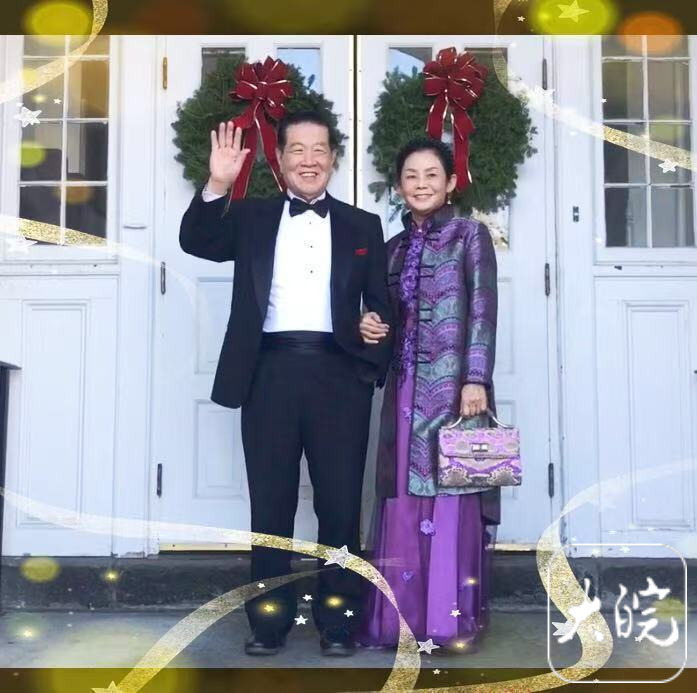
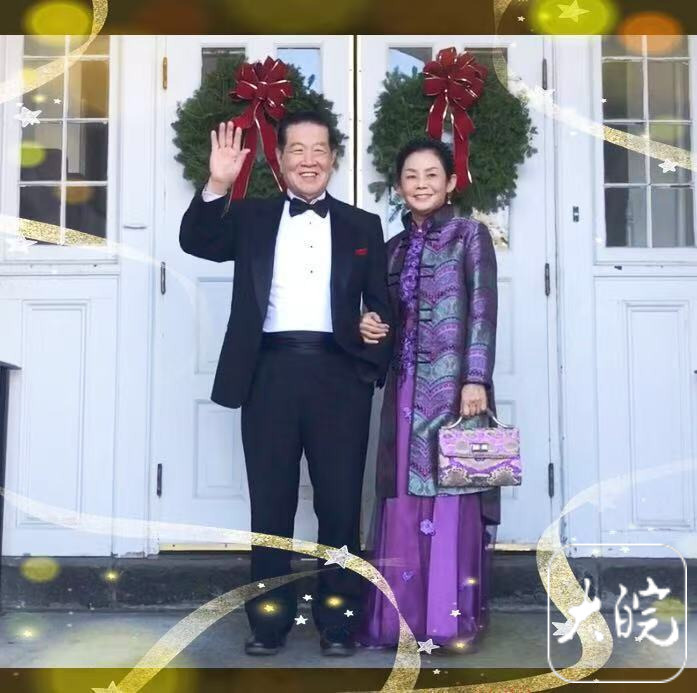
A wedding photograph from when the couple first met.
She could never forget what he said when he proposed. While everyone expected the standard “I love you,” his actual words were: “I am here to take care of you.” For a woman who had navigated the business world for years and achieved financial independence, the declaration initially caught her off guard. “Did I really need anyone to look after me?” Yet, through the years of their marriage, he fulfilled that promise in every imaginable way—from the trivial chores of daily life to long-term life planning, and even mundane errands. He always planned ahead with meticulous precision. “Sometimes I wondered if anyone could keep that up forever, but he managed it every single day.”
In his hands, everyday life turned into a series of scientific experiments. Their small home garden was cultivated with cabbages, chives, and tomatoes. Every spring, he would sprout seeds in wooden containers by the window, watching them grow into seedlings before carefully transplanting them into the earth. As the tomato vines began to climb, he would plan ahead—”We’ll soon have enough for tomato-pork meatballs”—and promptly build sturdy trellises for support.
Growing up in the city, Jiang found the process fascinating, but Dr. Lee tended to the garden day after day without a single lapse, as if conducting formal research. Jiang noted with a laugh that while their neighbors also grew vegetables, their plots were monotonous, whereas the family garden yielded a far richer harvest. Under his attentive care, “our napa cabbages grew large enough to rival a whole bundle from anyone else.”
There were countless such stories. When Jiang first arrived in the United States, she struggled to adapt to the climate and suffered from prickly heat. Without saying much, he brought home a box of medicated powder after work—a box she treasures to this day—and would regularly remind her, “Did you remember to apply your powder today?” During that period, Dr. Lee even competed with her to wash the dishes. To lighten his workload, Jiang once teased, “You aren’t washing these very cleanly.” Surprised and indignant, he retorted, “I’ve been washing dishes for all these years. Why would I suddenly forget just because you’re here?”
“In him, Eastern and Western cultures blended exquisitely,” Jiang said, reflecting on their quiet moments together over chess and conversation, where he would recount the details of past cases. He was sharp enough to notice when she was taking notes and would sometimes playfully ask, “It looks like you didn’t record this today.” When she asked how he knew, he would reply, “I can tell by your expression.”
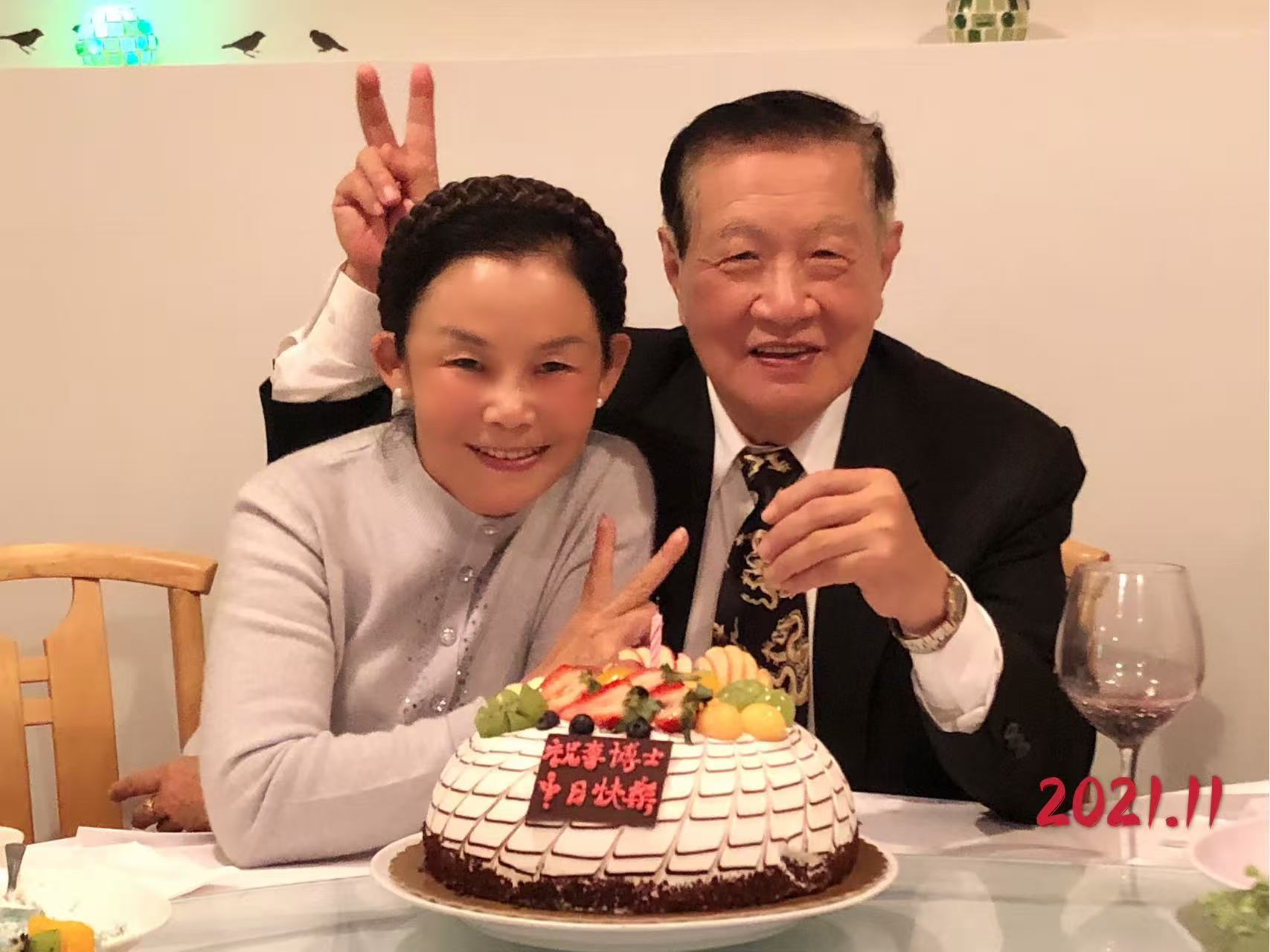
A photograph taken on Dr. Lee’s birthday in 2021.
Sheltered by his boundless care, Jiang often felt like a child who never had to grow up. Their home was filled with dolls and toys, and when friends asked about her hobbies, he would always name two: flowers and toys. When they moved, her collection of toys filled multiple boxes, and he would still frequently search online to buy her new ones. “Sometimes he felt like a father to me, sometimes an elder brother, occasionally a teacher, but most of the time, he was simply a deeply considerate husband.” Whenever it was time to give gifts, he would organize presents for all the children with immaculate precision. “I used to wonder how a man with such a demanding schedule could manage to make every little thing so perfect. Later, I understood: work is just work, but you are the most precious person in my life.”
Recalling those everyday moments, Jiang’s voice choked with emotion. “In the end, the person who protected and cherished me like a child is gone.”
“Absolute Sincerity and Integrity”: A lifelong promise
Dr. Henry Lee’s career spanned research, criminal investigation, education, and philanthropy, leaving a profound mark on countless lives. He frequently emphasized his guiding principles: absolute sincerity, truth-seeking, pragmatism, an unwavering refusal to yield, letting data speak, and turning the impossible into the possible. To Jiang, however, the core of her husband’s philosophy was encapsulated in a piece of calligraphy hanging in his Yangzhou study bearing four characters: “至诚信义” (Absolute Sincerity and Integrity).
“What is absolute sincerity and integrity? It is one’s core, an insistence on the truth,” Jiang explained. Many people marvel at how anyone could maintain such standards for a year or two, yet he lived by them for decades. One of his favorite refrains was: “We are the ones who speak for the dead.” If a person loses the drive to seek truth and respect reality, they are easily swayed by worldly pressures. “That applies to casework, but it applies to life just as much. Do not lean left or right, do not distort, do not submit. Let the facts do the talking, so you can look both the victim and the innocent in the eye.”
At first, she thought these were just fine-sounding words. But even when Dr. Lee was in his eighties, people would still bring unresolved cases to his doorstep for analysis. “If he could offer insight, he would; if he was powerless to help, he said so directly.” Once, a journalist asked Jiang what she considered his most prominent trait. Her answer was simple: his performance in the courtroom. Whether called by the prosecution or the defense, both sides routinely cited his forensic analysis as evidence. Such unwavering impartiality, she noted, is extraordinarily rare in the field of forensic science.
She understood the toll it took. “During the time I spent by his side, I heard him recount endless tangled mysteries. The difficulty was this: when you act impartially, people accuse you of bias; meanwhile, those who truly pull strings behind the scenes remain invisible.” When she once asked how he coped with such grievances, he simply smiled and said, “Who walks through life without facing injustice?” Jiang said those words reminded her of her own parents. “I firmly believe that kindness was woven into his very bones. Through smooth sailing and rough patches alike, his original intent never wavered. In his spiritual universe, truth and morality always outweighed everything else.”
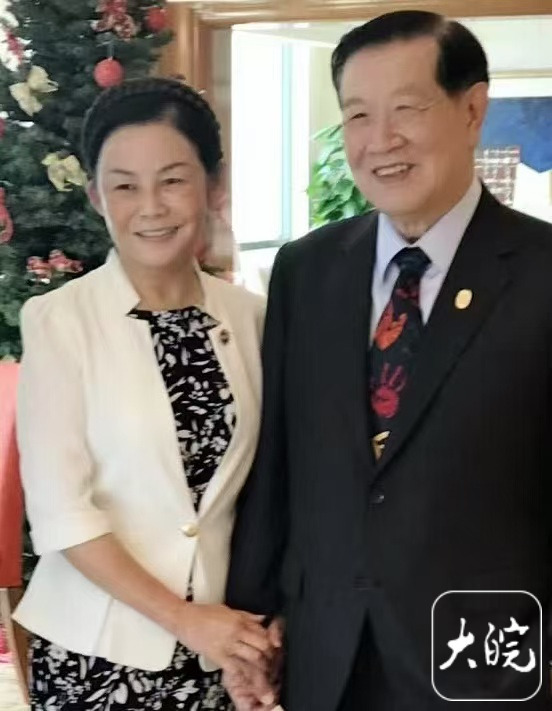
A portrait of Dr. Henry Lee and his wife Jiang Xiaping.
Thousands of photographs of Dr. Lee are stored on Jiang’s computer. Late at night, as she scrolled through them, she noticed a striking detail: the gleam in his eyes had remained virtually unchanged since his youth—sincere, clear, and utterly pure. “As the elders say, the eyes are the mirror of the soul.” While time left its marks on his face, and friends often joked that with Jiang by his side he had come to look somewhat like a kindly Santa Claus, Jiang insisted: “His eyes never changed by half a shade. They remained as earnest as ever, filled with compassion for all living things.”
Falling leaves return to their roots: A gentle homecoming
The return of Dr. Lee’s remains to Yangzhou has struck a chord across the country. Jiang revealed that her husband had long told the public he would not preserve his physical body after death. “He said he would donate his body for research, keeping only his eyes, because he joked he would still need them to make a living in his next life.”
When friends asked why she chose Yangzhou over his birthplace of Rugao, Jiang explained that after his passing, she had posted a simple message on WeChat: “Doctor, I am taking you home.” While he was born in mainland China, grew up in Taiwan, and built his career in the United States, spending most of his life traveling the globe, “whenever we returned to places like Rugao, we always stayed in hotels. Only in Yangzhou did we stay in a true home. That is why I decided his final resting place should be here.”
Jiang added that what her husband missed was not merely his specific birthplace, but the vast expanse of Chinese soil, its deep cultural heritage, and the shared language and nostalgia of the Chinese people. Having traveled the world, he could effortlessly slip into local dialects wherever he went—a habit that once puzzled her, but now made complete sense. “Returning to Yangzhou, returning to Jiangsu, returning to China—that is where his spirit could finally rest.”
A beacon and an ocean
Two days before the memorial service, Jiang drafted an invitation reflecting on his life: “He was once a beacon of light that illuminated the paths of many lives; he was once a vast ocean that nourished countless exhausted souls; he was once a sharp blade that pierced through layers of darkness and fog; he was once our cherished loved one, gifting us with countless moments of warmth.”
In Jiang’s eyes, the most precious legacy Dr. Lee leaves behind is the conscience and empirical rigor embodied by “absolute sincerity and integrity”—the dedication to letting facts have the final word, and a profound compassion for all living creatures.
“I want to thank all his friends, whether they made the journey to Yangzhou or not, who have loved and supported him,” Jiang said. “We hope that everyone can, like him, keep kindness in their hearts, hold fast to their true selves, and walk every step of the road ahead with steady purpose.”
Zhou Zhaocheng, a lawyer at Beijing Anjian Law Firm and one of Dr. Lee’s former students, recalled during an interview that his mentor’s career spanned 87 years of life and over six decades in forensic science. By solving bizarre cases and clearing the falsely accused, Dr. Lee used science to protect the truth and empathy to guard justice, earning renown across the globe as a pioneering forensic expert and a role model for legal professionals. Zhou noted that whenever he hit a roadblock in difficult cases, his mentor would patiently help untangle the chain of evidence, correct analytical biases, and instruct him: “Let the facts speak; let science decide right and wrong.” It taught him that the true essence of legal work is not about winning arguments, but about revering facts, restoring truth, and safeguarding justice. With his teacher’s ashes now resting in his homeland, Zhou said he feels the heavy weight of passing the torch—and vowed to honor that legacy on the front lines of criminal defense.
As the autumn rain of the Double Ninth Festival fell upon the courtyard’s orange tree, the final trumpet creeper flower, and the path of a wise man returning home, the storm would eventually pass and the flowers would bloom once more. The man who made facts speak for the silenced, who treated ordinary days with solemn care, and who kept a simple promise to the very end of his life, had finally returned to the soil he longed for.