
Liaoning slashed its economic zones from 92 to 43. The real surgery is inside the personnel files
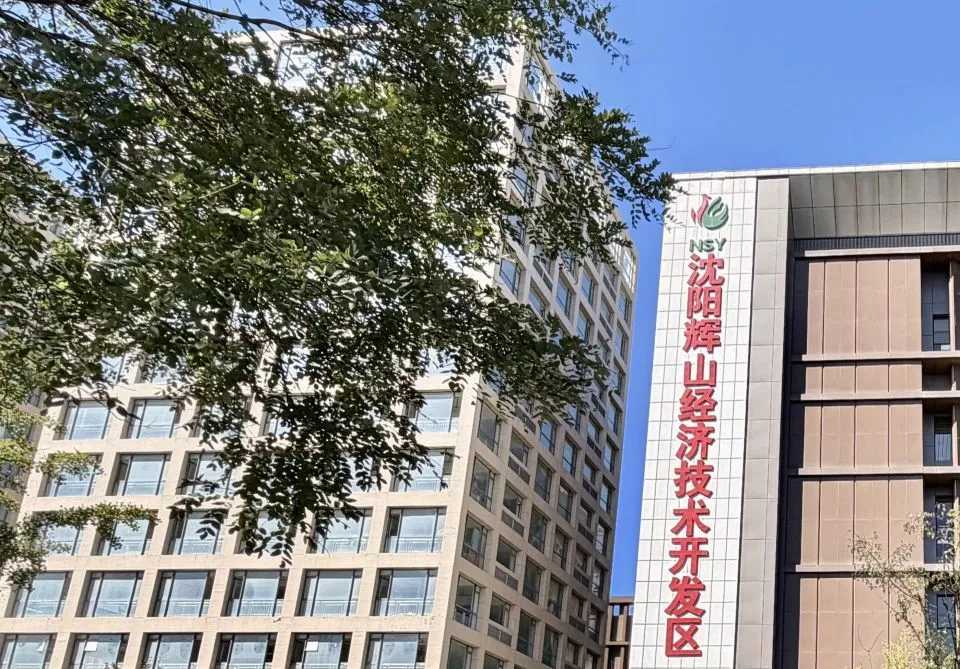
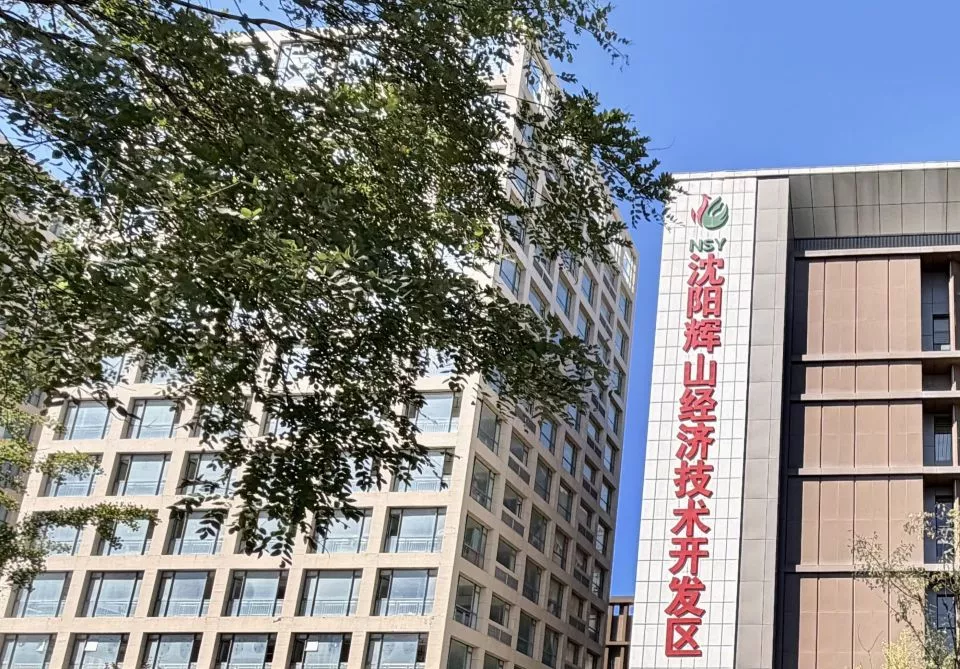
The Huishan Economic and Technological Development Zone stands as one of nine national-level development zones in northeast China’s Liaoning province. Photo: Wu Chao / Southern Weekly
A hypothetical crisis landed on the interview table: If a company in your jurisdiction faced a warehouse jam with unsellable goods, how would you, as the deputy head of investment promotion, untangle the mess?
That was the test Ge Ming drew ahead of the 2026 Spring Festival, during a high-stakes personnel competition held by the administrative committee of the Shenyang Huishan Economic and Technological Development Zone. A simple draw of lots had sealed his fate, assigning him this exact problem for a chance at the deputy directorship of the zone’s investment promotion center.
Months later, looking back at the grilling, Ge’s logic remained sharp. "You have to dig deep to figure out whether the bottleneck is market saturation or raw cost pressure," he said. "Once you diagnose the root cause, the prescription writes itself."
The selection process mirrored China’s rigorous civil service exams. Candidates surrendered their mobile phones at the door, drew lots for speaking order, and stepped up to the podium one by one. A panel of senior officials from the management committee and functional bureaus sat in judgment, scoring every word. When the tallies were finalized, Ge had successfully defended his title.
Ge’s career is deeply intertwined with the zone. Back in 2011, drawn by the ambition and operational flexibility of the Huishan development zone, he bypassed traditional civil service postings to join its management committee. Two years later, Huishan was upgraded to a national-level development zone.
Having spent his early career in human resources before moving into investment promotion, Ge was technically competing for the exact job he already held. But this round of shake-ups went far beyond a routine internal reshuffle. It marked a pivotal chapter in a sweeping structural overhaul across Liaoning’s entire network of development zones.
Beginning in the autumn of 2025, Liaoning executed a drastic consolidation of its provincial-level development zones, slashing the total count from 92 down to 43—shuttering 40 and merging nine. The sheer scale of the contraction is rare nationwide.
Alongside the territorial consolidation came a painful personnel purge designed to strip away non-essential social burdens and force development zones back to their core mission: driving economic growth.
While the Ministry of Commerce maintains oversight of national-level zones—leaving Liaoning’s nine national zones untouched by closures—the province opted to apply every other reform mandate across the board.
Liu Dianhui, deputy director of the Liaoning Provincial Department of Commerce, laid bare the urgency behind the campaign. "If development zones refuse to reinvent their growth model, history will leave them behind," he said. "This time, we made up our minds to change."
Development zones come in many shapes and sizes—economic zones, high-tech parks, new areas, cross-border cooperation zones, and specialized industrial parks—spanning both national and provincial tiers. According to the provincial commerce department, the 49 eliminated provincial zones shared four fatal flaws: sluggish growth, weak fiscal self-sufficiency, flawed spatial planning, and chronic rock-bottom rankings.
Low output intensity and a scarcity of anchor projects dragged their growth metrics far below the provincial average. Geographical clustering led to redundant positioning. In Dashiqiao, a county-level city administered by Yingkou, the local economy surpassed 33 billion yuan in 2025. Yet, the city operated two separate provincial development zones—Nanlou and Dashiqiao—sitting less than four kilometers apart, both laser-focused on the magnesite industry, a vital raw material for high-temperature industrial furnaces in steel and construction.
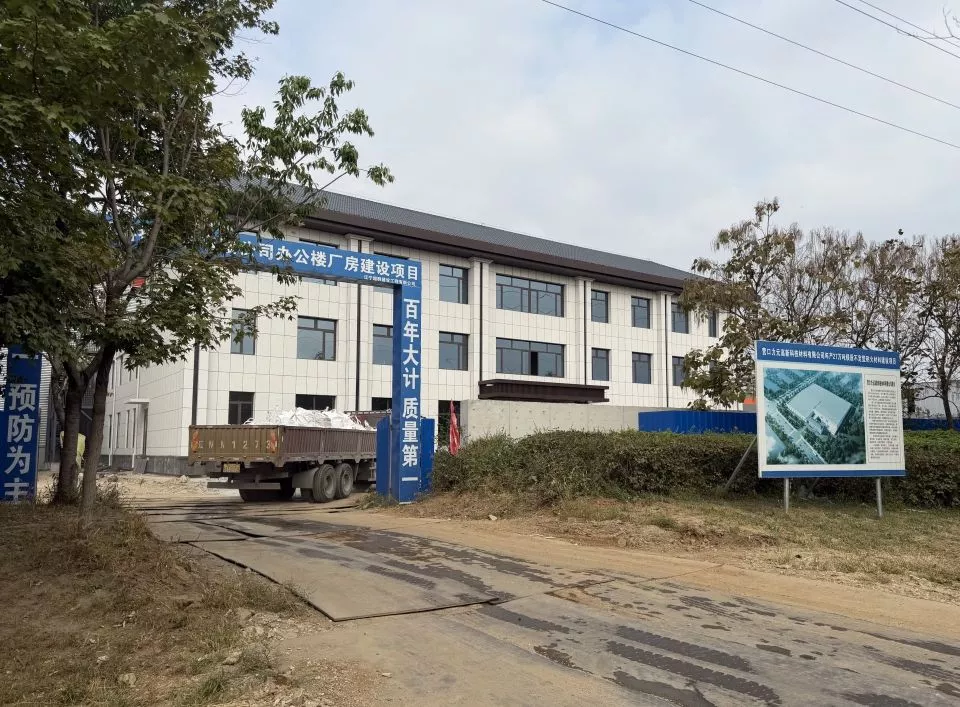
Magnesium industrial facilities under construction within the Dashiqiao development zone. Photo: Wu Chao / Southern Weekly
Xiao Jincheng, president of the China Institute of Regional Development and a former researcher at the National Development and Reform Commission, noted that an overabundance of zones inevitably breeds destructive cutthroat competition, with neighboring tracts fighting over the exact same projects.
In the recent reshuffle, the Nanlou zone was absorbed into the Dashiqiao Economic Development Zone.
Jiang Yunjun, deputy director of the Dashiqiao zone’s management committee, explained the logic of the merger. Nanlou’s magnesium sector was trapped in raw extraction and primary processing, leaving it vulnerable to market swings and overly dependent on steel demand. Dashiqiao, by contrast, boasted a more diversified industrial fabric.
By uniting the two, Jiang noted, the region stopped cannibalizing itself. Nanlou’s upstream mining and rough processing capabilities now feed smoothly into Dashiqiao’s downstream deep processing and advanced materials pipeline, welding a fragmented supply chain into a single contiguous unit.
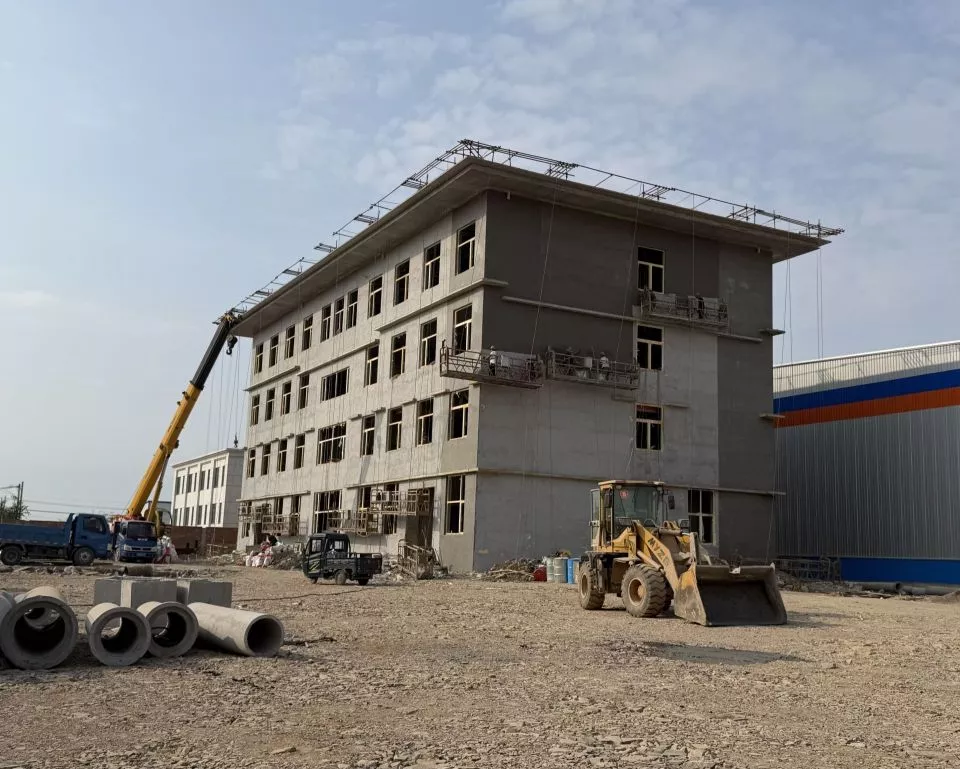
Construction sites in the Shenyang Dashiqiao Economic Development Zone. Photo: Wu Chao / Southern Weekly
Curiously, Beijing did not issue a top-down mandate for Liaoning’s consolidation. Instead, the province followed a simple principle: self-evaluation and voluntary selection.
A report by the *Liaoning Daily* highlighted how the city of Liaoyang handled the process. Following rounds of intense deliberation among local officials, the city voluntarily proposed shuttering three of its four provincial development zones, retaining only the Dengta zone.
Liu Dianhui explained the mechanism: municipal leaders conducted comprehensive health checks on local zones, measuring them against strict reform benchmarks. Qualified closures were filed for approval after painstaking negotiations at the county level. Resistance peaked in the early stages before smoothing out as consensus took hold.
When China established its first 14 national-level development zones in 1984, local governments viewed them as turbocharged engines of economic growth and rushed to replicate them. Over the span of four decades, the number of zones multiplied exponentially.
Liaoning was no exception. Across its map of 100 counties and districts, the number of provincial development zones peaked at 92—averaging roughly one per county.
The economic divergence grew stark, Liu noted. While flagship zones cleared 100 billion yuan in annual GDP, some provincial zones struggled to break 1 billion yuan. Chronic imbalances, low quality, and industrial homogeneity finally caught up with them.
The Shoushan Economic Development Zone, for instance, recorded a meager 4.2 billion yuan in import-export volume in 2024, falling woefully short of the provincial average of 15 billion yuan. Its elimination became a foregone conclusion.
Other zones were phased out simply because they had fulfilled their historical missions. A mid-level official at a national zone in Liaoning pointed out that certain provincial parks were dissolved because their boundaries had blurred into surrounding urban areas, their industrial footprints had merged with city life, and virtually every available plot of land had already been developed.
Liaoning’s downsizing mirrors a broader national trend. A 2024 central reform decision explicitly called for deep institutional innovation in how development zones are managed. A front-page commentary in the *People’s Daily* in September reported that local authorities across China had optimized their development zone landscapes by closing or consolidating more than 4,000 irregularly established parks.
Resettling 1,800 Staffers
Reflecting on the toughest part of the overhaul, Liu Dianhui did not mince words: "Reform is always painful. This round involved massive institutional restructuring, and the hardest part was dealing with people—and their emotions. Many staff members watched these zones get built from scratch and shared deep emotional bonds with them."
Consolidating development zones meant more than shifting administrative boundaries. It required auditing assets and debts, untangling unfulfilled investment pipelines, handling operational enterprise accounts, and ensuring continuous business services.
When it came to personnel, development zones nationwide followed a nearly identical playbook: strict caps on total staffing quotas and mandatory open competition for all posts. Liaoning was no exception.
Quota management sets a hard ceiling on headcount, allowing management committees to deploy staff flexibly based on actual workload. Meanwhile, the all-staff contract system dictates that every employee—regardless of whether their historical status was civil servant, public institution staff, or enterprise hire—must compete for a seat.
While some regions stripped civil service status from zone workers during similar overhauls—creating a minefield of resistance—Liaoning adopted a gentler approach by preserving official bureaucratic ranks.
The genius of Liaoning’s framework lies in a dual-track system that separates an employee’s "archival rank" from their "active post."
For salaried bureaucrats working inside a development zone, their seniority, wage scale, and career progression continue to advance in their personnel files independently of their specific zone duties. When an employee eventually transfers out or retires, their official status is verified based on their archival record—providing a crucial career safety net.
Previously, many zones froze personnel files the moment a cadre stepped through the door, effectively locking their administrative rank in place no matter how hard they worked. The dual-track system shattered this trap, allowing bureaucrats to climb the civil service ladder on paper without being chained to the fluctuating fortunes of a specific industrial park.
Huishan’s reform blueprint, rolled out late in the year, set a lean target of 120 positions, open to civil servants, public institution personnel, and open recruits alike.
The hiring mechanism operated across three distinct tiers: senior leadership was appointed directly by the Shenyang municipal party committee; certain middle-management posts were filled via direct appointment; and all remaining department heads alongside every sub-management position were subjected to open competition.
What happened to those who lost out? Unless sidelined by health issues or retirement age, unsuccessful candidates were generally required to leave the zone.
Staff members from dissolved zones were largely absorbed back into local government agencies or reassigned to surviving parks.
Baseline audits conducted before the reforms revealed that the vast majority of zone employees held civil service or public institution status, with very few open-market hires. As a result, when zones were merged, most personnel flowed smoothly back into local government apparatuses, keeping severance and compensation costs manageable.
Data released by the Liaoning Provincial Department of Commerce illustrates the scale of the contraction: across the original 92 zones, total employment stood at 3,969. Following the consolidation down to 43 zones, total staffing authorizations were slashed by nearly half to 2,088.
Among the 1,881 individuals displaced, 129 were trimmed through redundancies, 1,485 were successfully reassigned or absorbed internally, and 267 remain in scheduled transition pipelines—achieving the core goals of lean administration and fiscal relief.
Several local officials noted that the concurrent wave of government leadership reshuffles opened up additional landing pads for displaced workers. Even so, coveted posts remain scarce, and the road to reassignment is fraught with friction.
One provincial zone official admitted off the record that after multiple departments were merged, numerous officials who previously held division-level rank found themselves demoted to deputies.
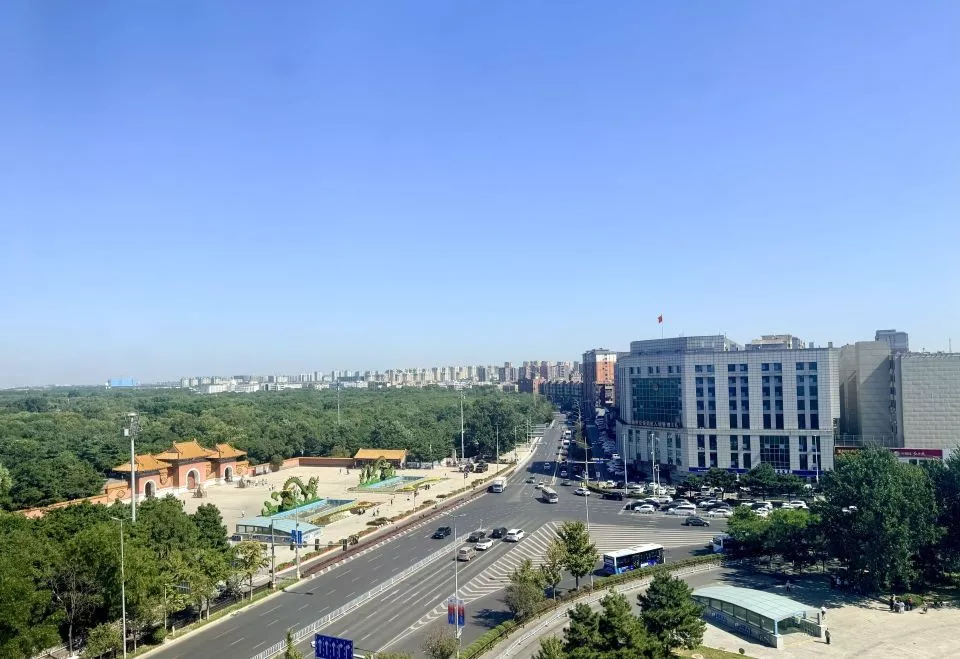
A street view in downtown Shenyang. Photo: Wu Chao / Southern Weekly
Slimming Down or Clearing the Mind?
Beyond cutting the number of zones in half, the survivors were forced to undergo internal liposuction.
Following the reforms, the average number of internal departments within Liaoning’s remaining zones dropped from 8.2 to 7.1, a 13.3% reduction. At the same time, departments dedicated to economic development and investment promotion swelled to 83.1% of the total, a 7.1 percentage point increase.
For decades, development zones had slowly morphed into catch-all administrative bodies, suffocating their primary economic mandate under mountains of social management chores. To regain their competitive edge, they had to shed these distractions.
Today, more than 90% of Liaoning’s development zones have completely stripped away social administrative duties.
New guidelines issued by the provincial commerce department drew a bright red line: development zones exist solely for industrial development, project incubation, and enterprise services. Public goods such as education, healthcare, and grassroots welfare must be handled entirely by local territorial governments.
Zhao Yongsheng, director of the Shenyang Economic Development Zone and concurrently head of the city’s Tiexi district, oversees a national-level zone whose annual output exceeds 100 billion yuan—making it an undisputed heavyweight in China’s rustbelt northeast.
Zhao offered a telling metaphor: "Call it slimming down if you like, but it’s really about clearing the mind. Trimming departments and headcount is just arithmetic. The real win is liberating cadres from trivial chores so they can focus entirely on serving businesses."
If development zones retained social governance tasks, Zhao argued, officials would drown in endless paperwork. Only by shedding those burdens can managers pour their energy into courting enterprises, expanding projects, and plotting long-term strategy.
Simultaneously, local governments devolved administrative approval and urban planning powers down to the zones, allowing companies to wrap up corporate filings on-site rather than bouncing back and forth between municipal and district offices.
Yet, delegation requires caution. Over-delegation risks turning a development zone back into a standard administrative district—not to mention questions over whether zone staff possess the professional expertise to handle specialized approvals.
An official at one chemical industrial park pointed out the awkward reality: certifying chemical safety requires niche engineering talent, a rarity among existing management committee cadres. Parks were forced to recruit specialists on the fly. "Only when the right people and capabilities are in place can we safely take on more authority," the official said.
In mid-October, the Liaoning commerce department issued new guidelines emphasizing that municipal governments must orchestrate the rollout of empowered task lists while reinforcing training to ensure that authority, capability, and regulatory oversight descend in lockstep.
With responsibilities clearly partitioned, local authorities began experimenting with an integrated "zone-government merger" model.
Under this arrangement, a development zone and its co-located administrative district share leadership teams while retaining dual signboards. Operating out of a single office, they preserve the zone’s nimble industrial and investment functions while fulfilling the district’s social governance obligations, thereby streamlining coordination.
Liaoning is no stranger to this concept. As early as 2002, the Tiexi district government and the Shenyang economic zone began sharing office space—pioneering an integrated management model ahead of its time. Today, the party secretary of Tiexi district also serves as the party working committee secretary of the development zone, and the district head acts as the zone’s director.
Reflecting on the journey, Zhao Yongsheng remarked, "With two decades of operational foundation, transitioning these functions feels completely natural now. Twenty years ago, this kind of reform was unthinkable."
This raises a natural question: Once a zone merges with its host district, does the brand name "development zone" still hold any value?
In practice, the zone-government integration is merely an organizational bridge designed to maximize efficiency. Preserving the development zone identity is essential precisely because it unlocks economic management authorities, harnesses the institutional flexibility required to court investment, and concentrates resources on project execution. Abandoning the zone label and handing everything back to traditional government bureaus would simply invite social administration back through the backdoor.
Ge Ming understands this dynamic well. Zone employees keep a close pulse on macroeconomic trends and develop specialized, aggressive investment-promotion skills, whereas traditional government agencies bogged down in day-to-day social affairs struggle to maintain a sustained focus on industrial policy and institutional innovation.
Laser-Focused on Industry
Ultimately, the entire development zone reform must prove its worth on the factory floor.
Liu Dianhui hit the nail on the head: "The absence of a complete industry and supply chain is the ultimate ceiling for any development zone."
The province’s newly minted guidelines impose a strict framework on surviving zones: each must anchor itself on one core pillar industry, supported by two or three distinctive secondary sectors, while reserving strategic headroom for emerging or future industries.
By 2028, Liaoning aims to drive the GDP growth rate of its development zones two percentage points above the provincial average, pushing their economic contribution past the 30% threshold and cultivating eight industrial parks with output values exceeding 100 billion yuan.
Zhao Yongsheng stressed that picking a dominant industry must stem from a zone’s genuine resource endowments and comparative advantages, warning that trying to build everything under the sun is a fast track to ruinous internal cannibalization.
Once a dominant industry is locked in, investment promotion can be tailored around the local supply chain to build a self-sustaining industrial ecosystem.
Huishan stands as proof of concept. Years of cultivation have allowed it to anchor three pillar industries: food processing, equipment manufacturing, and aviation.
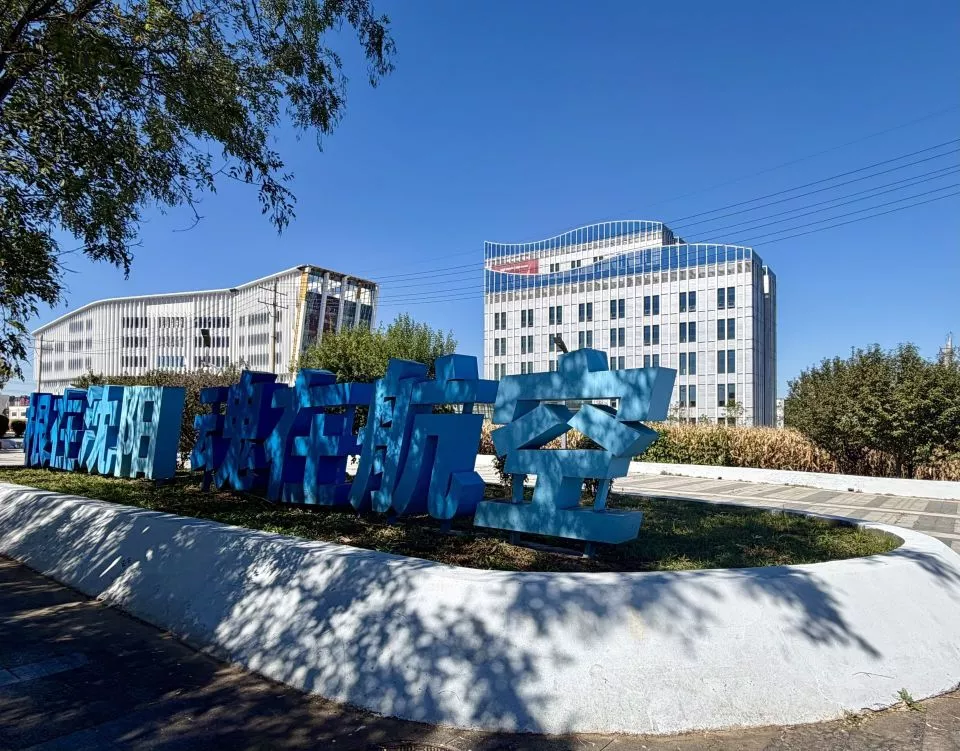
Exhibition displays highlighting Huishan’s three pillar industries. Photo: Wu Chao / Southern Weekly
Officials explained that industrial agglomeration is all about supply chain density—the degree to which upstream and downstream partners cluster locally. Taking a local dumpling manufacturer as an example, everything from flour and cooking oil to packaging and spices can be sourced directly within the zone.
Meanwhile, competitive neutrality regulations introduced in 2024 outlawed local governments from using fiscal subsidies and tax rebates to poach corporate investments, forcing zones to compete purely on the strength of their professional services.
Officials frequently describe themselves as "store-assisting waiters," holding a company’s hand through site selection, corporate registration, insurance setups, worker recruitment, factory renovations, and cost negotiations.
At the annual legislative sessions, Liaoning Provincial Party Secretary Xu Kunlin issued a blunt call to action: "Optimizing the business environment is Liaoning’s most urgent priority and strategic lifeline. We must use decisive action to turn the situation around in the short term."
That optimization ultimately boils down to how smoothly businesses are treated on the ground. An executive at a refractory materials company in Yingkou told reporters that after signing a lease with the Dashiqiao Economic Development Zone earlier this year, the journey from land acquisition to breaking ground took a mere half-month.
With the two rounds of zone consolidation winding down, Liaoning is preparing to activate a dynamic evaluation mechanism.
The provincial commerce department rolled out a fresh scoring system for 2026, training its lens on output per mu (approx. 0.16 acres), developmental efficiency, and industrial upgrading.
n
Accompanying these metrics are strict exit rules: any zone that anchors the bottom of the provincial rankings for two out of three consecutive years faces recommended dissolution, accompanied by a two-year ban preventing the host city from applying for new provincial development zones.
The underlying intent is to use competitive pressure to force parks to survive on quality rather than scale.
The economic backdrop remains harsh. Between January and August, Liaoning’s fixed-asset investment dropped 32.7% year-on-year, active construction projects fell 16.1%, and major projects valued above 100 million yuan suffered a 16.1% contraction.
For Liaoning, the dividends of reform will take time to materialize, and short-term growing pains are inevitable.
As economist Fan Gang once observed in *Institutional Changes in China*, all production requires inputs upfront and yields returns only at the end. Between the payment of reform costs, the initial glimmer of results, and the final cashing-in of dividends, a time lag is guaranteed.