

China’s ordinary shop owners are hunting hidden metal spikes. The government is not happy

Over the past two years, Chinese social media feeds have seen a surge of videos featuring middle-aged men with angle grinders, kneeling on sidewalks to slice off rusted metal bolts, stray screws, and jagged concrete anchors jutting out of the pavement.
These amateur fixers—who often run local fruit shops or clothing boutiques in their day jobs—scooter across cities like Xinxiang and Linyi to tackle what they view as urban landmines. The debris comes from various sources: remnants of old pandemic-era COVID-19 testing booths, abandoned construction barricades, and decades-old municipal infrastructure falling into disrepair.
What starts as a seemingly simple act of civic cleanup, however, quickly collides with China’s rigid urban bureaucracy. As cities shift their focus from massive construction booms to refined operational management, these vigilante handymen find themselves caught in a gray zone of jurisdictional disputes, noise complaints, and run-ins with local urban management officers known as *chengguan*.
By Xu Qaoli · Edited by Wang Zhiyan

These inconspicuous road hazards—standing just a few centimeters high—lurk in pedestrian walkways, commercial streets, and residential vegetation zones. Pedestrians occasionally trip over them, mutter an oath, and hurry on, rarely pausing to wonder who left them behind or why.
Kang Pengfei, 36, used to be one of those indifferent passersby. Living in Xinxiang, Henan province, he paid no attention to a broken traffic bollard near his residential compound’s entrance. That changed one sweltering summer evening when an elementary school student tripped over the jagged 10-centimeter stub right in front of him. The visceral reality of the incident prompted Kang—a former education and training industry worker with a decade of experience—to trade his teaching chalk for a portable metal cutter.
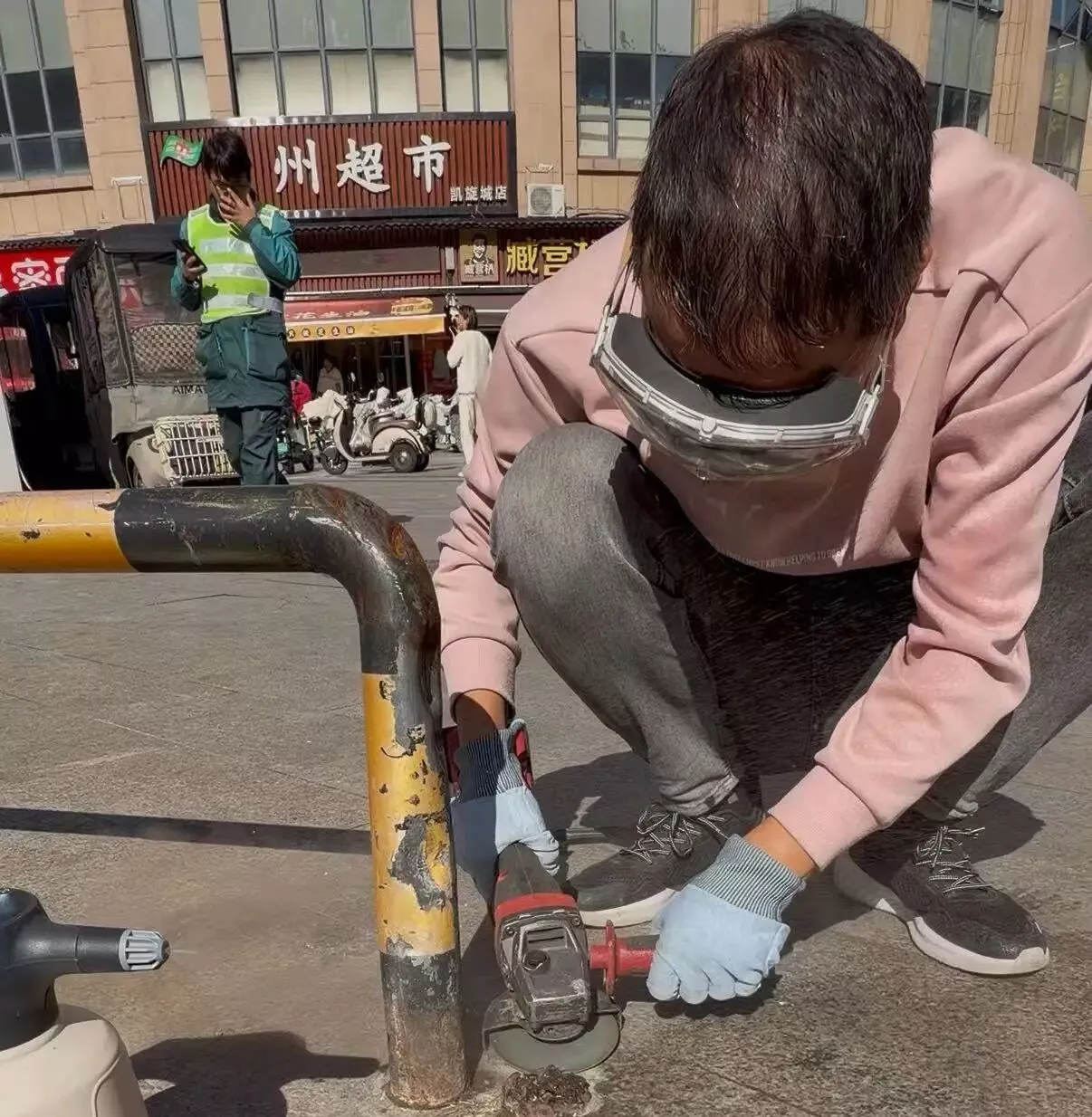
● Kang Pengfei removing a stray bolt. Courtesy of the interviewee
Clearing a bolt takes only minutes: a quick slice with the grinder, a few hammer blows, and the metal is flush with the pavement. Every morning, after dropping off his older daughter at school and checking on his tutoring business, Kang mounts his motorcycle to patrol the city. His gaze is now permanently locked onto the ground. Near a normal commercial street entrance, he recently found a cluster of five or six old bollards piled together, their bases wrapped in over twenty thumb-thick expansion screws.
The Beijing-Guangzhou railway line bisects Xinxiang into eastern and western halves. As the city expanded eastward, the western side gradually slid into an aging urban zone where bolts and uneven pavement are ubiquitous. Kang has accumulated roughly 2,000 removed items in a dedicated storage space, alongside dozens of bags of asphalt used for patching potholes. Though his social media account has just over 9,000 followers, they are fiercely local. Tips pour in daily from residents pointing out hazards.
Similar grassroots fixers have popped up across Shandong, Chongqing, and Henan. Tong Baohua, who runs children’s clothing stores in Linyi, Shandong province, keeps a grey-skinned notebook logging user-submitted addresses, optimizing his routes to tackle a backlog of up to 200 hazardous spots.
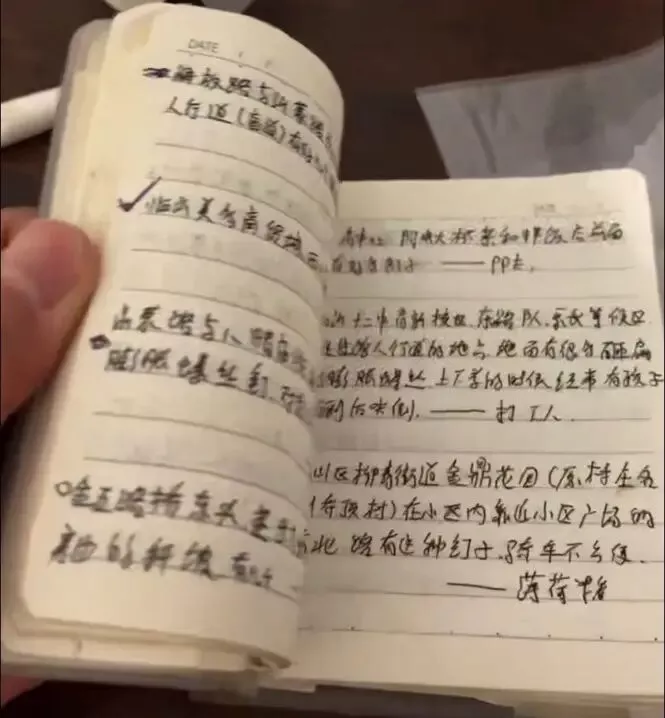
● Tong Baohua’s notebook tracks user-submitted hazardous locations. Courtesy of the interviewee
As their operations expanded, these fixers upgraded their toolkits. Kang started with a basic grinder and hammer, eventually adding crowbars, electric picks, asphalt materials, ground blowers, reciprocating saws for tree stumps, and—most recently—an electric spray bottle to suppress dust during cutting operations.
That dust control became necessary after an August run-in with local *chengguan* (urban management law enforcement officers). While Kang was cutting out expansion anchors left behind from a temporary tent setup, two uniformed officers stopped him, citing satellite monitoring and environmental protection regulations that prohibit dust-generating cutting operations.
"If it gets caught on camera, we get penalized too," the officers explained, according to Kang. His retort—"Does cutting a few bolts generate more dust than an electric scooter’s exhaust?"—fell on deaf ears. Left feeling aggrieved, he posted the encounter online.

The internet’s amplification mechanism often distorts these microscopic urban gripes. Kang admits that giving dramatic names to his cleared finds—such as the "Eight-Legged Monster" outside a middle school, which was actually eight twisted ground stakes—drives engagement, pulling in over 16,000 likes. Dubbed "Bolt Knights," these creators turn risk into visual content.
Yet the friction is real. Some netizens accuse them of lacking construction licenses or municipal authorization, while others suspect them of stealing scrap metal. More frequently, they face hostility from citizens. Property management staff have chased Kang away for noise pollution, and a hardware store owner who used metal hooks and chains to reserve a parking spot cursed at him when informed someone had tripped over them.
Tong Baohua faced similar pressures after his videos crossed millions of views and hit trending lists. District office leaders invited him for a chat, and his wife, currently nursing their baby, urged him to stop courting trouble with municipal authorities. A few days later, Tong posted a video titled bluntly: "Removing a single nail is much harder than you think."
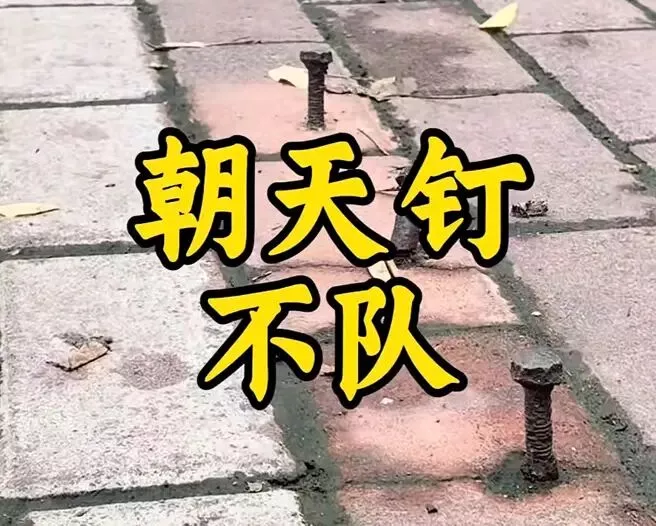
● Kang Pengfei giving quirky names to the removed bolts. Screen grab
Many of these metal hazards trace back to the pandemic era. Shop owners across urban walking streets recall how COVID-19 checkpoints required tents anchored by heavy metal expansion screws that were simply abandoned once restrictions lifted. Other hazards stem from aging infrastructure, such as worn-out park fitness equipment and speed bumps.
Delivery riders bear the brunt of the danger. Tong notes that a flat tire caused by a hidden screw is a courier’s worst nightmare, costing precious time and money.
When these amateur fixers run into gray zones where administrative jurisdictions overlap, bureaucratic paralysis sets in. Kang once spent days attempting to fix a broken dirt road outside a railway experimental primary school that straddled the administrative boundary between Zhengzhou and Xinxiang. When he reported it to the municipal department, he was told it fell outside their jurisdiction. He ended up livestreaming his own asphalt-paving efforts, only to be cursed at by elderly residents venting years of frustration at government inaction—prompting platforms to temporarily shut down his livestreaming channel.
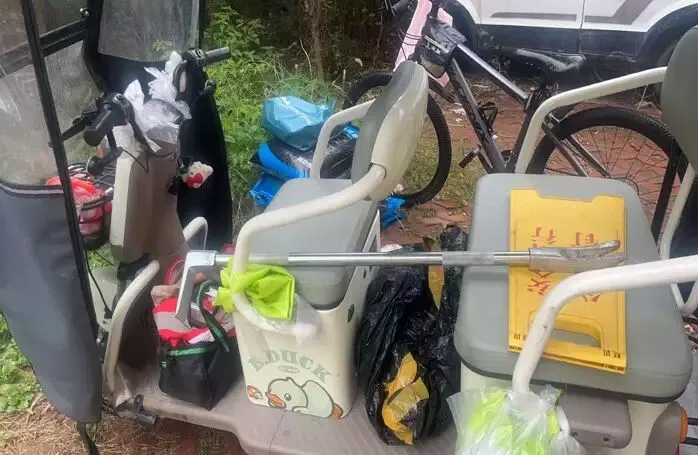

Why do these minor hazards persist? According to Lin Huihuang, a public policy researcher at Guangzhou-based institutions who has surveyed municipal management practices since 2024, the root cause lies in China’s transition from an era of frantic urban expansion to one of constrained maintenance budgets.
"The 1990s and early 2000s were the golden age of metropolis construction," Lin noted. After two decades of weathering, cities are entering a phase requiring meticulous upkeep. However, bolt removal and minor sidewalk repairs sit at the very bottom of municipal priority lists, starved of adequate funding.
Furthermore, construction contracting often operates as a commercial race to the bottom. Government projects won through competitive bidding are subcontracted layer by layer. "If the government pays 1 million yuan, seeing 500,000 actually used on the ground is considered conscientious construction," one industry representative told Lin’s research team.
Urban designers point to systemic planning flaws. Li Dihua, an associate professor at Peking University’s architecture department, argues that urban management often prioritizes administrative convenience over resident well-being. From poorly placed traffic signs to protruding anchor bolts left behind after sign removal, cities are riddled with what he termed "anti-human urban spaces." Even though China implemented the *Barrier-Free Environment Construction Law* in 2023, enforcement on micro-hazards remains uneven.
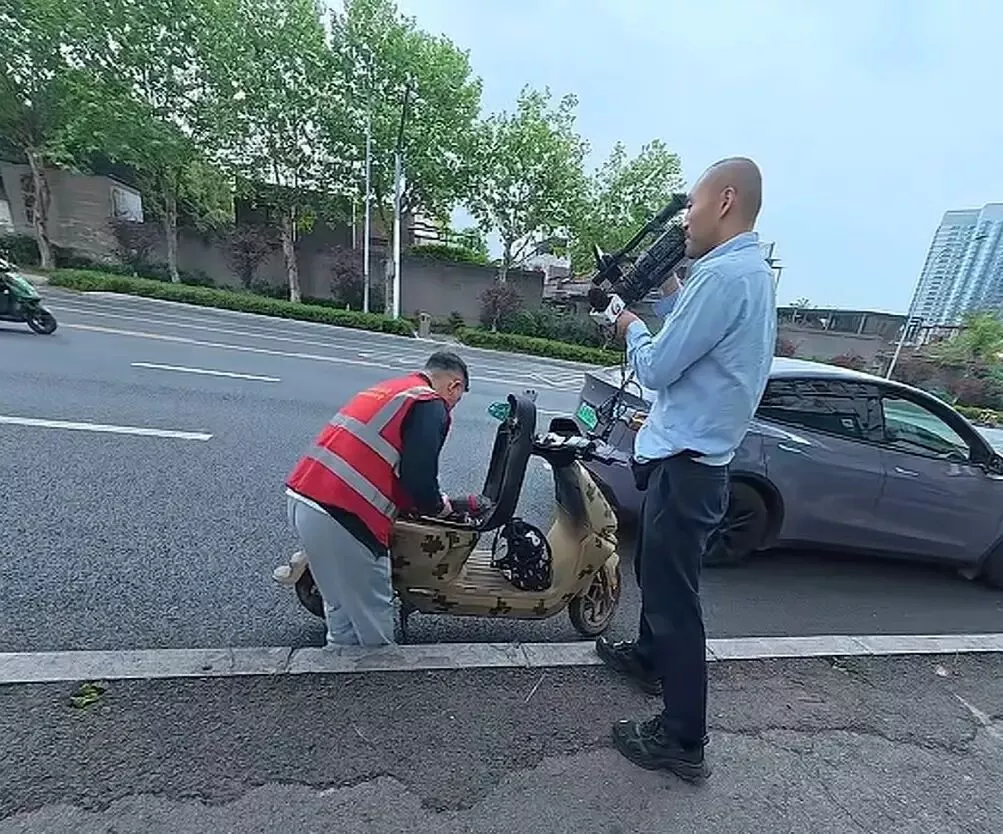
● Wei Guoqing accepting an interview with local media. Screen grab
Gradually, local governments are co-opting the phenomenon. At least 10 cities have launched special campaigns to clear stray bolts over the past two years, utilizing sanitation squads, urban management bureaus, or public reporting drives. In Chongqing, after local bolt-removal vlogger Wei Guoqing went viral in April, local urban management authorities officially hired him as a "city inspector" to log problems via an official app, effectively turning vigilantes into official auxiliary enforcers.
Yet researchers like Lin remain cautious, warning that citizen participation is inherently unstable and that long-term solutions require clear accountability between administrative bodies and corporate property owners.
For now, the bolt hunters continue their rounds. Despite flying metal shards scratching their eyes and ongoing regulatory gray areas, men like Kang Pengfei and Tong Baohua find a unique sense of accomplishment in every clipped screw. "Once you’ve experienced the pain they cause," Tong said, "you realize a single bolt is never just a trifle."
(Some names in this article have been changed at the request of the interviewees.)