
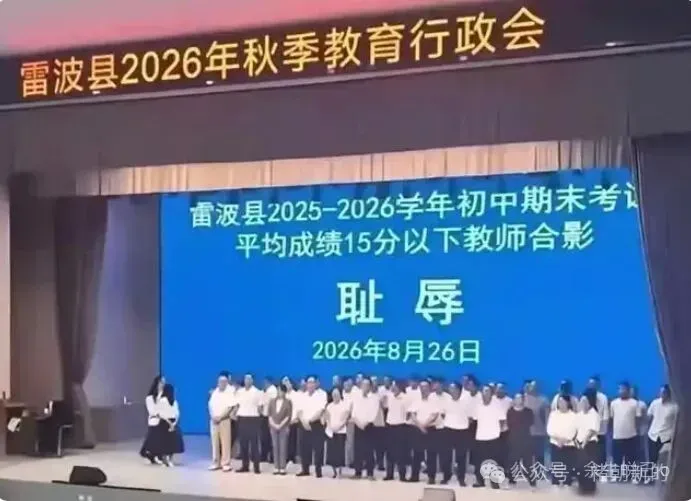
Teachers in rural China were forced to pose with a ‘shame’ banner over a 30-point average. The real crisis is much darker
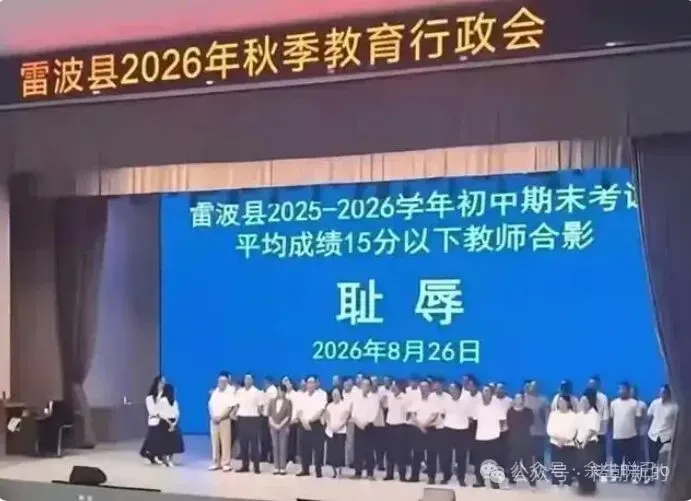
When images of the coerced public shaming surfaced online, many outside observers initially blamed the educators. Public sentiment questioned how teachers could perform so poorly, and some even praised the local county magistrate for personally attending and overseeing the event, viewing it as a sign of executive dedication to improving local education.
Yet a closer look at the administrative dynamics reveals a different picture. The magistrate’s presence on stage resembled that of an imperial magistrate presiding over a public trial rather than an official taking collective blame. Critics online soon pointed out that if public shaming were an effective metric for administrative reform, local party secretaries and county magistrates presiding over economically lagging regions should be forced to stand beneath the exact same banner to see if it inspires them to “turn shame into courage.”
More importantly, the public spectacle glosses over a staggering question: Why are class averages falling below 15 or 30 points in the first place, and just how widespread is this extreme underperformance?
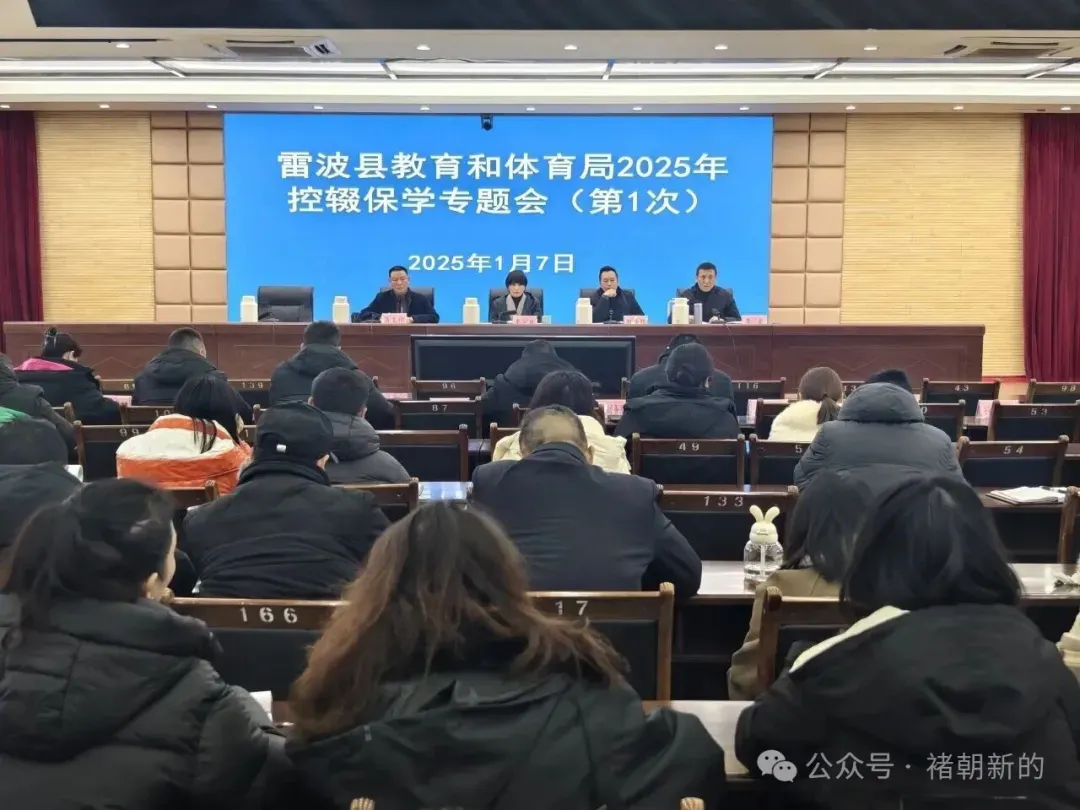
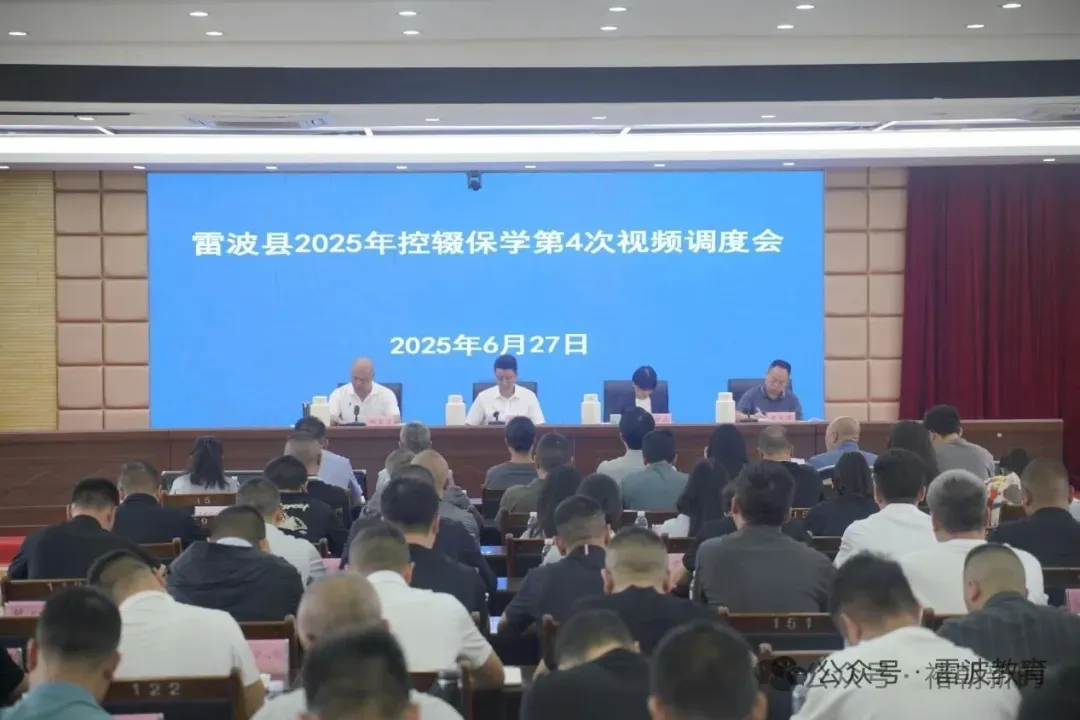
Liangshan is a heavily populated ethnic minority region where many residents primarily speak the Yi language rather than Mandarin. Compounding the linguistic barrier is a waning societal appreciation for formal schooling. The long-standing local sentiment that “studying is useless” has fueled chronic student dropouts during the nine-year compulsory education stage. Local schools and teachers bear a crushing administrative burden known as “controlling dropouts and ensuring schooling” (控辍保学)—a mandate that forces educators to repeatedly track down truant students and drag them back to the classroom. However, once these reluctant students return, their academic engagement is minimal, dragging down class averages.
This educational destitution is not isolated to Leibo County. Data from neighboring Meigu County, another impoverished district in Liangshan Prefecture, illustrates the broader structural collapse. According to reports from local state media and visiting educators, Meigu County Middle School—the only public high school in the entire county—achieved a historic milestone in 2023 by recording its first-ever regular college entrance examination (Gaokao) undergraduate admissions in nearly twenty years.
When Liu Xintai, a senior teaching researcher from Ningbo’s Beilun district in affluent Zhejiang province, arrived at Meigu County Middle School for a support teaching program in 2022, he was stunned. The school operated 73 middle and high school classes with a total teaching staff of just over 60 people. For more than a decade, the school had effectively produced zero graduates meeting standard undergraduate thresholds, with annual academic undergraduate admissions lingering between zero and one.
Compounding the teacher shortage is severe student attrition. Better-performing students consistently migrate to urban centers like Xichang or Leshan for better schooling, leaving behind a hollowed-out local student body. Liu discovered that nearly half of the school’s students spent chunks of the semester working odd jobs to earn living expenses, returning to campus only after long holidays.
Under such conditions, a class average of 30 points is not a reflection of individual teacher incompetence, but a symptom of profound regional poverty, linguistic isolation, and structural neglect. After a semester of intensive restructuring under the visiting Zhejiang educator, Meigu’s average scores crawled up into the 40s, and the school managed a modest uptick in college admissions—though over half relied on arts and sports tracks.
The spectacle in Leibo County ultimately reveals a profound disconnect between bureaucratic governance and grassroots realities. Resorting to public humiliation to punish frontline teachers ignores the reality that no amount of administrative coercion can bridge a chasm born of economic underdevelopment, massive student absenteeism, and systemic resource starvation.