

She rented her face to AI for 300 yuan a year. Now it is trapped in a black-box economy
Ordinary people are trading their digital likenesses to AI companies for a few hundred yuan, swapping their identities for a one-time payout that enters an untraceable circulation network.
During the first quarter of 2026, the industry rolled out roughly 1,300 AI-generated short dramas every single day. Because these productions often featured repetitive, homogenous faces, viewers increasingly complained about the stale aesthetics. A sudden shortage of distinctive human faces quickly morphed into a booming business.
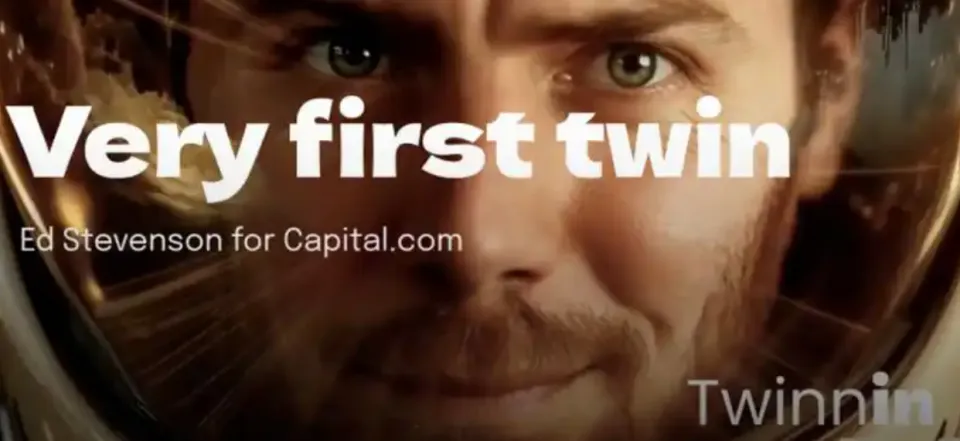
Abroad, roughly 2,000 users have uploaded their digital likenesses to licensing platforms like Twinnin. Domestically, platforms such as Xinzua and ActID have launched in rapid succession, while part-time online chat groups are flooded with recruitment ads seeking fresh faces.


Using legally authorized human likenesses to generate AI short dramas and video clips solved the authenticity problem while keeping productions compliant. Consequently, everyday people began selling their faces.

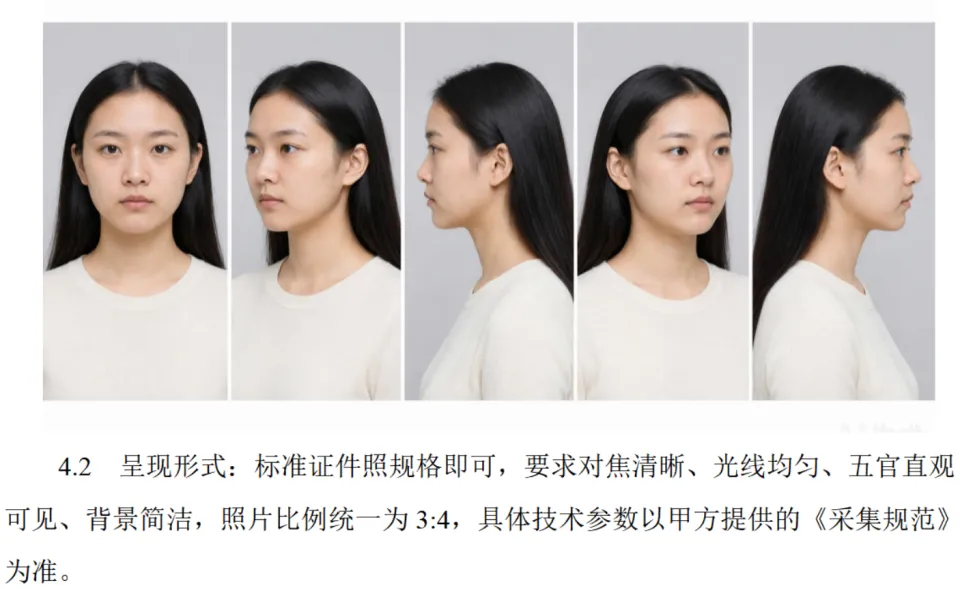
Liyi, a 29-year-old full-time mother living in a township in Hebei province, stumbled upon a recruitment ad in a part-time job WeChat group. The middleman posted that an e-commerce platform needed digital human faces, targeting women under the age of 30 with a one-year authorization term. The process was straightforward: submit personal details, record a few photographs and short video clips using a high-pixel smartphone, read a designated voice script, and sign a licensing contract to receive 300 yuan.
The only strict requirements were being under 30 and owning a smartphone priced above 2,000 yuan to ensure high-resolution capture.
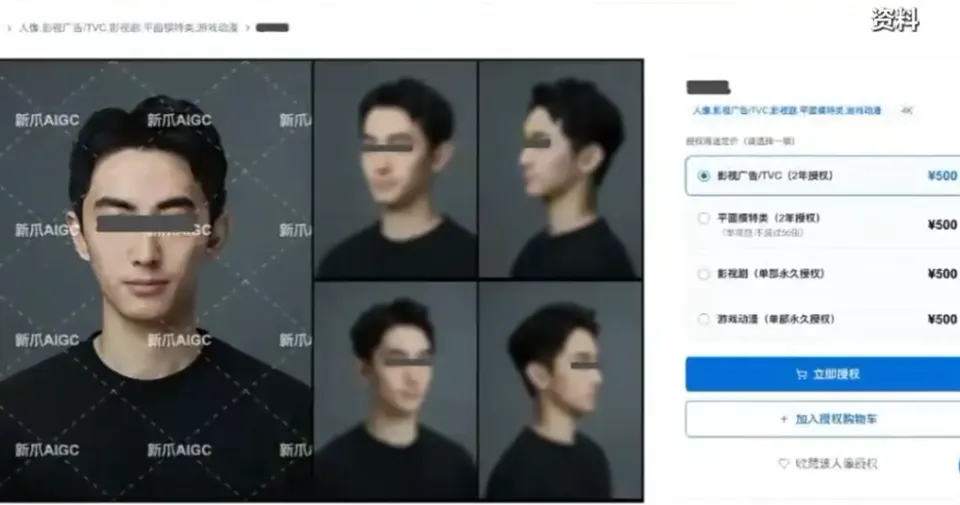
Liyi relies on side gigs and reselling cosmetics samples to supplement her household income. But as online review-boosting gigs dried up because brands increasingly turned to AI livestreamers, she decided the 30-minute photoshoot for 300 yuan was a fair bargain.

When asked about data leaks or unauthorized exploitation, Liyi admitted she neither knew nor cared. From her perspective, her photos were already shared with merchants for review tasks, meaning controlling her digital footprint was a losing battle anyway.
Song Si, a 26-year-old short-drama actress, had a different experience. Plagued by the industry downturn as AI-generated video squeezed out human performers, she watched her peers transition into managing digital human avatars. The earliest batch of face-renting middlemen were, in fact, former casting directors.
A director she previously worked with approached Song, asking if she would license her likeness to an AI project for an annual fee of 1,000 yuan, promising a commission every time a corporate client utilized her avatar. Song declined at the time, arguing that early AI video outputs looked stiff and distinctly artificial.
Instead, she signed with an MCN (Multi-Channel Network) agency to work as a live-stream shopping host.

Yet by this year, Song’s own MCN agency also pivoted into AI likeness licensing. Staff members persuaded her that signing over her digital avatar was equivalent to having an extra worker generating income around the clock—appearing in short dramas where every episode counts as a billable call, or starring in branded commercial videos.
Regarding safety risks, agency representatives offered reassurance: “Once signed, we provide institutional backing. If your face is stolen or misused, we can catch it early and defend your rights.”

Song grew tempted, though persistent industry horror stories weighed on her. She heard of people whose casual photo sets ended up inside short dramas, or whose single commercial appearance was repurposed across countless offline advertising campaigns without consent, leaving victims with prohibitively high legal costs.
Pursuing legal recourse requires proving that the face in a video is undeniably recognizable, tracking down who posted the content, and tracing the source of the raw material. Yet crucial call logs and procurement contracts remain locked inside platforms and agencies, keeping ordinary people locked out of vital evidence.

The final push for Song came from news headlines reporting that veteran actor Deric Wan, aged 62, authorized an AI digital resurrection to recreate his 20-year-old appearance, following similar moves by veteran performing artists like You Benchang, Joey Wong, and Stephy Qi.

“I realized this is an unstoppable trend, and individuals cannot fight it, so I might as well join,” Song said. “If my face happens to be liked by audiences, it could be an opportunity. The first rule of gaining exposure is being seen.”
The collection process was simple: a physical studio setup where she signed contracts, posed for photographs, and recorded audio samples to complete a one-year digital likeness authorization.

Xiaokai, a former short-drama actor who transitioned into becoming a digital human agent, noted: “Many people find my job title awkward at first, but don’t worry, all of you will be looking for us soon.” Having signed away his own likeness rights, Xiaokai is watching the market swell rapidly. Chengdu-based Xinzua closed nearly 70 transactions worth 40,000 yuan in its first two months, Shenzhen-based ActID recruited roughly 300 users since March, and streaming giant iQIYI launched an AI talent repository in April featuring over 100 initial actors.

Human likenesses primarily flow into two domains: AI short dramas and promotional e-commerce videos. In late July, ReelShort operator Hongguo Short Drama issued creator guidelines establishing strict standards for AI-generated visual continuity, facial expressions, and character distinctiveness to prevent audience fatigue.
Staff at AI animation firms explained that building custom digital faces from scratch via algorithms is prohibitively expensive, requiring dozens of reference images, modeling, and continuous adjustments costing hundreds to thousands of yuan per character.
“Purchasing direct human likeness rights allows AI models to run quick fine-tuning without infringement concerns,” an industry insider noted.

For the e-commerce sector, brands desperately need human-like AI avatars because videos featuring human faces drive significantly higher traffic and conversion rates. However, traditional human production costs remain an enduring bottleneck, with top influencers charging tens of thousands of yuan per promotional clip with uncertain returns.
Using AI generation tools bypasses these hurdles. By uploading front and profile photos of a real person alongside product assets and text prompts, creators can generate a polished video in ten minutes for under 10 yuan.

Compliance represents another core driver. Utilizing unauthorized internet imagery risks immediate platform takedowns and severe public backlash, turning licensed human likenesses into an essential prerequisite for brand collaborations.
For MCN agencies, purchasing amateur likenesses for 200 to 1,000 yuan provides reusable assets that remain active for an entire year at nearly zero marginal cost. Models resembling minor celebrities command higher fees, operating on industry grey-market tactics where lookalikes are styled through makeup and post-production to hint at famous stars without triggering trademark violations.
Even digital agents like Xiaokai cannot guarantee absolute long-term safety. While transactions are conducted transparently between consenting parties, downstream corporate buyers frequently deploy acquired assets to train underlying AI models without regulatory oversight.
This structural vulnerability stems from a fundamental technical reality: once an AI model “sees” a face, it cannot unlearn it.
Engineering solutions for machine unlearning remain elusive. Deleting raw source photographs, closing down collection portals, or inserting expiration clauses in contracts merely halts future data collection; facial features already absorbed into neural network parameters persist indefinitely.
Furthermore, while domestic regulations require digital human services to display visible disclosures, overseas jurisdictions lack parallel enforcement mechanisms. Once a digital face enters international short video pools or cross-border e-commerce feeds, tracking where the asset ends up becomes practically impossible.

Even with signed authorizations, verifying whether agreements explicitly cover model training, face-swapping generation, and cross-border ad placement requires rigorous legal scrutiny. If boundaries are breached, overseas platform bans fall on operators while everyday individuals remain entirely unaware of how their digital identities are being commercialized.

Legal frameworks are evolving—judicial practices are beginning to explore evidence-obstruction rules, and China’s Supreme People’s Court has incorporated facial recognizability as a factor in lowering evidentiary burdens for plaintiffs. Yet for individuals like Liyi, the financial and logistical costs of pursuing litigation far outweigh the initial 300-yuan payout.
Ultimately, trading away an AI likeness means stepping into a digital transaction where short-term financial compensation buys entry into an untraceable circulation network, leaving individuals with no control over where their digital faces travel once they leave the camera lens.