
Are the major powers sleepwalking into a global conflict. The warning from the Financial Times
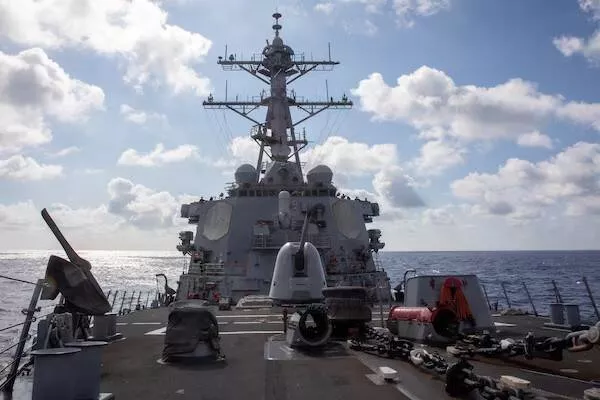
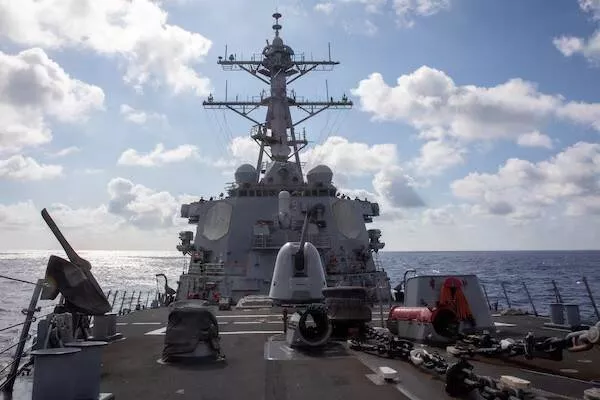
A U.S. Navy Arleigh Burke-class destroyer sails through the Taiwan Strait. The credibility of Washington’s security commitments to Taiwan has become a central focus in discussions surrounding the growing risks of global conflict escalation, as analyzed by Gideon Rachman, chief foreign affairs commentator for the Financial Times. (Photo: U.S. Navy)
As geopolitical disputes intensify across multiple global hotspots, growing anxiety has turned once again toward the terrifying prospect of a third world war. In a recent analysis for the Financial Times, Gideon Rachman warned that amidst deepening great-power rivalry and growing ambiguity surrounding Washington’s security guarantees to its allies and Taiwan, a cascading series of strategic miscalculations could easily spiral out of control.
Using the metaphor of “sleepwalking,” Rachman suggested that the international order is slowly and steadily drifting toward broader confrontation while nations remain dangerously unaware of the precipice ahead. He noted that while historical world wars required direct military clashes between major powers spanning multiple continents—a severe threshold that has not yet been reached—current regional conflicts carry a high risk of accidental escalation and dangerous spillover effects.
According to data from the International Crisis Group, the number of active armed conflicts worldwide has reached 65, an unprecedented high since the end of World War II. Rachman attributed this worrying surge to the relative decline of Western power, which has emboldened revisionist states seeking to upend the existing international architecture by granting them greater room for trial and error. The Group of Seven (G7) industrialized nations saw their share of global economic output shrink dramatically from nearly two-thirds in 1989 to just 43% by 2022.
The commentator pointed out that strategic coordination and ties between Moscow, Beijing, Tehran, and Pyongyang are steadily deepening. Throughout 2024, Russia and North Korea forged a mutual defense pact, while Beijing’s continued economic and technological support has helped cushion Moscow against Western sanctions, enabling its ongoing military campaign in Ukraine. Furthermore, Russia’s multifaceted pressure campaigns against European nations backing Ukraine have further amplified the risk of accidental escalation.
Drawing on historical lessons, Rachman emphasized that misjudging whether a rival will honor its defense obligations often yields catastrophic outcomes. On the eve of World War I, German leaders profoundly miscalculated Britain’s stance on Belgian neutrality; before World War II, Adolf Hitler similarly misjudged the resolve of London and Paris. He linked these historical warnings directly to the current credibility dilemmas plaguing modern superpowers.
Washington’s reliability remains the linchpin of stability across the Taiwan Strait.
This deep-seated anxiety is acutely reflected in cross-strait dynamics. Rachman analyzed that the central strategic puzzle facing Beijing is the true binding strength of Washington’s commitments under the Taiwan Relations Act, particularly its pledge to oppose any unilateral changes to the status quo by either side. Concurrently, Russian leadership is closely testing whether NATO’s Article 5 collective defense guarantee holds any real weight.
Anchored by the stark strategic reality that Taiwan produces roughly 90% of the world’s most advanced semiconductors, Washington would find a collapse of the island nearly impossible to tolerate. Yet, shifts in U.S. political rhetoric regarding overseas defense commitments—exemplified by Donald Trump’s skeptical stance toward traditional alliances—have made future American intervention far less predictable during a genuine crisis. This breeds the ultimate danger: when strategic players harbor deep doubts over whether adversaries will actually honor defense obligations, misjudgment becomes a primary catalyst for runaway conflict escalation.