

Pentagon audit forces US universities to cut over 80 China-linked research ties
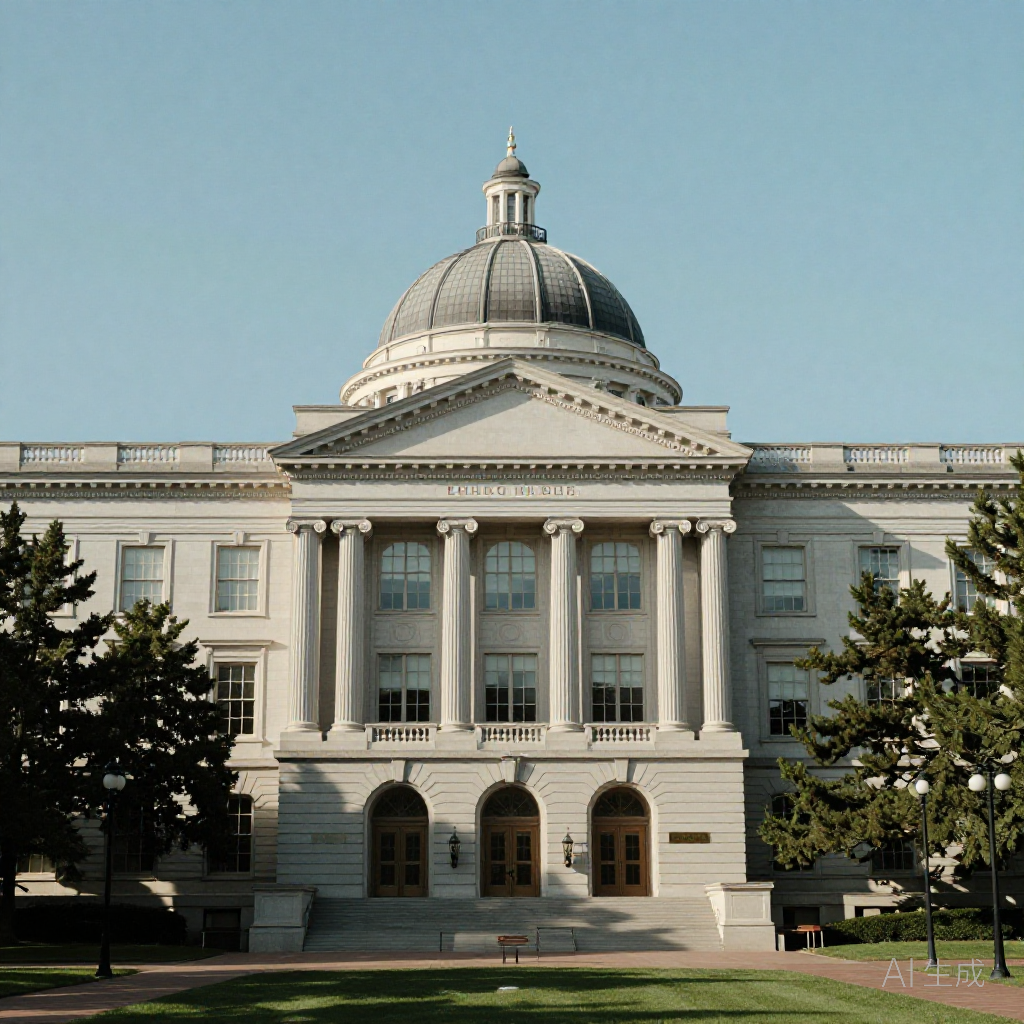
The Pentagon announced on October 19 the conclusion of its preliminary research security reviews across 30 major universities, resulting in the termination of more than 80 academic agreements tied to entities on the Section 1286 watchlist. https://t.co/yC0vSH2yjg
— Voice of America Chinese (@VOAChinese) October 20, 2026
The U.S. Department of Defense announced on October 19 that it has concluded preliminary research security reviews across 30 major universities. Under pressure from the federal government, these institutions have overhauled their academic partnerships and terminated more than 80 research agreements linked to entities on a restricted watchlist.
According to the Pentagon, the terminated agreements fall into two categories: those directly involving institutions explicitly named on the blacklist, and preemptive cuts targeting collaborative partners perceived as carrying potential risks, even if not yet formally listed. While the Department of Defense did not explicitly single out China in its announcement, the vast majority of entities on the restricted list are based in the country.
The watchlist originates from Section 1286 of the National Defense Authorization Act (NDAA), a legislative tool designed to identify overseas academic research institutions, corporations, scientists, and talent recruitment programs that Washington deems national security risks. The latest version of the list, released by the Pentagon in July, encompasses 130 foreign scientific and academic entities, with more than two-thirds located in China, alongside others in Russia and Iran.
The Chinese organizations named on the list span military academies, defense technology research bases, and civilian universities and research institutes. They include the Chinese Academy of Sciences (CAS), Fudan University, Shanghai Jiao Tong University, Shandong University, Beijing Institute of Technology, Beijing University of Posts and Telecommunications, and Tsinghua University’s Center for Strategy and Security, among others.
Beginning in fiscal year 2026, the Pentagon has barred the injection of foundational research funds into any projects involving entities on the list. American university research units that receive Department of Defense funding are likewise prohibited from conducting collaborative research with listed institutions or utilizing their research facilities.
Back in August, the Pentagon notified 30 U.S. universities to launch comprehensive internal audits, requiring them to verify their academic, financial, and scientific ties with overseas institutions and submit compliance remediation plans.
In its statement, the Department of Defense singled out seven universities for praise regarding their swift action: Oklahoma State University, Pennsylvania State University, the University of North Carolina at Chapel Hill, the University of South Carolina, the University of Southern California, the University of Texas at Austin, and Virginia Tech.
Joseph Jewell, the Pentagon’s assistant secretary of defense for science and technology, commended these seven schools in the statement for investing extraordinary effort into research security, establishing a security benchmark for the American scientific ecosystem.
Jewell added that the universities’ actions went well beyond baseline compliance, praising their proactive measures to prevent laboratories, research teams, and intellectual property from being exploited by foreign powers. Such proactive governance ensures that cutting-edge American research better serves defense requirements and strengthens national technological competitiveness.
These sweeping measures reflect sustained and intense congressional focus on the issue.
Representative John Moolenaar, a Michigan Republican and vocal proponent of restricting Sino-U.S. scientific exchanges who chairs the House Select Committee on the Chinese Communist Party, voiced strong support for the security assessments. He asserted that U.S. taxpayer dollars must never be channeled into supporting China’s military expansion, adding that universities bear a fundamental responsibility to protect government-funded research. Moolenaar also lauded the administration and the Pentagon for their actions, crediting their collaboration with universities for successfully halting dozens of high-risk partnerships with Chinese institutions.
Last September, the committee released an investigative report titled Fox in the Henhouse. The document revealed that over the preceding 24 months, hundreds of Pentagon-funded research collaborations involved Chinese universities and related defense industrial institutions. The report alleged that these arrangements resulted in billions of U.S. dollars ultimately supporting research that advanced China’s military development.
Following the Pentagon’s July update to the watchlist, China’s Ministry of Commerce responded that Washington has excessively broadened its definition of national security, deliberately framing academic exchanges within the context of political rivalry and wielding them as tools of suppression to obstruct normal bilateral scientific cooperation. A ministry spokesperson signaled that Beijing would inevitably take countermeasures.
Earlier this month, Moolenaar sent a letter to Secretary of Defense Pete Hegseth, urging the Pentagon to further expand the watchlist.
The letter proposed adding 14 institutes directly affiliated with the Chinese Academy of Sciences—which the lawmaker categorized as core defense partners of the Chinese Communist Party—alongside 62 research and defense laboratories, 58 universities, 22 overseas talent recruitment programs, and the China Scholarship Council (CSC) alongside its sponsored researchers.
The Pentagon stated it will continue working closely with congressional stakeholders, including the Senate and House Armed Services Committees, Appropriations Committees, and the House Select Committee on the Chinese Communist Party.
The Department of Defense further announced that it will dynamically adjust the watchlist as circumstances require and will maintain continuous scrutiny of American universities that retain problematic relationships with listed entities.
Emil Michael, the Pentagon’s under secretary of defense for research and engineering, issued a stern warning, emphasizing that regulatory oversight will not let up. Universities that fail to meet stringent research security standards face the explicit prospect of losing their eligibility for federal grants if their external partnerships threaten the safety of U.S. military personnel or the nation’s technological standing.