
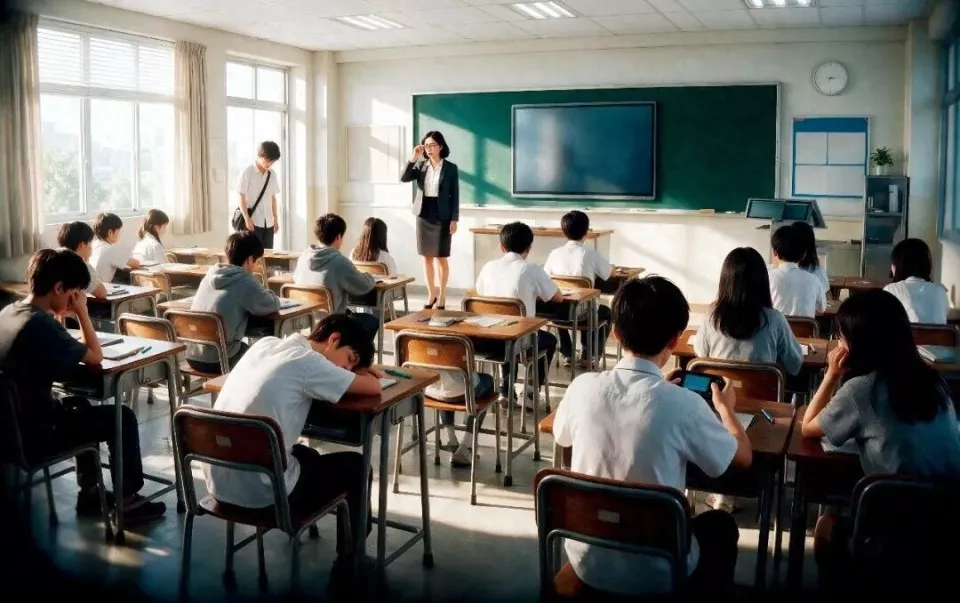
A 4-year-old was kicked by his kindergarten teacher. The police told his mother it was an internal school matter
“Children at this age often exaggerate things, so I was a bit doubtful,“ Liu recalled. When picking him up later, she asked other children what they thought of the new teacher, but their reactions were conspicuously silent. Nearly two weeks later, Liu decided to report the matter to the kindergarten management. Accompanied by the headmaster, she watched the security footage and confirmed an unsettling reality: her son’s account was entirely accurate.
Liu and her husband immediately reported the incident to the public security bureau, which promptly registered a case of “assault against the child.” Yet a month later, Liu received a notice of case termination. The handling police officer explained: “Given that the incident occurred inside a kindergarten during class hours, it should be handled in accordance with the Teachers Law rather than the Public Security Administration Punishments Law.”
Similar news stories involving student injuries caused by improper teacher discipline have frequently made headlines in recent years. Research by *China News Weekly* shows that many such cases encounter the same bottleneck during accountability proceedings—police agencies suspend investigations on the grounds that the incidents are “internal educational system affairs,” which in turn triggers numerous administrative reconsiderations and lawsuits.
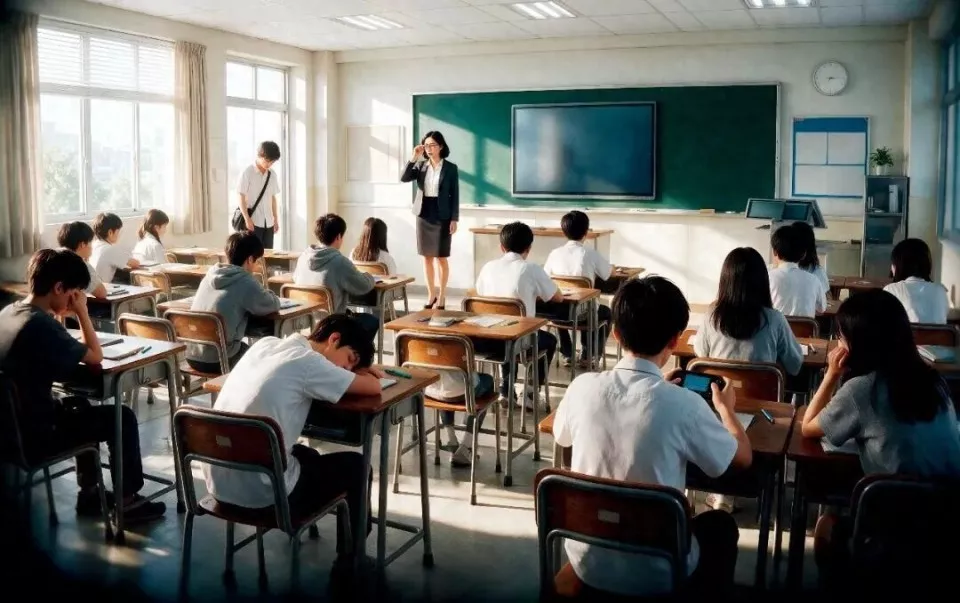
Educational institutions are expected to formulate and improve school rules and regulations based on students’ actual conditions, standardize daily codes of conduct, and establish sound implementation standards and procedures for educational discipline.
Several educators interviewed by *China News Weekly* revealed that following the implementation of the *Rules on Educational Discipline in Primary and Secondary Schools (Trial)* (hereinafter referred to as the *Rules*) issued by China’s Ministry of Education on March 1, 2021, teachers have had more specific operational grounds when administering discipline.
However, the current reality remains less than ideal: some teachers cross the line in handling students, while others refrain from managing them out of fear. Ma Yanxin, a tenured associate professor at the Law School of South China Normal University and secretary-general of the Ministry of Education-co-built Education Legislative Research Base, emphasized in an interview with *China News Weekly* that the key to handling such incidents lies in determining whether the act constitutes a professional educational duty, whether it follows statutory forms and procedures, and whether it remains within reasonable bounds. Once a teacher’s disciplinary measures exceed normal boundaries and violate the law or even criminal code, they should not be excluded from the Public Security Administration Punishments Law or the Criminal Law. “However, the function of the law is merely to set red lines and prevent the worst behaviors, while the higher pursuits of education require forces beyond the law to achieve.”
What is educational discipline?
Liu Hong watched the entire process through the surveillance footage: the children were sitting on the ground in a semi-circle, while her son and another child stood up. Suddenly, a teacher sitting in the middle of the semi-circle stood up swiftly, strode toward the boy, and kicked him in the leg—just above the foot and below the knee. The child, struck by tremendous impact, instantly collapsed to his knees.
The teacher subsequently apologized to the child and his parents for her actions and admitted to what was captured on camera. The kindergarten promptly dismissed her. “She explained that she kicked him because he refused to sing,” Liu recalled. She not only filed a complaint with the police but also petitioned the education authorities to revoke the teacher’s kindergarten teaching certificate.
The education bureau replied that the revocation of a teaching qualification required waiting for the police investigation conclusion. What she ultimately received, however, was the case termination notice. “We are currently preparing to file for administrative reconsideration,” Liu said.
Discipline has long been a concomitant phenomenon in teaching practice. According to the definition under the *Rules*, “educational discipline refers to educational activities in which schools and teachers, with education as their fundamental purpose, manage and guide students’ violations of rules and disciplines, or correct them through standardized methods to promote self-reflection and reform.” Article 12 of the *Rules* explicitly prohibits two major categories of harmful behavior: first, direct corporal punishment that causes immediate pain through beating or stabbing; second, indirect psychological and physical harm such as excessive standing, mechanical repeated copying, forcing abnormal postures, and deliberate isolation.
Ma Yanxin explained that during the drafting process of the *Rules*, debates over terminology were intense—specifically whether to use “punishment” or “discipline.” “The ultimate consensus was that this is not punishment. Educational discipline is essentially an educational means; it takes discipline as its external form, but nurtures students as its true purpose, rather than punishing the students themselves.”
In recent years, however, cases of student injuries caused by improper teacher discipline have continued to emerge, sparking widespread social discussion. For instance, in Guangdong in 2023, a sixth-grade primary school student surnamed Liang suffered severe hearing impairment in his left ear—requiring a hearing aid to hear—after a physical education teacher slapped him for fidgeting in line. After the parents reported the case to the police, authorities suspended the investigation on the grounds that the case fell under the management of the *Teachers Law*. The dissatisfied parents then filed a lawsuit in court.
Also in 2023, a physical education teacher in Chongqing surnamed Xiao slapped a fifth-grade student surnamed Lin, suspecting him of verbally abusing others via mobile phone voice messages. A medical appraisal concluded mild facial trauma. After the parents called the police, forensic appraisal determined it to be a minor injury; the police concluded that the teacher’s slap constituted corporal punishment within teaching, decided against administrative punishment under the Public Security Administration Punishments Law, and transferred the case to the education department.
When Lin’s parents filed an administrative lawsuit, the first-instance court’s ruling contradicted the police conclusion. The court stated: “The original intention of educational discipline is to help students grow better, not to harm them.” Although the involved teacher enjoyed the right and obligation to criticize and guide students within the scope of teaching duties and could administer moderate educational discipline in emergencies, the teacher neither conducted any form of criticism nor operated according to the norms of the *Rules*, but instead directly slapped Lin, causing bodily harm.
The police appealed. The second-instance court similarly held that while the teacher’s behavior contained certain characteristics of educational discipline, it had breached the boundaries stipulated by the *Rules*.
AI illustration for this article by adan
How to define responsibility?
Why do public security organs handle identical improper disciplinary behaviors differently?
In the aforementioned case of student Liang in Guangdong, the public security organ’s rationale was that Article 37 of the *Teachers Law* specifically stipulates that the consequences for a teacher’s corporal punishment of students are limited to administrative sanctions and criminal penalties, with no mention of public security penalties. Based on this, the case fell outside the scope of the Public Security Administration Punishments Law.
Ren Haitao, a professor at the Law School of East China Normal University and executive director of the Education Policy and Law Research Branch of the Chinese Educational Society, participated in the early-stage legislative research for the *Rules*. “From beginning to end, the *Rules* have never considered corporal punishment as part of legitimate educational discipline, nor have they ever denied the binding force of the Public Security Administration Punishments Law over clearly illegal or even criminal non-disciplinary acts,” Ren clarified to *China News Weekly*.
In fact, Article 15, Paragraph 2 of the *Rules* clearly states: if a teacher violates provisions prohibiting corporal punishment and the circumstances are minor, the school should issue a warning and education; if the circumstances are severe, their authority should be suspended or disciplinary sanctions imposed; if serious harm is caused to a student’s physical and mental health and laws are violated, public security organs must intervene in accordance with the law.
Having handled numerous nationwide educational disciplinary disputes, Ren encountered a case where a dormitory supervisor—a retired veteran—kicked a student who violated dormitory rules and disrespected staff, resulting in a ruptured spleen. “The force used by the teacher, whether the original intent was to cause harm, and the spectrum of consequences ranging from mild pain to a ruptured spleen are all critical. In this case, the teacher’s action was suspected of being illegal or even criminal, which is why the police had to step in.”
However, he also pointed out that in actual practice, handling guidelines for these incidents vary by situation, and a one-size-fits-all standard is unworkable. Comprehensive evaluations of specific cases are required, taking into account the circumstances at the time, whether the teacher’s intent was management or intentional harm, the degree of force, the actual injury sustained by the student, and the student’s age.
“If it exceeds the reasonable scope of educational discipline or even crosses the boundaries of a teacher’s authority, there is no legally permissible excuse, and the teacher must bear corresponding legal liability just like anyone else harming another person,” Ma Yanxin added.
In the administrative lawsuit of the Lin case, the court provided an in-depth analysis of this issue. “Excessive educational disciplinary behavior should be subject to the constraints of the Public Security Administration Punishments Law, which aligns better with public perceptions of fairness and justice. If educational discipline that has not constituted a crime but is blatantly improper is only subjected to internal administrative sanctions without a negative judgment from a public security management perspective, it effectively allows unlawful discipline falling between legality and crime to escape legal constraints, inevitably leaving victimized students and their parents feeling that their rights are unprotected.”
The second-instance judgment also emphasized that “internal responsibility cannot replace external accountability,” meaning that the education department’s internal investigation into a teacher and the public security department’s public security penalties run along two independent tracks without overlapping accountability.
How to achieve effective management?
According to Ma Yanxin, during the drafting of the *Rules*, legal professionals were invited to conduct arguments, and voices from frontline teachers, students, and parents were widely solicited. Based on explicitly banning corporal punishment, determining what disciplinary methods teachers could adopt was a hot topic of discussion at the time. “The biggest disagreement initially was whether disciplinary actions could impose certain physical burdens on students, such as running penalties, standing punishment, or copying assignments. The final consensus was that running penalties are unacceptable, but standing in the classroom for no more than one class period is permissible, and teaching tasks or class service duties can be increased, provided the student’s endurance is taken into account.”
Kong Xiaozhen, a primary school teacher in Guangdong, told *China News Weekly* that the *Rules* gave her peace of mind: “This document clearly lets me know what actions should and should not be taken. For example, when students frequently talk in class, I know the extent to which discipline can go, such as public criticism by name or making them stand for an entire class.”
“Starting about five or six years ago, an increasing number of teachers began consciously avoiding physical intervention with students,” said Tang Yufeng, a junior high school teacher with nearly 30 years of teaching experience in Hebei. This timeframe roughly aligns with the release and implementation of the *Rules*. Tang recalled that during the period when the *Rules* took effect, the school repeatedly summoned all teachers for concentrated study. “Now, during meetings on teacher ethics and conduct, every teacher must sign a commitment letter explicitly stating they cannot hit students.”
Nevertheless, divergences remain in operational practice. Some teachers feel that current disciplinary tools are insufficient to effectively constrain students. Su Jing, a vice principal in charge of moral education at a complete high school in Guangdong, noted: “For minor violations like tardiness or failing to submit homework, some students are indifferent to criticism, self-criticism letters, standing, or calling parents, making it hard to achieve much effect. A minority of teachers resort to harsher measures outside the rules; while the school steps in to correct them, it faces dilemmas.”
The *Rules* leave flexible room for disciplinary measures: schools can draft and revise school rules based on the actual characteristics of their student bodies, detailing standards and scenarios for educational discipline; teachers can invite students and parents to jointly formulate class rules and covenants through democratic consultation, which can then be implemented after filing with the school. “Because disciplinary methods vary endlessly in practice and feature many innovative approaches, adjustment space was reserved in the document at the time,” Ma Yanxin explained.
Su Jing once led the deepening adjustment of on-campus disciplinary measures. Through discussions involving student, parent, and faculty representatives, followed by approval from the principal’s executive board, the measures were finally submitted to the competent education authority for filing. “We detailed various disciplinary infractions, such as violations of school dress codes, mobile phone management rules, and boarding student regulations, and formulated corresponding disposal measures, such as circulated criticisms, suspension of boarding qualifications, and cancellation of boarding opportunities.”
Specific disciplinary measures formulated through standardized procedures ultimately formed binding written school rules. “Smoking in dormitories is a severe safety and disciplinary issue; our rule is that once discovered, boarding qualifications are immediately revoked. When we actually enforced this against a violating student, the parents were extremely dissatisfied and even complained to the education department. However, because we had clear regulations and completed the publicity of school rules, the education department ultimately approved the school’s disposition.” Su Jing recounted.
Some cities and regions are also drafting local versions of detailed educational discipline rules based on local conditions. For instance, the Beijing Municipal Education Commission issued the *Trial Implementation Detailed Rules for Educational Discipline in Primary and Secondary Schools in Beijing* in August, prescribing corresponding forms of discipline for different age groups and addressing disciplinary infractions such as “using the internet to curse, slander, or launch personal attacks against teachers or classmates” and “bullying classmates.”
At a Ministry of Education press conference on September 4, Wang Lei, head of the Department of Teacher Education, pointed out that clear “rulers” must be placed in teachers’ hands by accelerating the improvement of regulations and formulating detailed operational rules, ensuring that discipline has legal bases, boundary controls, and reference cases so that every teacher clearly understands what to manage, how to manage, and the scale of management.
However, a more practical trouble is that some teachers still choose to “refrain from acting” even when detailed rules are in place.
At the school where Su Jing works, students are barred from bringing mobile phones. On one occasion, a student was caught playing with a mobile phone during class. According to school rules, a circulated criticism should have been issued. However, the parents argued that “my child is psychologically fragile and cannot withstand public criticism.”
More fundamentally, wide divergences persist regarding the scope of application for discipline across different regions, schools, and teachers. Ma Yanxin noted that several concentrated controversial areas exist in reality, such as whether student romantic relationships, dyed hair, or bringing mobile phones should fall under the purview of discipline. “Many grassroots teachers have reflected the distress these issues cause them, so such contents may receive further clarification in future policy documents or local rules.”
He simultaneously emphasized, however, that the limits of the *Rules* and the law are merely “baseline protections.” “For instance, urban schools and schools in remote mountainous areas dominated by left-behind children may face entirely different educational discipline challenges. The law can only prevent the worst outcomes, but education itself is extremely complex and relies on the dedication and creativity of educational workers.”