
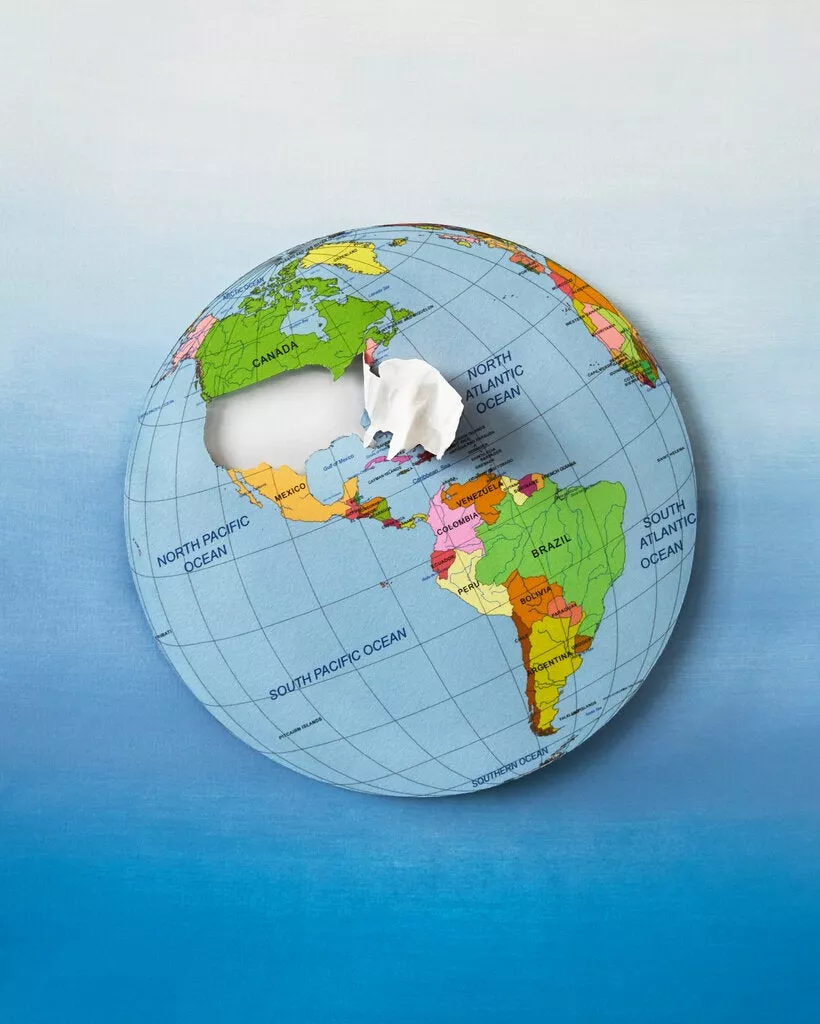
As America retreats, three scenarios define a world reshaped by China’s rise
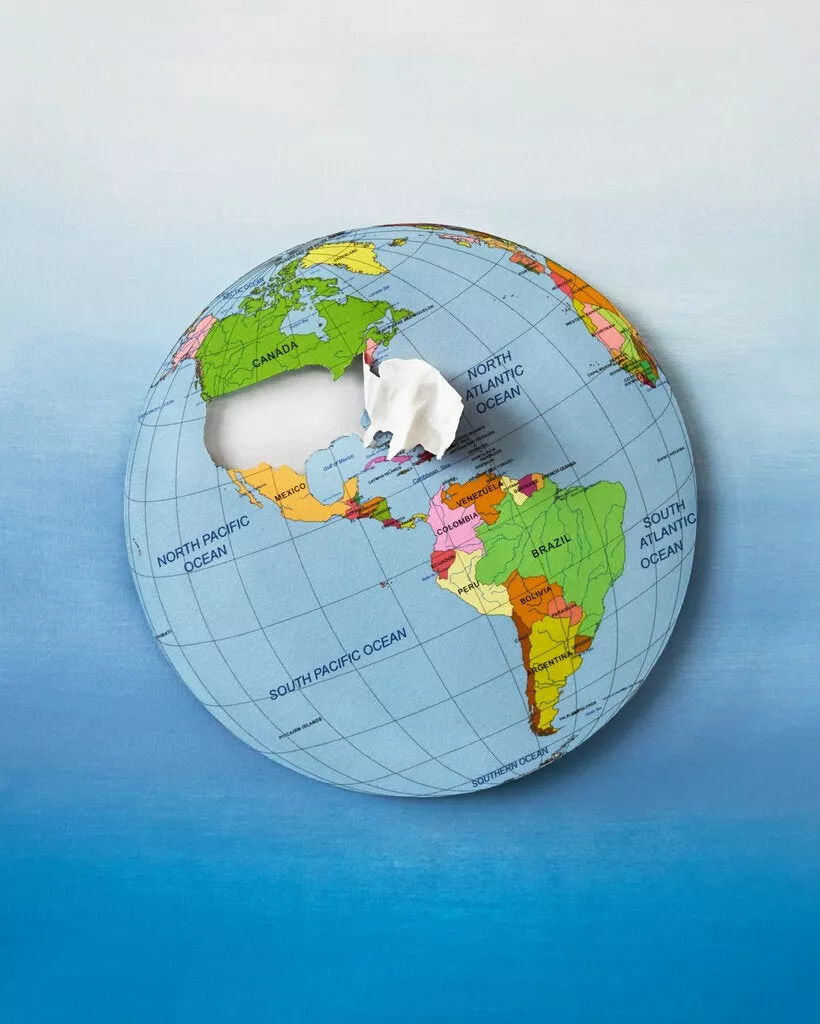
This final installment of the “Disordered New World” series explores how the post-World War II international system is unraveling as Washington steadily retreats from the global stage, forcing nations worldwide into strategic realignments.
Today’s reality is stark: the United States and everything it once represented are undergoing a profound transformation, epitomized by a political leadership that actively expands executive power beyond constitutional bounds. This administration has forged a movement fueled by personal loyalty, grievances, and retribution, while systematically dismantling the pillars of the post-war global order—disdaining traditional allies while courting authoritarian regimes.
This dynamic raises a critical question about America’s future on the international stage. Will it degrade into a nuclear-armed power driven by populism, malice, and caprice—increasingly authoritarian and erratic? Or will the American public, once the current era concludes, reclaim their nation as a champion of global democratic ideals and human rights?
Even future leaders inheriting the MAGA philosophy are unlikely to entirely replicate the current administration’s raw authoritarianism and volatility. Yet, the world has already undergone changes far beyond the scope of any single individual. That reality makes it futile to imagine a simple restoration of the post-war, rules-based international order once built by the U.S. and its democratic partners.

Nearly four decades after the fall of the Berlin Wall—the ultimate symbol of the Cold War—a radically new geopolitical landscape has emerged. An ascendant Eastern giant has risen as an economic and military rival to the U.S., posing a challenge that dwarfs the former Soviet Union. Meanwhile, Moscow has transformed into a revanchist authoritarian state waging war on the European continent. Democratic institutions are in global retreat, ironically led by the very nation that long championed them. Frontier technologies like artificial intelligence increasingly perform complex tasks once reserved for the human brain, while economic globalization—once promised to deliver borderless prosperity—has exposed its dark side: soaring migration, deepening wealth inequality, rampant cybercrime, and entrenched social polarization.
History cannot be reversed, nor can we return to the tidy bipolarity of the last century. The dream of making nations “great again” cannot alter concrete realities. The world’s momentum remains relentless.
How the future unfolds remains anyone’s guess. Yet prudence demands that we game out multiple potential outcomes to better navigate impending challenges. For the American public, such foresight is especially vital. As one strategic thinker noted, any international effort to counter the collapse of global order must be anchored in the recovery of American democracy. A recent call by Canadian leaders at an international forum reflects a growing consensus: middle-power nations must band together to forge a “third way” independent of great-power confrontation. Yet a revitalized America—with its economic muscle, military mobilization capacity, and institutional traditions—remains an indispensable force for reversing authoritarian expansion and preserving a free order.
The following analysis outlines several possible trajectories for the coming decade. These projections draw from deep discussions with international relations scholars, historians, and thinkers concerned with the global horizon. Far from claiming scientific precision, this outlook aims to bring current historical choices into sharp relief. As a legendary American baseball figure once quipped, “If you don’t know where you are going, you’ll end up someplace else.”
Scenario One: The Democratic Revival
This is the most hopeful outcome. A U.S. president committed to the rule of law, clean governance, and global human rights ascends to the White House, sparking a national self-repair process that restores America’s luster as a “city upon a hill.”
European nations shed their overreliance on American security guarantees, bolstering their own defense while gradually rebuilding trust in Washington. Moscow’s dictator is overthrown, the conflict with Kyiv is frozen, and Ukraine pivots to post-war reconstruction and the recovery of its territories. Although the Eastern superpower’s total economic output surpasses that of the U.S., a military gap persists, prompting the two nuclear-armed rivals to establish terms of peaceful coexistence.
Reformed United Nations agencies regain institutional authority, no longer undermined by Washington, and mobilize international coalitions to tackle climate change, pandemics, and the governance of frontier technologies. The post-war consensus among developed nations—that aiding the developing world fosters stability and mitigates poverty—is renewed, and Washington abandons its transactional approach to foreign aid.
Before leaving office, the current president brokers an end to a Middle Eastern conflict, claiming victory despite unresolved religious tensions and active nuclear programs in the region. That tentative calm allows a new Washington administration to launch fresh peace talks, coinciding with shifting political dynamics within Israel.
With domestic order restored and democratic allies aligned, the U.S. leads the international community toward a decentralized model of global governance. Yesterday’s assumptions—unfettered globalization, the unalloyed benefits of free trade, technological inevitability, and democratic supremacy—give way to a multipolar world. In this new ecosystem, competing power centers vie for influence while remaining far more deeply interconnected and interdependent than they were a century ago. International affairs are managed through fresh institutional architectures designed to preserve peace while honoring ideological and cultural pluralism.
America’s internal renewal is pivotal to this outcome. Despite past erosions of its ideals, the U.S. remains uniquely positioned due to its economic heft, defense capabilities, enduring institutional values, and resilience against its own flaws. The American founding ideal of equality took 87 years and a civil war to extend to Black Americans, and over a century more to institutionalize. Women’s suffrage is barely two centuries old, and the fight for genuine equality continues. Yet, as history shows, America has repeatedly engineered its own “new birth of freedom” and retains the capacity to do so again.
Scenario Two: Stagnation and Muddling Through
In this future, the world largely continues along its current trajectory. While Washington’s new leadership dismantles trade barriers, repairs alliances, and avoids major international conflicts, internal American divisions persist. Bipartisan gridlock and executive branch instability hobble governance.
The U.S. retains enough economic and military muscle to command deterrence and respect, but after weathering two wildly divergent administrations, much of the global community—including Europe and North America’s neighbors—no longer views Washington as a democratic model or moral beacon. U.S.-led alliances and economic frameworks atrophy. Global politics grows more fluid as countries hedge their bets economically, with a growing number of nations recalibrating their ties to court Beijing’s trade and security umbrellas.
As the Eastern superpower catches up with the U.S. economically and closes the military gap, its economic gravity pulls Europe and emerging markets closer. Beijing steadily ramps up pressure on contested island territories, stopping just short of direct military intervention that would trigger a U.S. response. Several major developing nations—such as South Asia’s rising giant, North America’s southern neighbor, and key Southeast Asian states—cross the threshold into developed status, though they lack a shared vision for global governance.
In the Middle East, the incumbent U.S. president manages to secure vital shipping lanes before departing office, though Iran’s clerical regime retains most of its enriched uranium. Israel’s leadership changes, but Gaza remains in ruins, and settlement expansion in the West Bank stokes enduring resentment. Moscow’s dictator is replaced by a military junta of security elites, while the conflict with Ukraine hardens into a protracted cold war. Europe increases defense spending but remains deeply fractured over its policies toward China, Russia, and global affairs.
Climate governance stutters along in the absence of ambitious commitments. The UN and its vital agencies are sidelined by domestic U.S. skepticism, leaving them hamstrung by budget and mandate constraints. Relative peace prevails, but beneath the surface, the rapid accumulation of Eastern power threatens to shatter the fragile status quo.
Scenario Three: Disorder and Descent
Paralyzed by extreme polarization and reciprocal blame, the U.S. implodes internally. NATO and other American-led international institutions disintegrate amid tariff wars and mutual acrimony. The architecture of global governance—anchored by the UN, the global trade regime, and international financial institutions—collapses as the Global North and South fracture into competing economic blocs designed purely for transactional security and trade convenience. Beijing moves to absorb territorial islands by force without facing armed international resistance, though its own economic slowdown deprives the world of a stable anchor. Unchecked artificial intelligence unleashes unprecedented crises: mass surveillance, runaway disinformation, the evaporation of millions of jobs, and escalating cyber warfare.
An America stripped of international trust and crippled by internal dysfunction plunges the world into deep fragmentation, leaving regions vulnerable to Beijing’s unilateral will. Grudges and historical grievances fuel local and international politics, plunging regions like the Caucasus, the Balkans, and the Horn of Africa into demagogue-driven conflicts.
p>
Unabated climate change wreaks global havoc—swallowing coastal cities and triggering extreme weather events across Africa and Asia that spark massive refugee crises and resource wars. The total collapse of international bodies pushes the world into anarchy, haunted by the dual specter of mass famines and regional conflagrations.
Russia, battered by infrastructure strikes, brandishes tactical nuclear threats. The U.S. and Iran remain locked in a multi-year standoff that renders the Persian Gulf perilous for shipping, sending oil prices soaring and plunging developing populations deeper into poverty amid soaring energy and food costs. Trust in Washington evaporates among Middle Eastern heavyweights like Saudi Arabia. Israel’s internal security deteriorates as terror attacks multiply, casting a dark cloud over the entire region.
While all-out war between the U.S., China, Russia, and Europe remains unlikely—given that such cataclysms usually stem from historical grudges or man-made miscalculations—the danger of runaway regional conflicts remains a constant threat. Authoritarian rulers eagerly exploit foreign flashpoints to tighten domestic control.
The world slips into darkness, and the America that once promised a guiding light is consigned to history.
Of course, the history yet to be written holds far more possibilities than these three paths. As the American sports philosopher famously (and perhaps apocryphally) observed, “It’s tough to make predictions, especially about the future.”
The challenges are undeniable, but the future is not destined for despair. Flawed though it may be, the post-war liberal order achieved historic, indelible milestones. Even as authoritarianism spreads, the hunger for freedom burns in the hearts of billions. The Ukrainian people’s resolve to fight for their sovereignty is awe-inspiring; American judges repeatedly stand firm against executive overreach; global journalists risk their lives in pursuit of the truth; and ordinary people rally to aid strangers in distress, as seen in recent flood relief efforts in Nepal and the Tibetan plateau.
History proves that in nations like Poland and Hungary, the ballot box can reverse extremist political tides. Yet, as recent shifts in German politics demonstrate, elections can also serve as flashing warning lights. Next month’s U.S. midterm elections and the 2028 presidential race will command the world’s anxious attention.
Philosophically speaking, humanity’s collective future hinges on the choices nations make in the ongoing struggle between truth and falsehood. The historical record shows that people do not always make the wrong choice. The key is acting before it is too late to turn the tide.