
How China’s biggest musical icon hid a 14-year cancer battle from the world
The revelation was shared publicly by prominent television host Shui Junyi via his video blog, marking the traditional “qi qi” (the 49th day after passing) memorial for Liu. According to Lu’s letter, the final resting place was chosen by her and her family, with assistance from Shui and veteran singer Mao Amin.
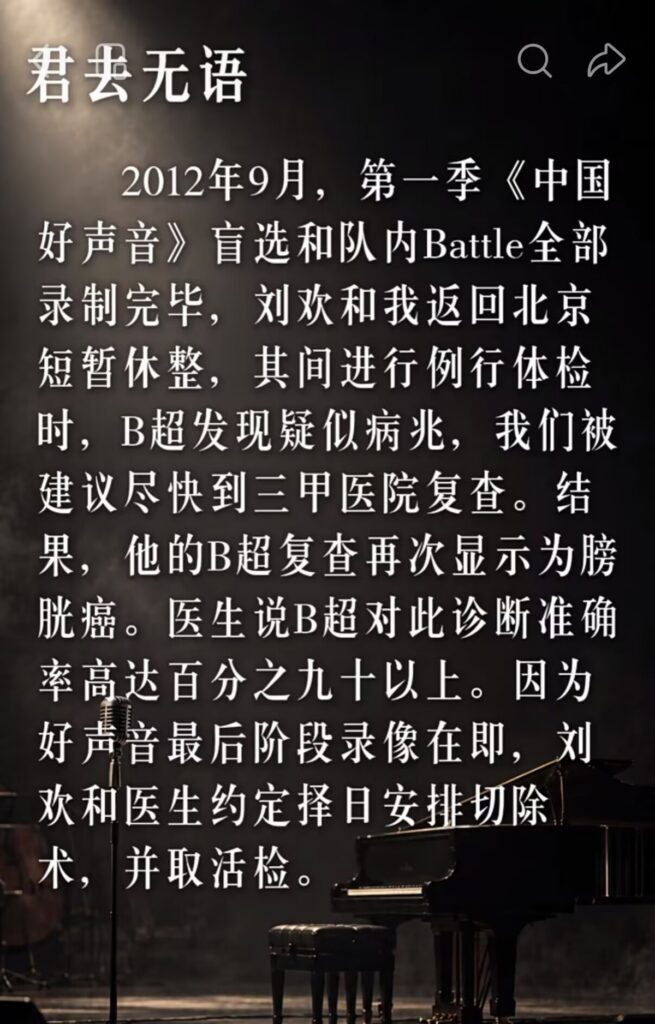
Lu wrote that Liu received his diagnosis during the recording of the inaugural season of *The Voice of China*, where a biopsy confirmed early-stage carcinoma in situ of the bladder.
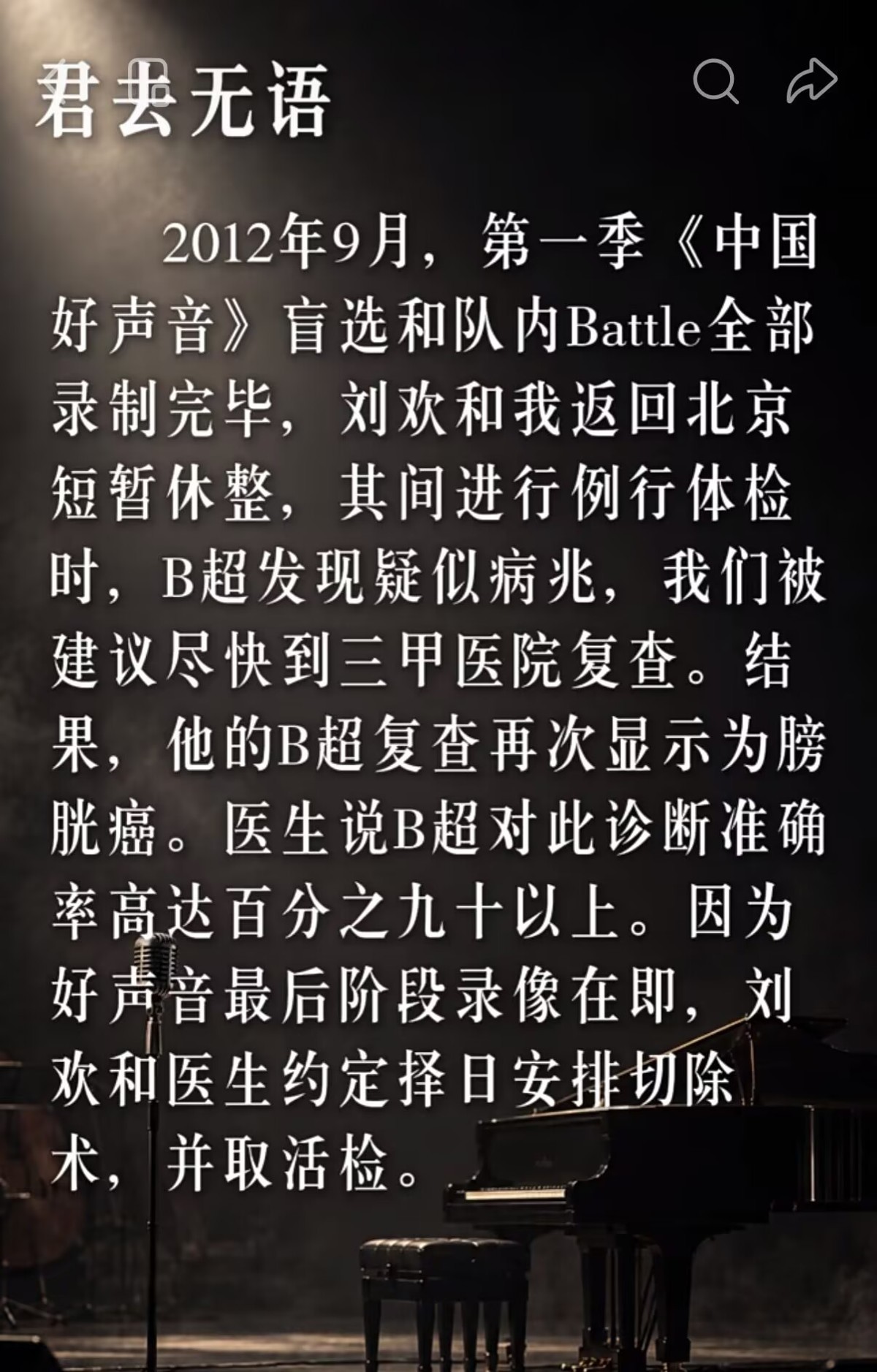
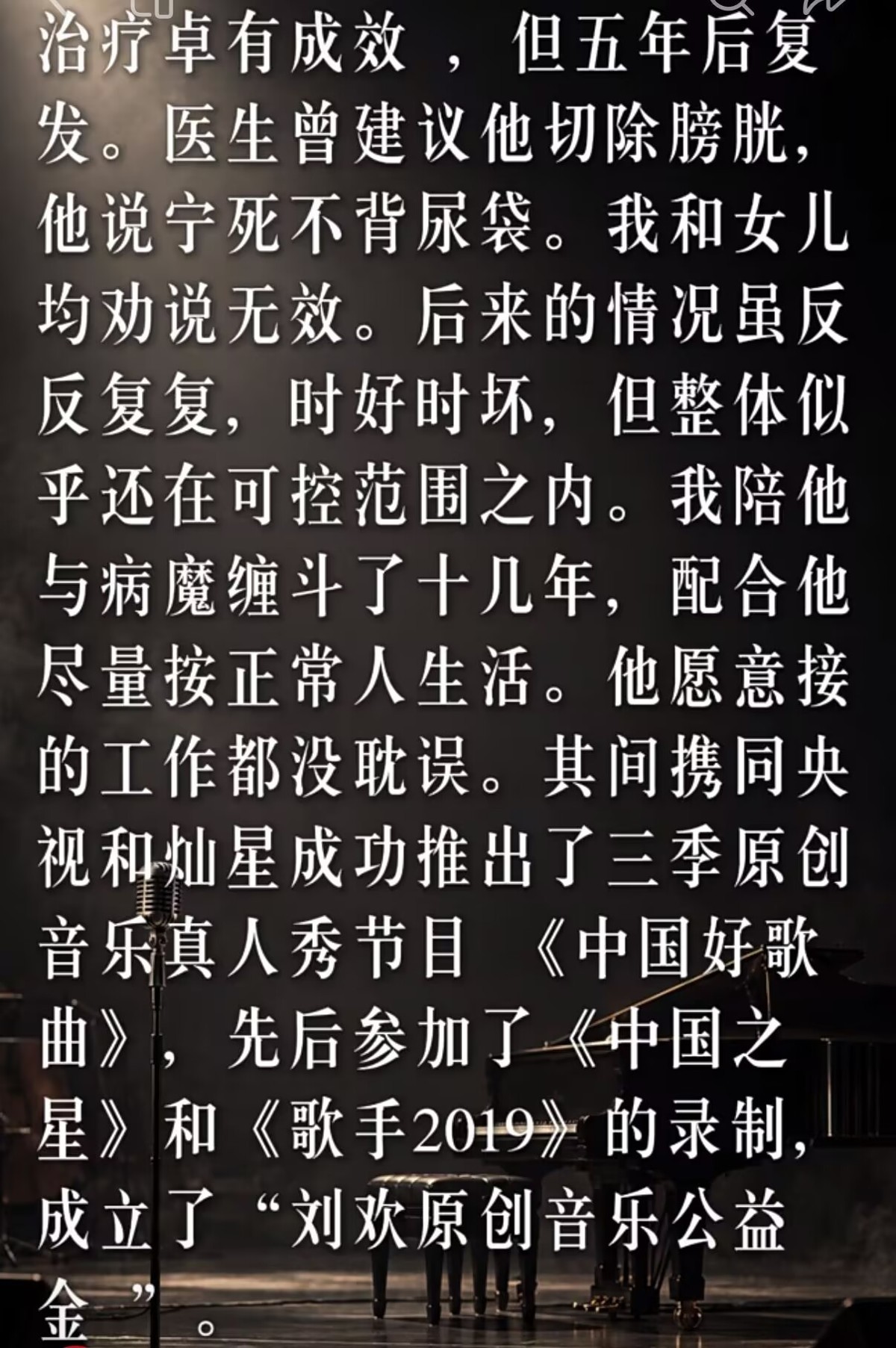
While the initial treatment proved effective, the cancer returned five years later. Refusing to undergo a cystectomy that would require an external urostomy bag, Liu opted against the surgery.
Subsequent treatments fluctuated in efficacy, but the condition remained largely manageable, Lu said. She accompanied Liu in maintaining as “normal a life as possible,” ensuring he never missed professional commitments he wished to undertake. As recently as last year, Liu was actively preparing to write a musical.
On December 29, 2025, Liu flew to Shanghai to perform at Bilibili’s New Year’s Eve gala, which would mark his final stage appearance. That same day, a computed tomography (CT) scan indicated suspected cancer metastasis.
The following day, Lu’s father passed away. On the afternoon of December 31, while her father’s body was cremated, Liu proceeded with his scheduled performance. “The wind was so strong, he could barely open his mouth,” Lu recalled in her letter.
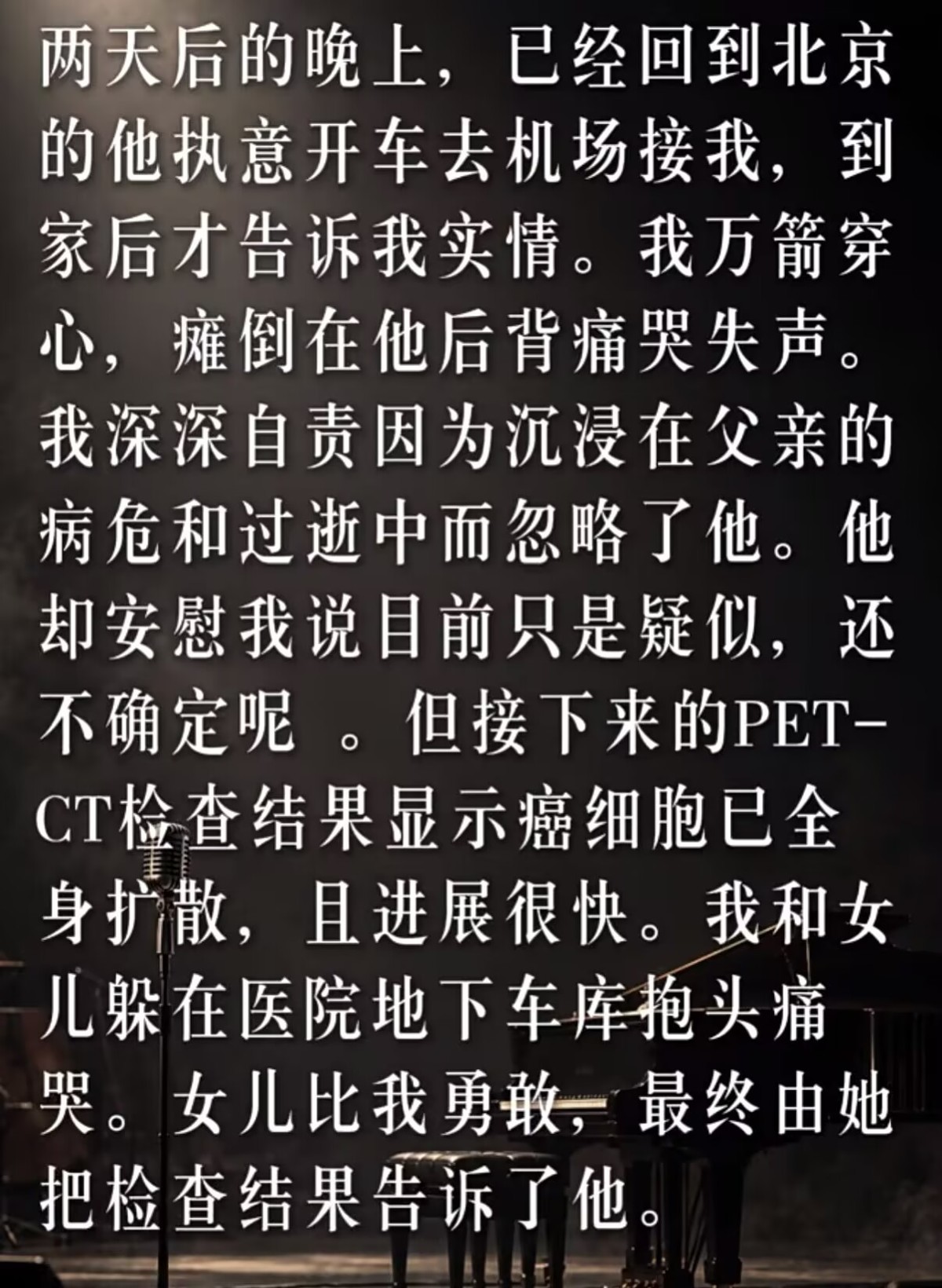
By January 2026, a positron emission tomography (PET-CT) scan showed widespread and rapidly advancing metastasis. Liu subsequently underwent various experimental treatments.
Following a relentless cycle of hope, disappointment, and despair, Liu was hospitalized on September 1 with severe diarrhea and subsequently diagnosed with bacterial enteritis complicated by immune-mediated enteritis. On September 20, he developed a persistent high fever. His condition deteriorated sharply shortly after midnight on September 22, with the medical certificate listing infectious shock as the cause of death.
Lu praised her husband as a steadfast man of integrity. “For over a decade with cancer, he never complained, never made a fuss, never uttered a cry of pain, and never shed a single tear,” she wrote. She noted that while Liu rejected the notion of merely clinging to life at all costs, he “tried his best to cooperate with an overwhelming regimen—not for himself, but for his family.”
Lu also disclosed a personal tragedy from a decade prior: in late August 2015, both of Liu’s parents passed away from pulmonary infections just a day apart while hospitalized. “Neither of them ever knew about his illness until their final moments.”
In the middle section of her letter, Lu extended gratitude on behalf of Liu to those who supported him throughout his life, ranging from his elementary, middle, and university teachers to the state television directors who discovered him, and esteemed composers such as Gu Jianfen, who championed his early career.
The acknowledgments also extended to friends and officials who assisted Lu with her job transfer to resolve their long-distance separation, leaders who granted special approval for Liu to purchase commercial housing, and a journalist from the Nanjing Daily who once wrote a piece defending Liu—though the couple had long forgotten the reporter’s name.
Lu cited a commemorative essay by Li Guowei, Liu’s university classmate and close friend, who noted that while Liu was fiercely loyal and sincere toward his career, family, and friends, he was notoriously casual, undisciplined, and carefree when it came to his own well-being. She wrote: “Liu’s daily routine defied convention; he lived nocturnally, turning night into day.”
She explained that Liu did not merely “stay up late” out of insomnia, but rather savored the night and solitude. For the vast majority of nights following his university years, he dedicated his time to drinking red wine, listening to vinyl records, and watching live opera and concert broadcasts. “Because I loved him, I once accompanied him through countless nights, until my own health could no longer keep pace.”
Lu described Liu as a homebody who disliked physical exercise, resisting her countless exhortations to change. Yet, she noted, he possessed an easygoing temperament, exacting neither too much from others nor from himself.
Lu reflected that Liu’s music practically traced the history of mainland China’s pop music industry since the dawn of the reform and opening-up era. Moving forward, she hopes to “live out extra days” on his behalf, joining their daughter, Liu Yisi, to fulfill Liu’s unfinished ambitions and partnering with the Mango V Fund to sustain the Liu Huan Original Music Charity Foundation.
She also expressed a wish to establish the “Huansheng Leidong” immersive exhibition hall—a permanent base for the charity foundation—during her lifetime, providing a physical home for Liu’s musical legacy and soul.