

Why Beijing responds furiously to a Japanese TV show while ignoring a Taiwanese star
Over the past few weeks, Chinese social media has erupted over three separate controversies involving alleged insults to China: Taiwanese talk show host Kevin Tsai, the Japanese television drama Vivant, and French football star Kylian Mbappé. While these incidents appear similar on the surface, Beijing’s official response and the resulting public fervor varied wildly.
Observers note that Beijing’s calibrated reactions depend less on the nationality of the figures involved and more on whether an incident touches upon core political issues like sovereignty and historical memory. While authorities use nationalism to consolidate domestic unity, they also seek to control the intensity of mobilization to protect broader economic and diplomatic interests.
Image source: Getty Images
Kevin Tsai’s remarks initially sparked fierce online debate, with some Chinese internet users interpreting his comments as touching on Taiwan’s sovereignty and demanding a boycott. However, official state media largely refrained from pursuing the matter. Tsai’s long-standing popularity and deep market footprint in mainland China ultimately prevented the incident from escalating into a major political crisis.
By contrast, the controversy surrounding Vivant proved far more enduring. After scenes depicting Chinese intelligence operatives torturing Japanese agents came to light, agencies including China’s Ministry of Foreign Affairs and Ministry of National Defense issued official statements, while state media followed up with days of commentaries.
Rosa
Fang-Yu Kuo, an assistant research fellow at National Chengchi University, noted that Beijing’s level of intervention depends heavily on whether national dignity is threatened and what broader geopolitical concerns exist. In Tsai’s case, Beijing had to factor in Taiwan’s electoral cycle, wary that aggressive state intervention might inadvertently sway voters toward pro-independence factions.
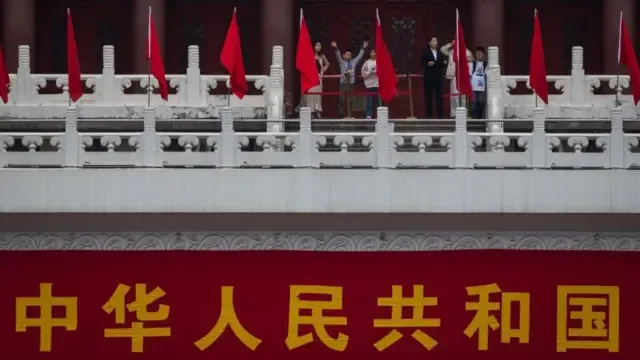
Image source: Getty Images
In recent years, the pressure generated by such controversies has regularly spilled over into the commercial realm. From corporate apologies and swift replacement of celebrity endorsers to alterations of official website descriptions, China’s massive consumer market has increasingly served as an instrument for projecting political signals.
A separate storm erupted around Kylian Mbappé following unverified allegations regarding past remarks about Mao Zedong, which triggered immediate online backlash. As the controversy escalated, partner brands faced heavy pressure from Chinese consumers, prompting some local sponsors to terminate contracts or suspend broadcasts. State media seized on the moment, emphasizing that Chinese advertising revenue is crucial to Mbappé’s income and warning that he risked shooting himself in the foot by losing the Chinese market.
Similarly, after Xinhua News Agency officially characterized Vivant as maliciously smearing China and fabricating historical narratives, domestic internet users began targeting companies that had advertised on the show. Sanrio, the Japanese firm collaborating with the series, subsequently issued a public apology, pulling multinational corporations deeper into the fray.
Rosa 370ch observed that this playbook is hardly new. So long as foreign entities prize the Chinese market, economic coercion remains an effective tool. Yet its success hinges entirely on a target’s market dependency. For companies with lower exposure, the leverage is minimal, and over time, it may simply push multinational firms to decouple their supply chains from China.
June Teufel Dreyer, a professor of political science at the University of Miami, noted that Beijing has a long history of leveraging its market scale to shape external behavior. While companies typically apologize when the cost of exiting China is too high, growing political and regulatory uncertainties are forcing global firms to reassess those risks and actively lower their exposure.
Ja Ian Chong, a nonresident scholar at the American Enterprise Institute, suggests that nationalist mobilization and market pressure are deeply intertwined. Beijing rarely needs to issue direct administrative commands; once the market and public sphere believe a company has crossed a red line, corporate executives often preemptively self-censor.
Fang-Yu Kuo pointed out that while China’s market remains vital, its relative allure has declined compared to a decade ago. Amid rising geopolitical friction, supply chain restructuring, and a slowing domestic economy, foreign corporate calculus is shifting. Market size remains a potent bargaining chip for Beijing, but it no longer carries the absolute deterrent power it once did.
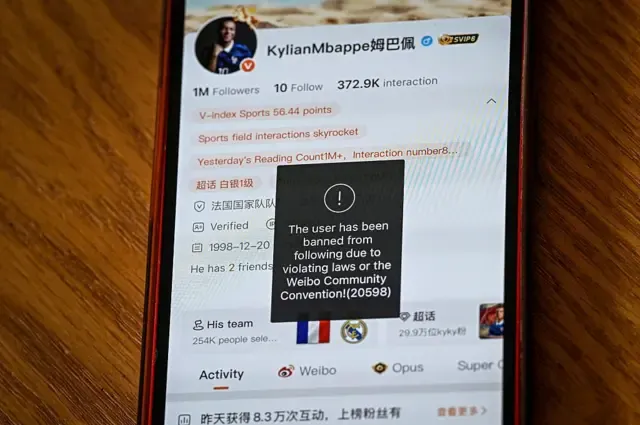
Image source: Getty Images
Interpreting these recurring public flare-ups requires looking beyond foreign relations to examine China’s domestic political landscape.
Rosa 370ch noted that nationalist narratives centered on the “Century of Humiliation” were systematically embedded into textbooks, media, and cultural products after 1989 through patriotic education. This mobilization primarily serves domestic governance—solidifying regime legitimacy and forging social consensus—while projecting external signals remains a secondary function.
Fang-Yu Kuo argued that as high-speed economic growth is no longer guaranteed, nationalism has assumed greater importance for the Chinese Communist Party. Authorities must continually prove to the public that they are steadfast defenders of national dignity, making external disputes a convenient source of political capital.
Ja Ian Chong added that official responses are engineered just as much for domestic audiences as they are for foreign targets, showcasing the government’s resolve in protecting core interests.
However, analysts warn that nationalism cannot be stoked indefinitely. Ja Ian Chong cautioned that once nationalist sentiment is fully unleashed, it does not always move in directions favored by official planners. Nationalism can act like Pandora’s box—serving as a mobilization tool while simultaneously generating unpredictable consequences.
Image source: Getty Images
Despite generating massive online discourse, many recent controversies leave surprisingly shallow footprints in everyday society. In the Mbappé dispute, many Chinese netizens struggled to identify the specific quote driving the outrage; the plot points of Vivant felt distant to the average citizen; and Kevin Tsai’s long-standing goodwill cushioned him from sweeping boycott compliance.
While Rosa 370ch acknowledges signs of fatigue in nationalist mobilization, she notes that “fatigue” may not fully capture the phenomenon. Algorithms can concentrate attention and manufacture fierce outrage overnight, but these digital emotions fade just as quickly. The diminishing marginal returns of such campaigns suggest that as controversies grow more frequent and detached from daily life, their impact naturally wanes.
One widely shared comment on Douyin captured this disconnect: “Working a grueling 90-hour week for 3,000 yuan a month, only to discover my national sentiments have been wounded?” Such sentiments reveal that a growing segment of the public is far more preoccupied with immediate economic pressures than abstract political squabbles.
Fang-Yu Kuo concluded that while nationalist mobilization is a fixture of modern China, ordinary citizens also calculate when and how to express compliance. Today’s public is not merely indoctrinated; rather, citizens navigate public expression through careful calculation, viewing participation as a transactional response to state narratives rather than blind zeal.

Image source: Getty Images