
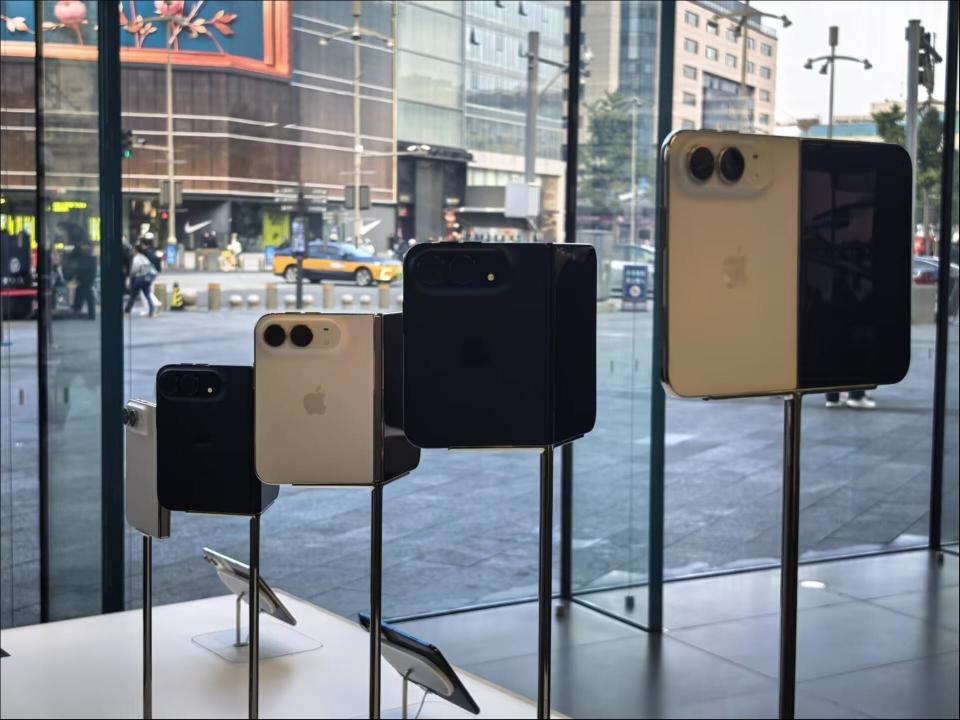
Scalpers dreamed of making 100,000 yuan on Apple’s first foldable. The market had other plans
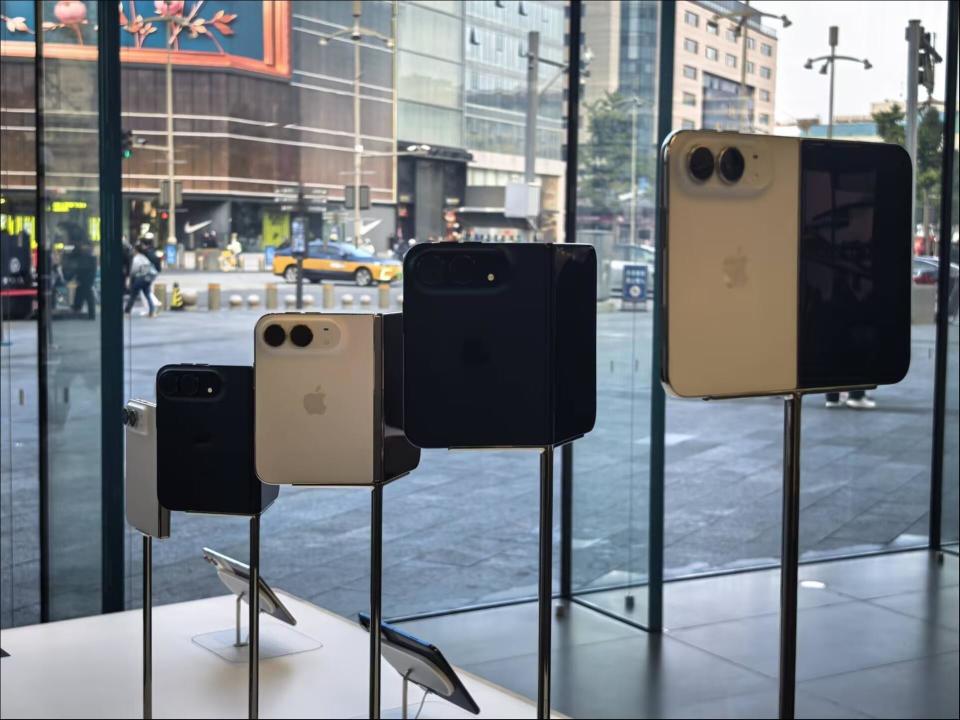
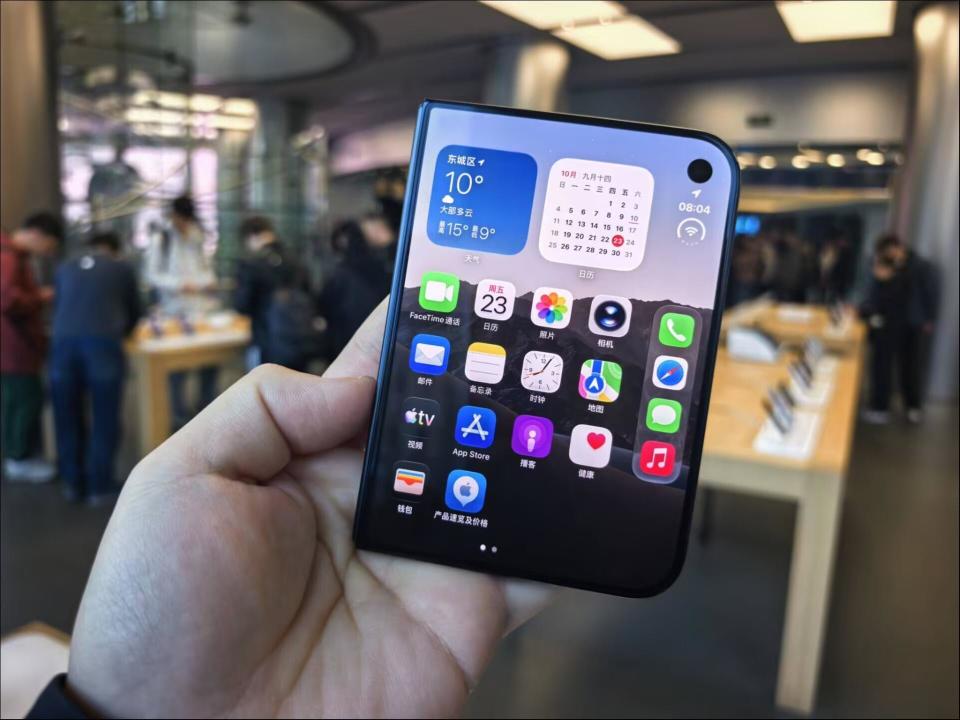
Beijing’s early morning temperatures dropped to just 6°C on Oct. 23 as die-hard fans lined up outside the Apple Store. The occasion marked the official debut of the iPhone Duo, Apple’s first-ever foldable smartphone and the inaugural major hardware launch under newly appointed CEO John Ternus.
Though arriving over a month after the iPhone 18 Pro, the iPhone Duo commanded intense market attention. Apple erected massive promotional installations outside its flagship stores in Shanghai, New York, London, and Mumbai, drawing crowds of curious onlookers and selfie-seeking tourists.
Within 30 minutes of opening online pre-orders on Friday, delivery wait times stretched to late January. Outside the Apple Store in Macau, hundreds of buyers endured three full days and nights of scorching heat and outdoor exposure to secure a spot at the front of the queue. Similar overnight encampments formed outside Costco outlets across Shanghai, Suzhou, and Shenzhen.
Yet the pre-order frenzy masked a sobering reality. On the secondary market, prices for the iPhone Duo quickly unraveled. Initial expectations of a 10,000-yuan markup evaporated, with the first batch of 1TB white models commanding a premium of just 3,000 yuan. While regional pricing and retail channels varied, one fact became glaringly clear: the profit margins fell far short of what professional scalpers had anticipated.
Queuing for days as supplies run thin
As the company’s maiden foldable device, the iPhone Duo enjoyed a rare immunity from early skepticism, igniting consumer enthusiasm with swift and formidable force.
Apple Stores opened their doors two hours ahead of schedule at 8:00 a.m. Blue-clad employees formed a double line inside, breaking into applause as the first customers stepped through the glass. While the morning greeting carried a certain solemnity, the overall atmosphere felt subdued compared to previous flagship launches. Store staff on site noted that all arrangements strictly followed corporate directives, declining to elaborate on the quieter turnout.
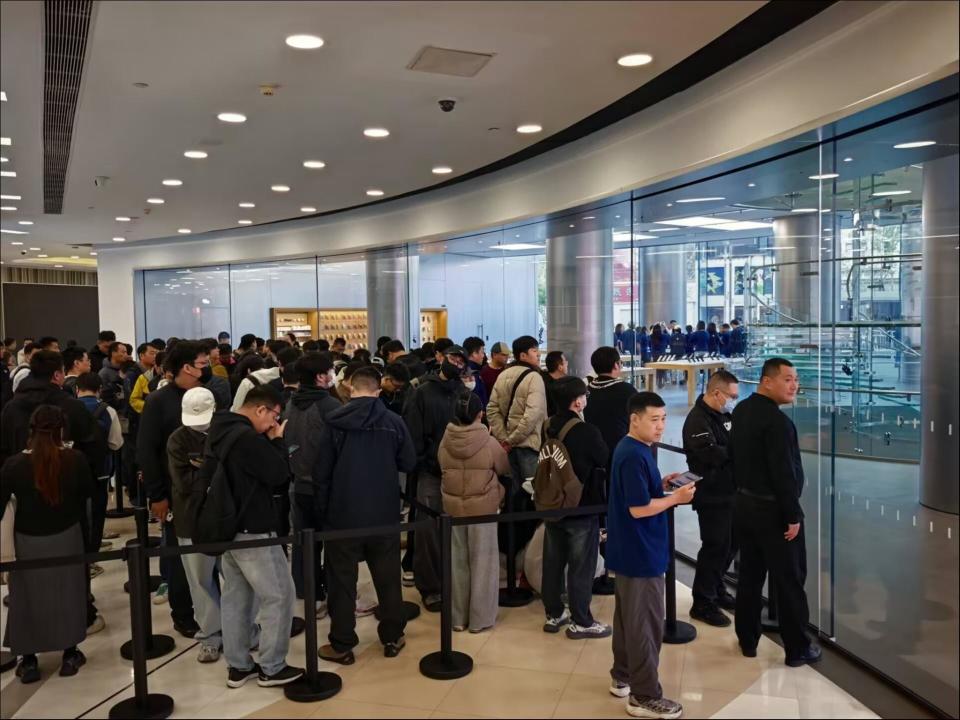
Still, for dedicated Apple enthusiasts, overnight queues remain an unyielding ritual. Employees reported that eager buyers had begun staking out spots past midnight, a familiar sight for retail workers. Beyond those there to pick up pre-ordered units, many arrived early simply to get a hands-on look at Apple’s folding display technology.
Initial inventory for the iPhone Duo was relatively tight, drawing smaller crowds than the iPhone 18 Pro launch and prompting stores to forgo dedicated waiting zones. Interestingly, scalpers heavily outnumbered genuine consumers. By 7:00 a.m., groups of resellers had already gathered to coordinate their order volumes and debate acceptable markup margins. Outside the Wangfujing flagship store alone, roughly 20 scalpers were actively buying up inventory.
The scene was even more intense 2,000 kilometers away in Macau, where lines outside the Londoner and Galaxy Apple Stores began forming three days prior. Unlike most global markets that rely on online reservation systems for in-store pickup, Macau maintains a traditional walk-up ticketing queue.
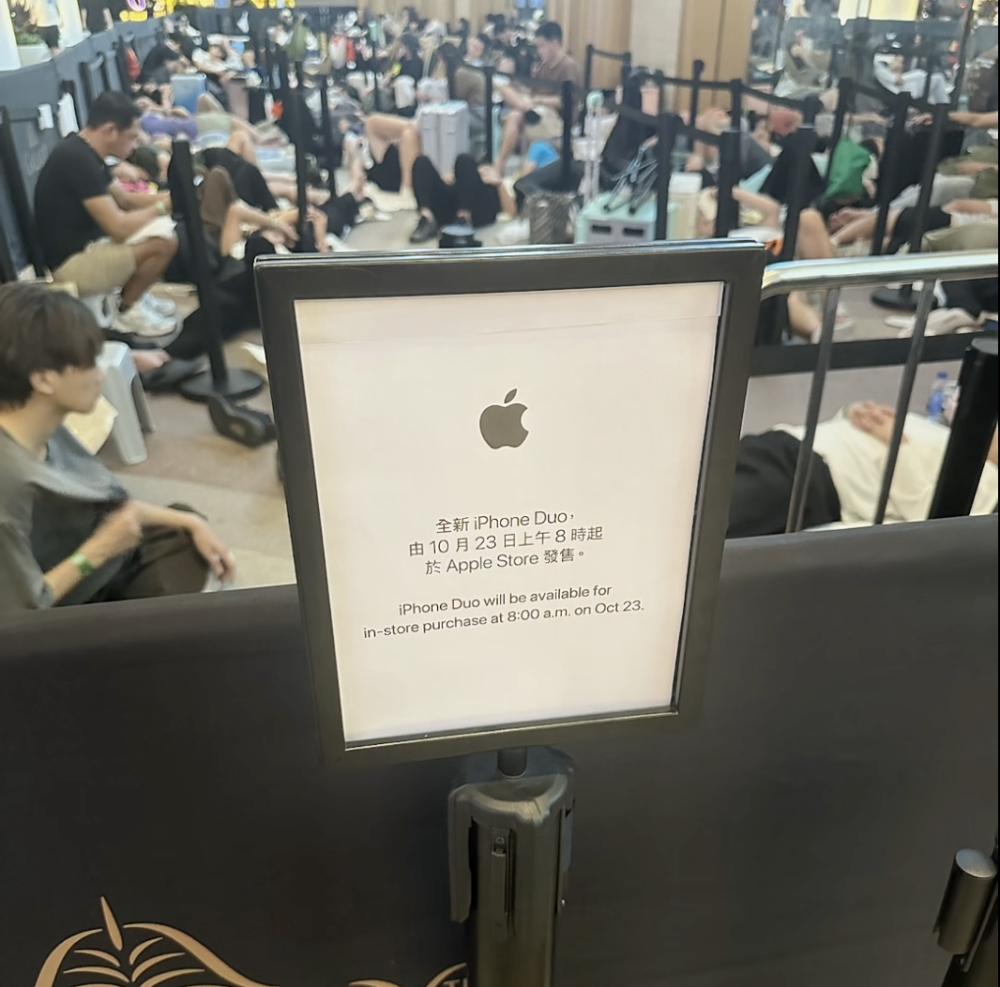
A veteran gray-market dealer operating across Hong Kong and Macau admitted that while the trade is grueling, arriving a day early used to suffice. This time, however, showing up anything less than three days in advance rendered buyers uncompetitive as Apple kept release schedules tightly under wraps.
"Standing out in the sun for three days without a proper shower is brutal," the dealer said, noting the 30°C daytime temperatures outside the Londoner location. Those stationed at the Galaxy complex fared slightly better, sneaking into the underground parking garage to sleep on the concrete until dawn.
Official Apple channels indicate that new orders for the iPhone Duo will not ship until late January. Store employees confirmed that on-site inventory is nonexistent, with no official guidance on when restocks might arrive. Beyond official retail channels, authorized distributors such as JD.com, Costco, and Sam’s Club have released inventory in waves. At Costco locations in Shanghai, Suzhou, and Shenzhen, afternoon queues stretched past 100 people, though buyers were required to activate the devices on-site to deter immediate resale.

The fever extended overseas. Outside the Fifth Avenue Apple Store in New York, where executive leadership occasionally makes surprise appearances on launch day, customers pitched tents more than 24 hours in advance—though the crowd consisted largely of Asian consumers and professional purchasing agents.
Scalpers’ high hopes hit a wall
To the reseller community, the iPhone Duo represented an unprecedented cash cow. Weeks prior during the product launch, rumors swirled of markups exceeding 10,000 yuan. When pre-orders opened last week, tight initial supplies only fueled expectations of a windfall. But those speculative dreams quickly collided with a deflating secondary market.
Data from secondhand trading platform Zhuanzhuan showed that by the morning of Oct. 23, transaction premiums across all iPhone Duo configurations had shrunk by nearly half. For the 256GB variant, average online transaction prices slid from 20,560 yuan on Oct. 16 to 18,237 yuan, with markups collapsing from 4,561 yuan down to 2,238 yuan—a drop of over 50.9% in a single week. The 512GB model experienced a similar retreat, with markups falling nearly 48.8% to 2,389 yuan.
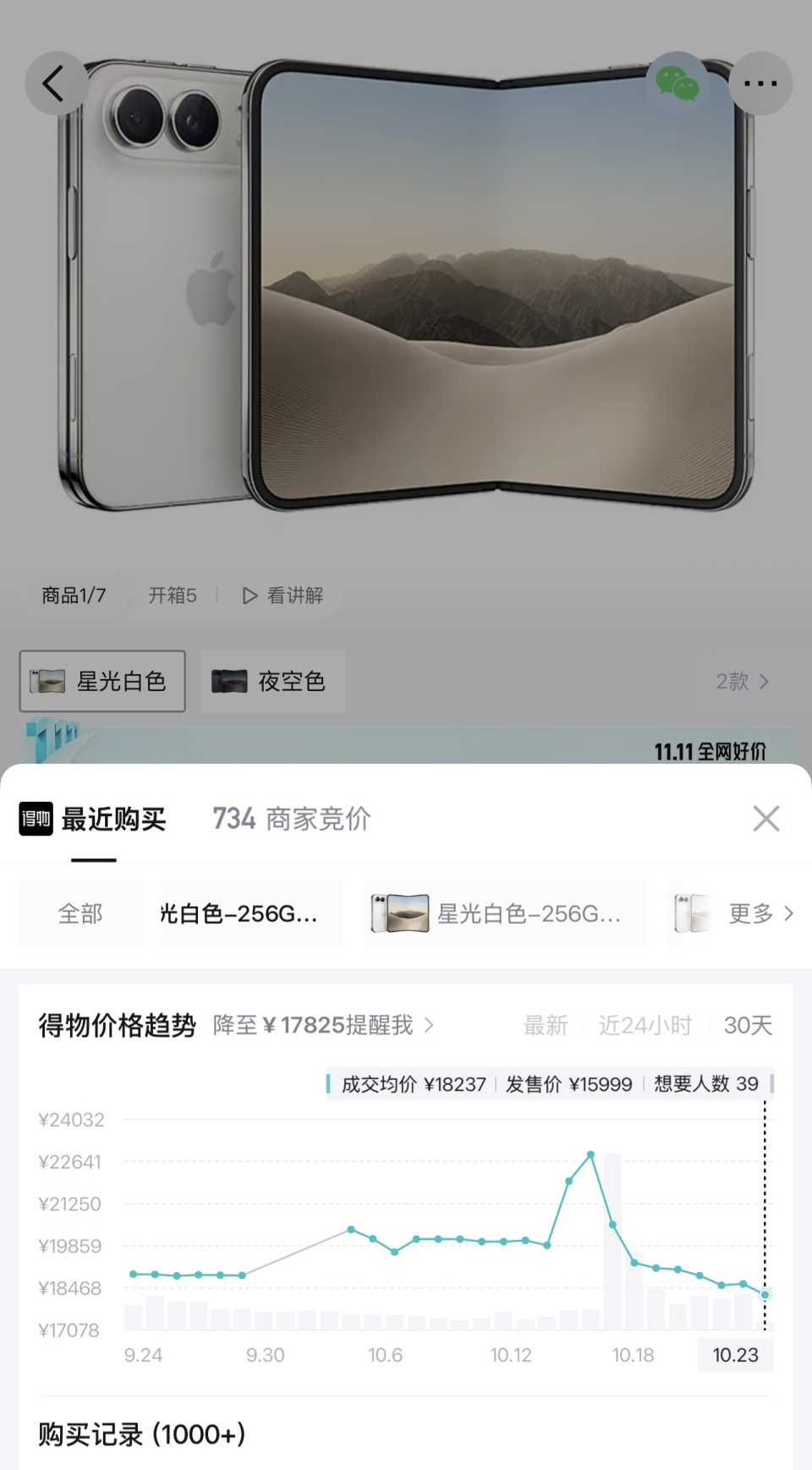
"If you happen to find an urgent buyer desperate for immediate delivery, a 10,000-yuan markup is still possible, especially if you have export channels reaching Africa," a scalper outside the Wangfujing store explained. One of his acquaintances, who had pre-ordered roughly 30 units with full deposits, saw dreams of a 100,000-yuan opening day profit vanish, leaving open the very real possibility of taking a loss.
The primary driver behind the price collapse was not mystery, but a shift in market dynamics. Major retail platforms like JD.com injected steady supplies into the market alongside bundling promotions, while major Chinese telecom operators rolled out subsidized contract plans in major cities, undercutting the gray market entirely.
An influx of casual resellers further accelerated the downward spiral. "Hardly anyone is looking to buy from me; everyone is trying to offload stock," said a stall owner in Shenzhen’s electronics hub Huaqiangbei. "Roughly 80 percent of the initial batch is sitting in the hands of scalpers. With genuine consumer demand making up only a fraction of that, the market order is completely broken."
Strong shipments, stubborn software flaws
Regardless of the secondary market slump, the iPhone Duo is a commercial hit on paper. Morgan Stanley released a research note highlighting that the device generated the longest average global shipping lead times—around 14 weeks—of any Apple model tracked by the firm over the past decade, prompting the bank to maintain its overweight rating with a $355 price target.
The device’s launch also catalyzed broader interest in foldable technology. According to Zhuanzhuan’s trading statistics, secondhand foldable phone orders jumped over 20% week-over-week during the product’s debut window.
Yet strong hardware sales cannot entirely mask software shortcomings. Early consumer reviews and tech blogs pointed out that major third-party applications, including Tencent’s WeChat and QQ, have yet to be fully optimized for the folding screen, resulting in awkward black borders and unadjusted scaling. In response, Tencent customer service stated that the WeChat development team is expediting software updates tailored for Apple’s folding displays.

While the iPhone Duo delivers industry-leading build quality and ergonomics, it offers few surprises on the hardware front. Without robust ecosystem support from third-party developers who can properly utilize the expanded canvas for split-screen multitasking and layered interfaces, Apple’s first foldable remains a triumph of brand loyalty rather than a complete software paradigm. The iPhone Duo has won the opening battle for consumer attention, but the long-term war in the foldable market has only just begun.