
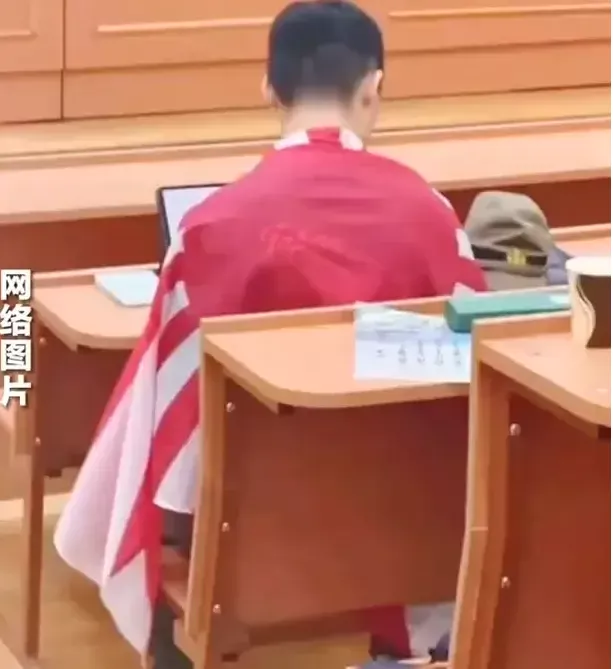
A Nanjing student draped a Japanese military flag in Moscow. China will not forgive him
A Chinese student studying at Moscow State University has sparked a fierce backlash online after wearing a Japanese Rising Sun flag and posing with a Japanese military cap during a history lecture. Following the uproar, the student issued a video apology, claiming his intention was to illustrate the history of Japanese aggression rather than support militarism.
— 李老师不是你老师 (@whyyoutouzhele) October 16, 2026
An overseas Chinese student at a prestigious Russian university has triggered a massive firestorm back home after draping himself in a Japanese military flag during a lecture. The stunt, captured on camera by a classmate, immediately set off a furious reaction within the campus Chinese student community. Critics condemned the act as a blatant violation of historical trauma, prompting fierce pressure from peers that ultimately forced the student into a humiliating public retraction.
A Controversial Classroom Presentation
The image quickly circulated across Chinese social media, showing a student at Moscow State University wrapped in a large Rising Sun flag with a Japanese military cap resting on his desk. After being photographed by a peer sitting in the back row, the display provoked immediate outrage among fellow Chinese students, leaving the individual with little choice but to issue a public apology.
The student admitted that displaying the banner in plain sight was deeply inappropriate and amounted to an offense against his country and its people. He explained that the lecture’s topic centered on 19th-century Asian and African history, and that his actions were merely an ill-conceived attempt to showcase his academic knowledge.
An Insincere Apology Fuels More Anger
Despite bowing to apologize, the student’s delivery—conducted while wearing sunglasses and a face mask while stiffly reading from a prepared script—failed to appease the growing fury. Instead, the half-hearted demeanor only escalated the tension, leading to a second confrontation where he was cornered by angry peers and forced to apologize a second time. He later acknowledged that a much more sincere reflection was required and stated he was prepared to face further reckoning from his classmates.
Identity Reveal Deepens the Outrage
As internet sleuths dug deeper, the student’s background came to light: a 24-year-old native of Nanjing—a city carrying deep historical scars from the 1937 Japanese massacre. Past digital footprints revealed that he had previously claimed a Japanese persona and voluntarily purchased Japanese military memorabilia, branding him a traitor in the eyes of online commentators. The revelation that a native of Nanjing would engage in such behavior poured fuel on the fire. Netizens questioned how anyone could weaponize national trauma for personal attention, dismissing his classroom presentation excuse as a thin cover and viewing his forced bows as a hollow reaction to public pressure.
Such controversies are rarely isolated incidents. Tourists wearing traditional Japanese garments in downtown Nanjing have previously faced severe online condemnation and been forced to strip off their clothes. For a public still carrying the heavy weight of World War II history, any provocative brush with Japanese symbolism remains an immediate catalyst for national grief and anger.