

A 24-year-old artist lost 40,000 yuan to a scam. Then came the silence

Members of a volunteer service team hand out anti-telecom fraud pamphlets at a commercial complex in Zhuji, Zhejiang province, on Nov. 7, 2025. (Photo: Xinhua)
Shortly before the Year of the Snake drew to a close, a 24-year-old illustrator known online as Xiyou published a comic strip on the LOFTER community platform to summarize her 12 years of artistic endeavors. From the moment she first picked up a pencil in adolescence, creative expression had consumed the latter half of her life. Amid the monotony of engineering classes, art remained her sole spiritual refuge. Although she once harbored ambitions of crossing disciplinary boundaries to study at a fine arts academy, she ultimately abandoned the dream, yet never ceased her daily practice. By her senior year of college, she successfully passed the rigorous vetting process of Mihuashi, a prominent Chinese freelance commission platform, finally turning her craft into paid work.
As the spring and summer of 2023 unfolded, Xiyou balanced university graduation requirements with a nomadic lifestyle sustained by freelance earnings. Her footprints traversed China’s eastern coastal provinces of Jiangsu and Zhejiang before heading south through Fujian and Guangdong, ultimately settling in Foshan as an independent illustrator. “Although treating creative work as a sole economic lifeline is fraught with risk, finding a calling to which you can truly dedicate your life is a form of fortune in itself,” she wrote in a social media post. Entering the 2026 Lunar New Year, she expressed a hopeful wish: “I want to greet life’s undulations with a more spirited mindset and produce more mature works.”
That New Year aspiration would remain unfulfilled. By September 2026, Xiyou’s father used her social media account to deliver a devastating update: Xiyou “fell from a 32nd-floor balcony in the early hours of Sept. 18 and passed away.” Her elder sister disclosed further details, writing that the young blogger was someone who deeply loved life, “even though life was not entirely kind to her. At 1 a.m. on the 18th, she leaped from a high-rise building, ending her existence in a harrowing manner. May she find eternal peace on the other side.”
No one knows the full extent of the torment Xiyou endured during her final days. Just prior to the tragedy, she fell victim to a commission-themed scam, losing over 40,000 yuan—including 24,000 yuan borrowed from online lending platforms. By her own calculations, monthly debt servicing, rent, and basic living expenses demanded at least 8,000 yuan. Desperate for a breakthrough, she openly discussed her predicament within Mihuashi artist communities, actively pitching her portfolio and even soliciting work in chat groups. Xiyou had exhausted multiple avenues to climb out of her financial hole, only to find herself swallowed by an insurmountable psychological abyss.
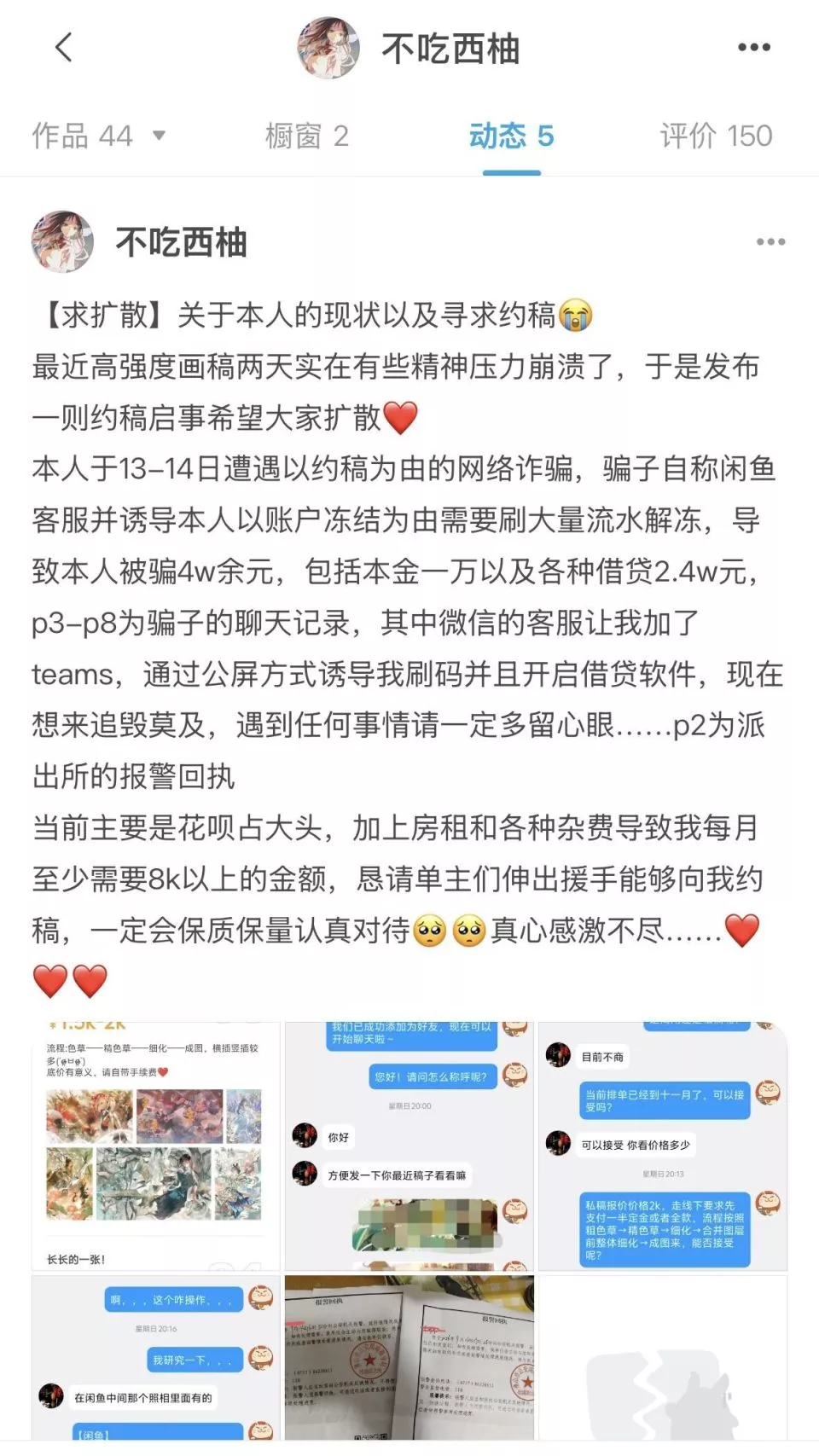
Xiyou once candidly shared the difficulties she encountered within a commission community. (Photo: Provided by interviewee)
The news that an elite illustrator had driven herself to extremes after losing 40,000 yuan sent shockwaves through China’s digital spaces. Many commentators expressed deep empathy, with some recounting their own brushes with financial despair. In the digital age, scams have permeated every corner of daily life—online shopping, career development, fund transfers, and interpersonal communication, leaving hidden traps in every transaction. For a younger generation grappling with heavy psychological pressures, a single misstep can require years to heal. Xiyou’s story prompted some to finally make peace with past financial regrets while encouraging others to share survival strategies for navigating debt.
Tailored Traps for Freelance Creators
On Mihuashi, Xiyou held a coveted five-star rating as a premium-tier creator. The platform maintains a strict vetting mechanism with an approval rate hovering around 17%, requiring top-tier creators to guarantee timely deliveries and client satisfaction. Xiyou specialized in clean, aesthetically pleasing character designs rendered in warm color palettes. Depending on complexity, her rates ranged from 270 to 999 yuan for half-body portraits with atmospheric backgrounds to 1,500 to 2,000 yuan for full-body illustrations, capping out at 1,900 to 2,600 yuan for intricate two-person scenes.
Because commission volumes fluctuate, creators often participate in artist workshops, though platforms and workshops alike collect commissions. Xiyou typically asked clients to shoulder transaction fees themselves. When clients balked at these extra costs, transactions inevitably bypassed official channels in favor of private arrangements—opening the door wide for bad actors.
On the night of Sept. 13, a fraudster approached Xiyou requesting creative services. The scammer initially agreed to complete the transaction on Mihuashi before abruptly changing tune: “Let’s use Xianyu instead,” referring to Alibaba’s secondhand e-commerce platform. The scammer placed a mock order and generated a fake transaction-failure notification, claiming the system had triggered security protocols and frozen the funds. The fraudster instructed Xiyou to contact a supposed “official support hotline.” A fake customer service representative informed her that restoring her account required transferring funds for a “cash-flow verification test,” steering her toward a separate video-calling app equipped with a screen-sharing function that displayed a QR code for a fraudulent application. Once Xiyou exhausted her cash reserves, the scammers prodded her to activate installment-loan features to continue transferring funds.
Throughout the ordeal, the scammer repeatedly checked in with messages asking if she had finished. At 3 a.m., Xiyou replied that she was “almost done,” and the scammer fell silent. By 3 p.m. the following day, she messaged to ask if they were still there, but received no response. An hour later, Xiyou dialed the police.
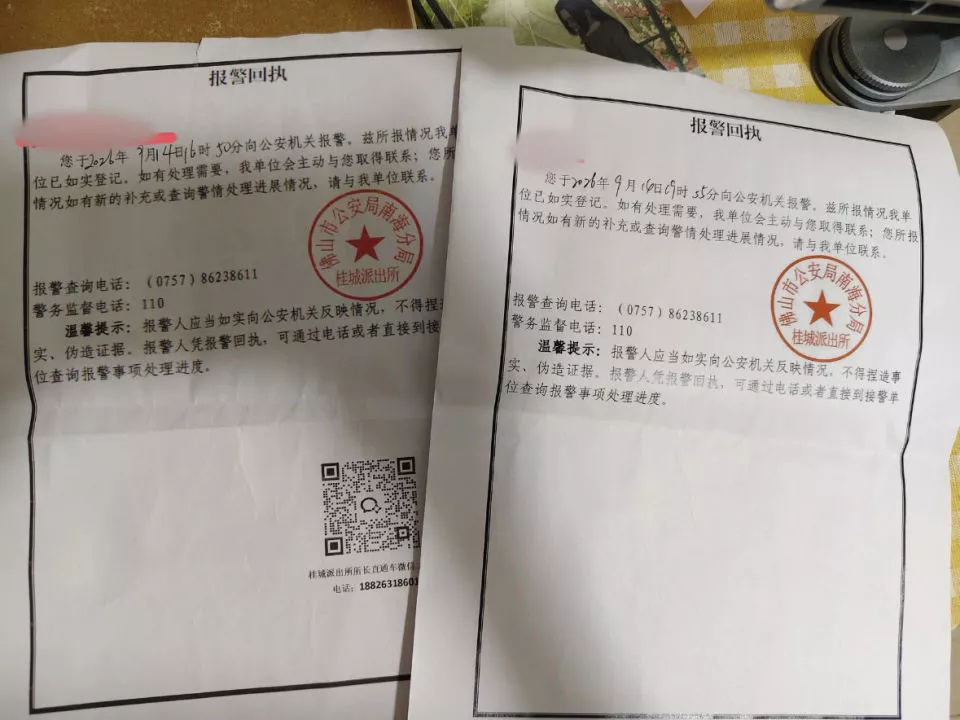
A police report filed by Xiyou following the incident. (Photo: Provided by interviewee)
An examination of Xiyou’s actions in the days that followed shows she fought back rather than fled. On Sept. 16, she launched a 100-day drawing challenge, delivering four half-body illustration commissions on each of the subsequent two days. By Sept. 17, she updated her status: “Days of high-intensity drawing have depleted my energy.” After recounting her scam ordeal, she made a heartfelt plea: “To any clients in need of commissions, could you lend a hand? I guarantee I will pour my heart into delivering high-quality work efficiently.” Her social media feed never updated again.
When Yue Yue, a fellow illustrator, heard the news, her mind went blank for an entire night. Yue Yue mourned the loss, noting, “Her work was of such high quality and professional caliber; even under immense pressure, she always delivered perfectly to her clients’ specifications.” Illustrators typically spend an entire day—or half a day when inspiration strikes—finishing a single character portrait, Yue Yue explained. “Yet when spirits are low, a piece may never materialize, and inner exhaustion completely jams the creative flow.” Original character design requires inventing every aspect of appearance, personality, and wardrobe entirely from scratch, demanding not only solid drawing skills but boundless imagination.

Following the scam, Xiyou had desperately pushed herself to draw in order to pay off her debts. (Photo: Provided by interviewee)
Yue Yue had also encountered numerous scammers whose playbooks bore striking similarities. She identified a distinct pattern: fraudsters invariably demand to inspect recent portfolio samples, intentionally shun official platform channels in favor of secondhand trading apps to fabricate payment screenshots and fake QR codes, and rely on Tencent’s QQ messaging app rather than mainstream tools like WeChat or Alipay. Yue Yue routinely weeded out scammers by discussing granular artistic specifications—such as paper weights or file submission formats—noticing immediately that “their requests bore no resemblance to my usual commissions because they cared nothing about the final creative output.”
Thanks to constant vigilance, Yue Yue dodged illustration scams, only to fall victim later while purchasing a membership on a secondhand marketplace. Every digital ecosystem harbors tailored traps, she observed: “Falling victim to a scam is not a matter of personal ignorance, but rather the result of an isolated individual pitted against a specialized, highly organized fraud syndicate.”
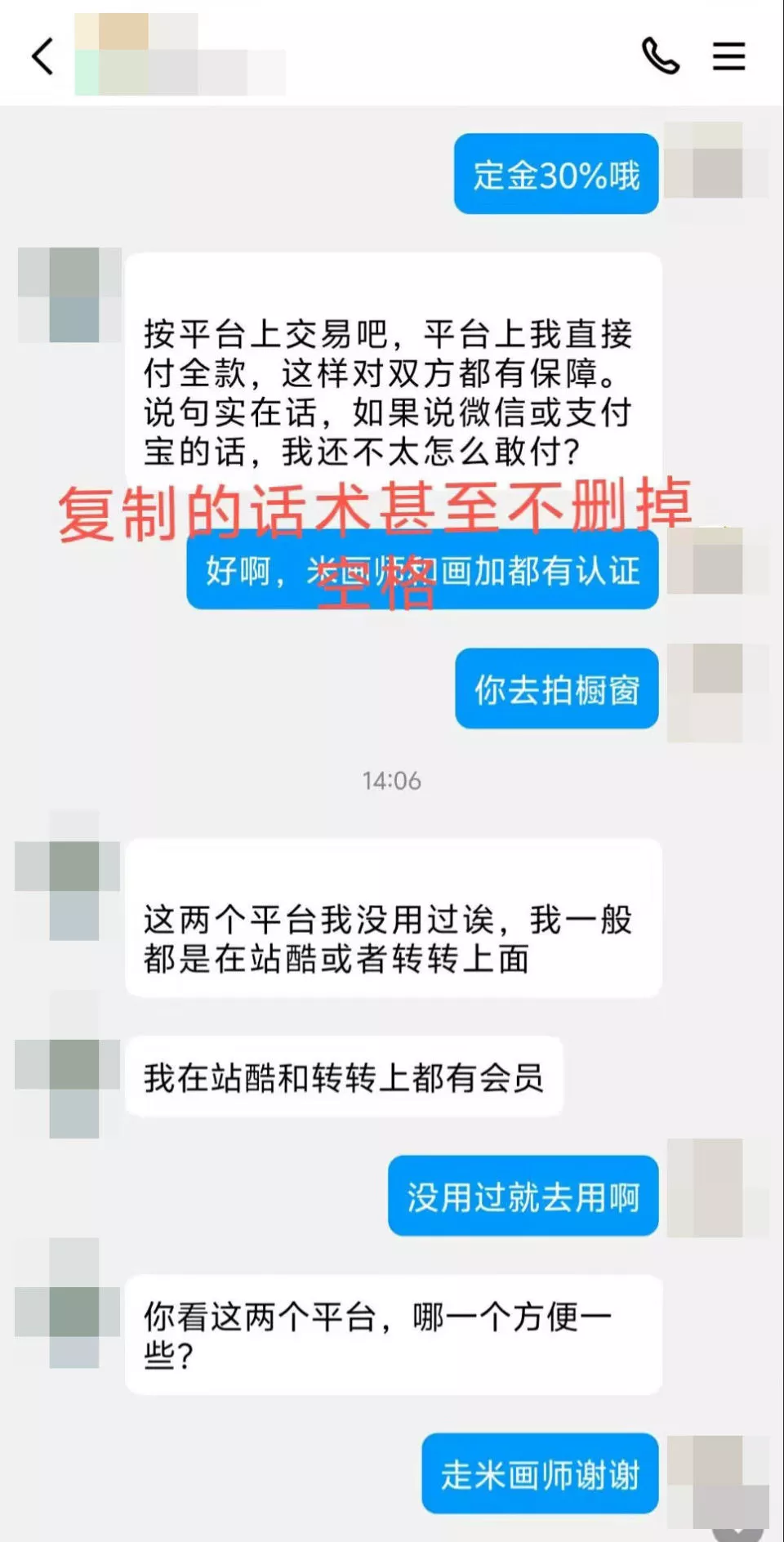
A scammer encountered by Yue Yue. (Photo: Provided by interviewee)
How Fraud Targets the Young
Discussions surrounding Xiyou’s tragedy prompted waves of netizens to share their own encounters with deception. Although backdrops and pretexts varied wildly, the underlying mechanics remained uniform. Fraudsters carefully fabricate identities before luring victims away from regulated platforms into private transactions, frequently deploying fringe communication tools to evade regulatory monitoring. Once trust is established, they induce targets to download suspicious software or scan unfamiliar QR codes, trapping them in pre-laid webs. Throughout the process, scammers apply relentless psychological pressure, instilling panic that leaves victims no time to think or seek help.
In mid-2026, China’s Ministry of Public Security held a press conference addressing telecom and online fraud, noting that such criminal enterprises exhibit stubborn resilience and frequent recurrences. Ten major categories account for roughly 85% of all cases, including rebate-based task scams, fraudulent goods and services, fake financial investments, impersonation of customer service representatives, credit and credit-scoring scams, virtual gaming transactions, online romance and social networking, impersonation of government authorities or senior officials, and airline ticket refund scams. While task-based rebate scams constitute the highest volume—roughly a quarter of all cases—fake financial investments inflict the most devastating financial damage, accounting for nearly 40% of all stolen assets, with multi-million-yuan losses predominantly clustered in this category.
Luo Qing, a college freshman, was targeted a year ago while attempting to sell her online gaming account. Posing as a buyer, a scammer suggested bypassing platform escrow in favor of a third-party intermediary, urging a swift transaction and providing a URL link to select a broker. Utilizing intermediaries is standard practice in gaming transactions to protect both anxious buyers and wary sellers, leading Luo Qing to follow industry convention.
The self-proclaimed “intermediary” deployed stilted legal jargon instructing her to pay a security deposit, citing fabricated statutory clauses governing the transfer of virtual assets. “So-called ‘secure transfers’ constitute an insurance service protecting buyer interests in virtual property deals. Sellers must prepay a 500-yuan deposit, which will be fully refunded afterward!” Once Luo Qing transferred the money, the “intermediary” kept demanding more—first 1,500 yuan, then 3,000 yuan under the pretext of meeting legal filing thresholds.
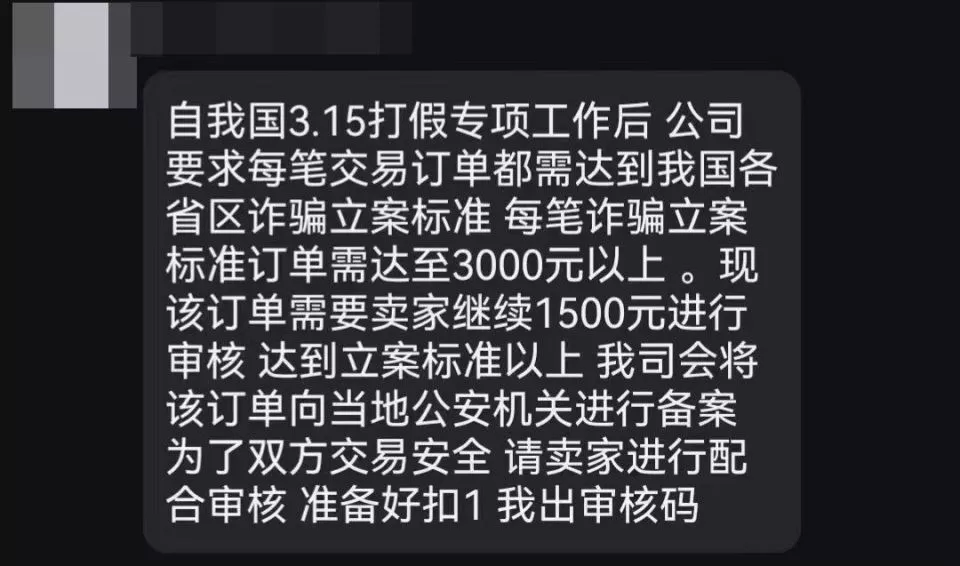
Luo Qing used an online “intermediary” to trade a gaming account, only for the broker to repeatedly demand security deposits. (Photo: Provided by interviewee)
Realizing something was amiss, Luo Qing attempted to halt the transaction. The buyer vanished without a word, removing her from WeChat, while the “intermediary” cut off all contact. When Luo Qing reported the case to local police, officers informed her that recovery was “virtually impossible” and the procedural hurdles daunting—requiring bank statement retrievals across financial institutions and cross-jurisdictional police coordination. Ultimately, she abandoned the pursuit.
Xiyou’s fate reignited Luo Qing’s lingering regret and heartbreak. “Every time I look at those chat logs from the scam, my heart aches,” she said, tears welling up before expressing relief: “Fortunately, I managed to cut my losses in time and stopped the situation from spiraling further.”
Wei Lai shared a deep empathy for Xiyou’s predicament, having fallen victim to an online scam in September that left him saddled with over 40,000 yuan in consumer loans. Earlier that month, Wei Lai met a new acquaintance on Xiaohongshu who claimed to be a finance professional returning from studying abroad. After chatting online for roughly half an hour, the woman announced she was flying to Shenzhen for a two-week business trip during which she could not use social media, asking Wei Lai to download the Teams app to stay in touch.
Over the next week, the woman showered Wei Lai with messages sharing daily anecdotes, books, and hobbies. Though Wei Lai responded sparingly, she grew increasingly proactive, steering conversations toward romantic philosophies, hinting at deeper intentions, and confiding that she had recently rejected a blind date simply to spend more time with him. Wei Lai began engaging more frequently. At that point, she dropped a piece of “confidential investment intelligence”: she claimed to have turned a profit equivalent to the price of a car by investing in gold through a specific financial app, encouraging Wei Lai to back her play by opening an account and investing alongside her.
Having established trust, Wei Lai harbored no suspicions. Customer service instructed him that a minimum deposit of 30,000 yuan was required, adding that if he lacked cash, he could use Ant Group’s Huabei consumer credit service to fund the account. “You can place an order directly through Huawei’s official mall.” Wei Lai handed his Huawei store login credentials to the customer service agent, who used his account to order three smartphones totaling roughly 40,000 yuan, which Wei Lai settled via Huabei installments. Four or five days later, when urged to double down on his position, he refused. A week after that, attempting to access the platform, he discovered his funds were frozen; customer service informed him that unlocking each account required an additional 50,000 yuan fee. Recognizing the gravity of the situation, Wei Lai filed a police report that very evening.
For a full week after the scam came to light, Wei Lai’s mind was consumed day and night by the ordeal. Struggling to sleep, he sank into cycles of intense self-reproach. Still a college student, he was forced to squeeze part-time jobs into an already grueling academic schedule to service monthly installment payments of roughly 2,000 yuan, leaving him paralyzed by anxiety. He kept the ordeal secret from his parents and friends, unwilling to burden them with his troubles. Wei Lai understood why Xiyou made her tragic choice: “Falling victim to fraud leaves deep psychological scars and self-loathing, which, compounded by crushing debt and a feeling of having nowhere to turn, can drive people to seek absolute escape.” Yet his mindset has gradually improved: “Life has to go on after all.”
Offering counsel to vulnerable young victims like Wei Lai, online communities have urged resilience: “Those trapped in online scams and digital loans must prioritize staying alive above immediately paying back debts. Cultivate mental fortitude. Do not be intimidated by debt-collection phone harassment; if collection agents resort to verbal abuse or doorstep harassment, call the police immediately. Do not be overly frightened—this world is far from as dark as it seems.”