
At 40, she flew abroad for IVF alone. China’s single women are taking reproduction into their own hands
When Lu Yang first told her mother about her plan to travel abroad for assisted reproductive technology, her mother’s response cut straight to the core: “What is this about? Why can’t you just find a suitable man?”
Six years later, when Lu Yang brought up the topic again, her mother was somewhat swayed and offered no further resistance. Silence, in this case, was tacit approval.
Lu Yang had just turned 40.
“In my 30s, Mom always imagined I would not only marry but marry someone successful,” Lu Yang recalls. “By 40, she slowly accepted that this reality wasn’t going to happen.” Growing up in a first-tier Chinese city as a science-and-engineering master’s graduate who studied abroad, Lu Yang once dreamed of becoming an astronomer—someone capable of making generational scientific breakthroughs. But dreams proved to be like distant stars: visible, yet forever out of reach. She eventually recognized the limits of her own abilities, accepting the unbridgeable chasm between genius and herself.
After returning to China, Lu Yang worked as an editor for junior high school physics textbooks before transitioning into international curriculum training. As the years wore on, physical and cognitive fatigue became inevitable, and her stubborn attachment to past academic dreams gradually dissolved.
The arrival of a child took on profound meaning for her. Compared to increasingly distant academic ambitions, shaping a life and taking on the mission of motherhood felt far more substantive and enduring.
Over the decade starting from her 30s, Lu Yang went on more than a dozen blind dates, none of which led anywhere. By chance, she stumbled upon social media stories of single Chinese women traveling overseas for assisted reproduction. The accounts provided a revelation. Following her parents’ gradual acceptance and more than a year of exhausting medical procedures, Lu Yang welcomed her daughter in 2025—a fair-skinned, brown-haired, dark-eyed mixed-race girl.
According to data from China’s reproductive medicine sector, babies born through assisted reproductive technology nationwide exceed 300,000 annually, accounting for roughly 3% to 3.5% of newborns (based on 2023 figures).
China’s Civil Code explicitly states that children born out of wedlock enjoy the exact same legal rights as those born to married parents, and many regions have removed the requirement to present a marriage certificate when completing birth registrations. However, the Technical Specifications for Human Assisted Reproductive Technology, issued by the National Health Commission, still explicitly prohibits domestic medical institutions from providing such services to unmarried women.
n
Notably, northeastern China’s Jilin province once passed a local regulation—the Jilin Province Population and Family Planning Ordinance—introducing an innovative provision allowing “women of legal age who forgo marriage but have no children to utilize compliant medical means to give birth to a child.”
While this local clause broke through policy bottlenecks, it collided with the national-level technical specifications, leaving qualified medical institutions legally unable to implement it. In practice, the provision remains a dead letter.
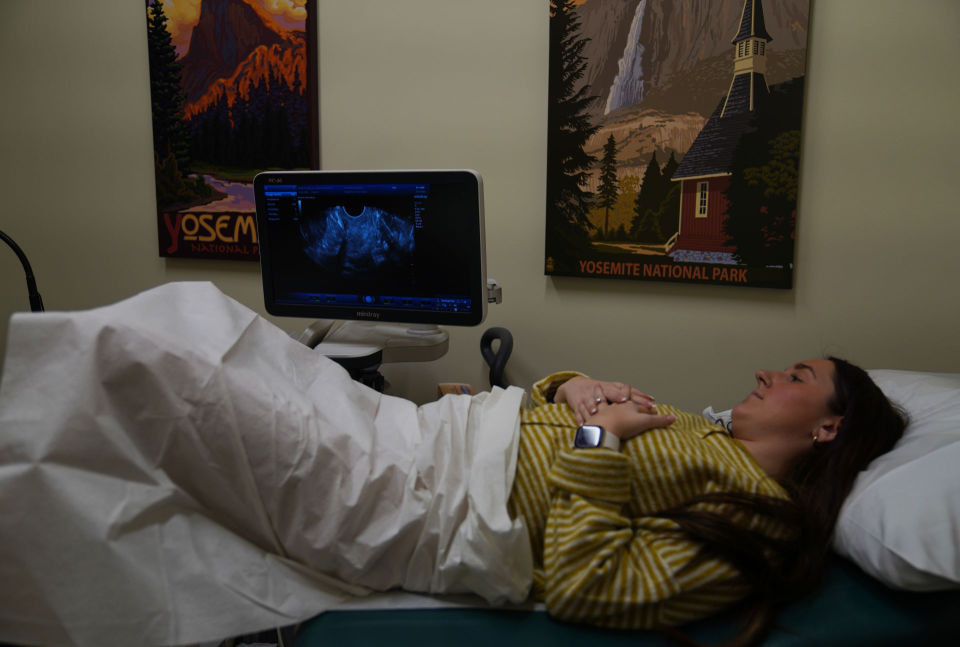
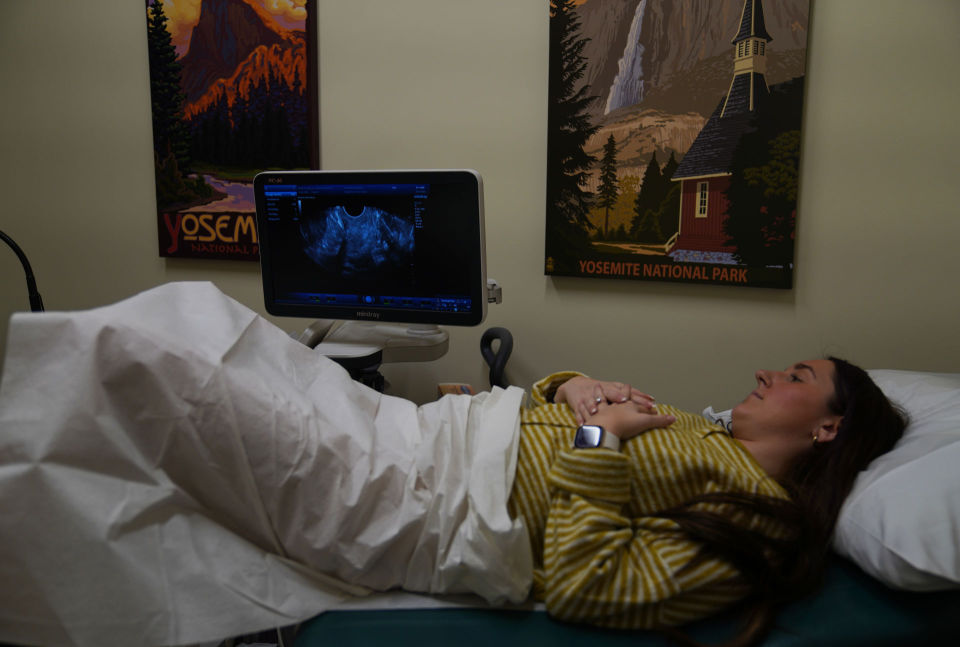
On January 9, 2026, a woman undergoing in vitro fertilization (IVF) receives an ultrasound examination at a fertility clinic in Knoxville, Tennessee (Photo: Visual China)
During recent sessions of the National People’s Congress and the Chinese People’s Political Consultative Conference (the Two Sessions), several delegates raised proposals regarding single women’s reproductive rights. Their suggestions included expanding access to assisted reproductive technology for qualified unmarried women, ensuring single women receive reproductive security equal to that of married women, and piloting the freezing of eggs for single women anticipating future family needs.
Yet support and opposition remain deeply divided. Critics voice concerns that recklessly opening up assisted reproductive technology could trigger complex ethical dilemmas, that intentionally engineering households lacking one parent warrants debate, and that the financial investment and caregiving responsibilities required for single-parent upbringing are immense.
Liao Xi, vice president and head of the reproductive medicine department at Beijing Jiayuan Hospital, noted in an interview with Southern People Weekly that seeking assisted reproduction across borders introduces numerous hardships. Medically speaking, the administration of gonadotropins and egg retrieval are invasive procedures carrying risks such as ovarian hyperstimulation syndrome, bacterial infection, and internal hemorrhage. Furthermore, overseas clinics vary wildly in quality and lack standardized regulatory oversight. When it comes to seeking recourse, the high costs and complex procedures of cross-border litigation make securing compensation for medical malpractice extraordinarily difficult.
More severe are the long-term legal and lifestyle predicaments. The subsequent storage of overseas frozen eggs, cross-border transfers, the confirmation of future legal relationships, and a series of child identity issues are fraught with unpredictability. Many who embark on this path fail to fully evaluate these distant costs.
For women, raising a child alone is not merely a medical decision; it requires confronting legal and remedy risks, financial burdens, the depletion of time and energy, and potential identity confusion during a child’s upbringing.
Here is Lu Yang’s account:
Pursuing cross-border assisted reproduction is a massive gamble; the worst-case scenario is spending a fortune and coming away with nothing. Especially for someone with limited financial resources like me, it is less of a medical choice and more of a financial roll of the dice.
I had known about this path for years, but I didn’t take action until I turned 40. During that time, I balanced blind dating with waiting for my parents to soften their stance. The moment they stopped strongly objecting, I contacted a fertility clinic in Country B. Based on my age and physical condition, the initial evaluation showed that my chances of success were far from ideal.
Even so, I decided to give it a try.
I packed my bags and set off alone for Country B. Ever since my study-abroad days, I had grown accustomed to moving through life independently, rarely feeling lonely—or rather, having fully adapted to a solitary lifestyle.
I rented an affordable guesthouse near the fertility center, but what followed was unexpected and perilous: on the third day after my arrival, I suddenly lost consciousness, unable to eat, and slept for a grueling 17 hours. It was likely a viral infection that left my limbs completely weak. When I woke up, I was gripped by lingering fear. If I had remained unconscious, I might easily have been overlooked. I was fortunate my constitution wasn’t worse; once I woke up, I clearly began to recover.
Whenever physical ailments strike, I catch myself wishing someone were there to help. But the moment I return to normal, I yearn to be left entirely alone.
My greatest worry was whether this sudden illness might have damaged my eggs, so I consulted the medical staff, who assured me it should be fine. In any case, I couldn’t afford to abort this treatment cycle; otherwise, all the time and money invested up to that point would have gone down the drain.
When selecting a donor, appearance was my top priority. He didn’t need to be conventionally handsome, but he had to help compensate for my flaws: I am of average height and have an adenoidal facial structure. When filtering candidates, I first set the height requirement above 1.80 meters and leaned toward angular face shapes. People like us care deeply about looks; if we could accept any appearance, we wouldn’t find marriage so difficult.
Eventually, I obtained two screening-passed blastocysts (embryos cultured to days 5 to 6 ready for uterine transfer), giving me two chances at motherhood. Yet the first transfer failed, delivering a devastating blow because it was my highest-rated embryo. Unwilling to endure a lengthy wait, I prepared for a second attempt two months later. That period was marked by deep depression as I carried the crushing expectation that “this time must succeed.”
I am someone who rarely suffers from self-inflicted emotional exhaustion, but even after filtering out all practical anxieties, a deep-seated fear of death remained. Reproduction is, at its core, life’s counter-offensive against death. Moreover, a three-person household without a child grows increasingly weary as the members age; meals become bland, the atmosphere grows heavy, and there is a palpable sense of everyone’s life force slowly draining away. This, too, drove my desire for a child.
I flew back to Country B. Because of my frequent short-term entries, I felt exceptionally nervous going through customs. But to ensure my story remained consistent, I decided to be completely honest.
The customs officer was a middle-aged man. After listening to my story, he told me the oldest mother he had ever encountered was 44. “So, you are full of hope,” he said. “No matter what, you must believe the child will come.”
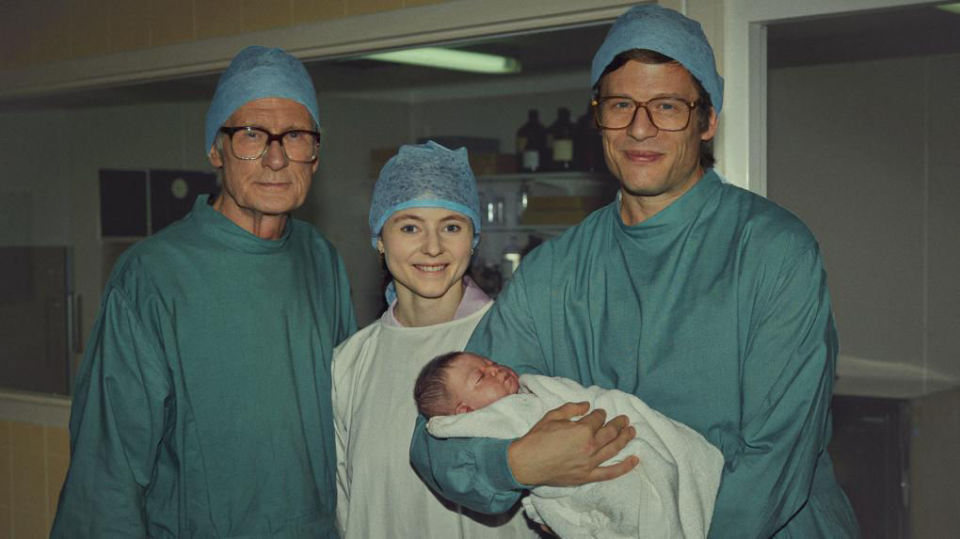
A still from the film Birth of a Miracle depicting the 1978 birth of Louise Joy Brown, the world’s first “test-tube baby”
That moment touched my heart and provided a tremendous surge of spiritual encouragement. I told him I didn’t plan on giving birth in Country B—I was merely utilizing their medical resources. He chose to believe me. And it was the truth: I held no attachment to living overseas and would never betray the trust of a total stranger.
This time, I succeeded.
My entire pregnancy and delivery went smoothly; I didn’t even experience early morning sickness. It was only in the late stages of pregnancy that my blood sugar rose slightly, and lying down caused aching in my ribs.
Less than a month after giving birth, I developed non-lactational mastitis, likely stemming from underlying immune issues. I underwent two consecutive hospital surgeries to clear out necrotic breast tissue. The post-surgery regimen required high doses of hormones and anti-inflammatory medications, triggering multiple sequelae: “three highs” (high blood pressure, high blood sugar, and high cholesterol), vertigo, and persistent joint pain throughout my limbs. For a long time, even walking up stairs felt like a grueling chore.
The physical and mental ravages of this illness far exceeded the childbirth itself. After all that time and effort, my daughter only managed to drink breast milk for three weeks. Weighing the gains and losses, however, that minor setback meant almost nothing.
The earlier one pursues assisted reproduction, the higher the probability of success. But there is a built-in paradox: when people are young, they often feel they have an abundance of time and possibilities; by the time they realize they cannot find an ideal partner, they are no longer young, their reproductive capacity has declined, and success rates plummet in tandem.
When my daughter turned one, we often strolled around nearby shopping malls. An elderly grandmother once asked my mother if the child was a test-tube baby. She shared that her own daughter had wanted to do the same thing, but she had stopped her. Seeing my daughter full of life and vigor, she felt a pang of regret—but her daughter was already 45, and for many things, repentance came too late.
In my early 30s, I already sensed I was out of the running on the romantic front. My biggest shortcoming, perhaps, was that I didn’t fit the societal imagination of an “ideal daughter-in-law”—glamorous, gentle, and adept at housework. I lacked all of it. During that period, I endured a dozen blind dates, mostly arranged by family and friends.
I met one man who dropped out of junior high school yet owned multiple properties; the moment we met, he launched into a critique of China’s educational system. I thought to myself: no matter how many systemic flaws exist, they shouldn’t stop someone from finishing junior high. Another man heard I was a “returnee” and fantasized that I could help him move abroad while he took charge of “investment and financial management.”
The more men I encountered, the lower my approval of them dropped, producing a strange sense of “reproductive isolation.”
My final blind date happened when I was 39. The man was reasonably good-looking with a low educational background, but his siblings were all well-educated, suggesting good genetic stock. I figured as long as there were no fundamental disagreements, we could try getting along. But he felt our differences were too vast and communication too difficult.
As I grew older, I understood with increasing clarity just how hard it would be to encounter a better option. I have a female cousin who, just past the age of 30, was being introduced to 50-year-old widowers. Though that cousin eventually married, and the children of other relatives settled down one by one, during those days it felt as though I was the only person left wandering alone. I had tried with every ounce of my being; why wasn’t it working?
For a brief moment, I even considered a one-night stand, but worried about hygiene and infectious disease risks. By comparison, sperm banks at least undergo medical screenings and provide relatively comprehensive profiles.
The greatest disadvantage of single parenting is bearing higher risks alone, especially when children fall seriously ill. If a child contracts a rare or severe illness requiring bone marrow from a blood relative, the predicament of a single-parent family becomes starkly acute. Anticipating this exact concern, I specifically preserved my umbilical cord blood at birth. Though I harbor reservations about the technology itself, I was willing to try anything that could add even a sliver of protection.
During the period when hormone levels plummeted postpartum, I was plagued by terrifying nightmares: in the dark, my shoulders throbbed with intense pain as a malevolent-looking child bit me. This likely tied back to latent parental anxiety.
A practical problem of single-parent childrearing is limited income—one person’s earnings can never match two. But as long as one lives frugally, life goes on. I have no excessive material demands and wouldn’t mind a reduced standard of living.
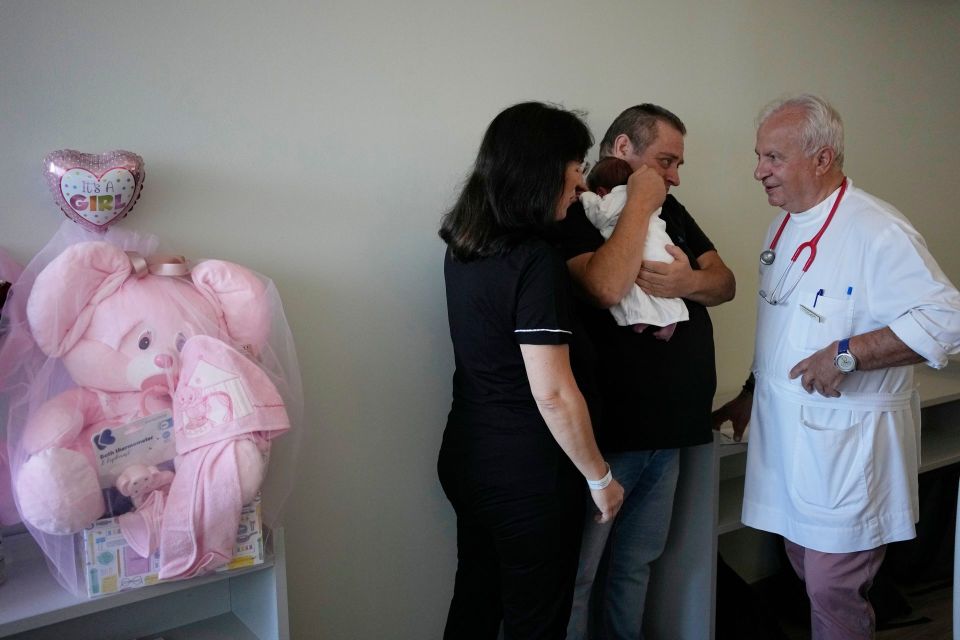
On September 11, 2026, in Athens, Greece, an older couple holds their newborn test-tube baby, just three days old, while talking with pediatricians at a private maternity clinic (Photo: Visual China)
If my daughter turns out unlike me and develops a craving for luxury goods and designer brands, I will teach her business thinking early on: “Mom can teach classes. If you have enough students, you’ll have money to buy what you want. Can you help Mom market this course? If you can’t sell it and have no other skills, we’ll just live simply like this.” Spending a few thousand yuan a month isn’t particularly wealthy, but it avoids destitution. Maintaining this kind of stable peace of mind is already good enough.
Unnecessary parenting expenses must also be compressed. I don’t want to spend a fortune on cram schools; I can teach academic subjects myself. To be frank, more than a decade of experience in the training industry has taught me that no mediocre child has ever been coached into a genius by me; the best outcome is moving from a B level to a B+, while reaching an A remains an illusion.
I hope my daughter lives an easy, happy life, cultivating the mindset of “no matter what I turn out to be, I am joyful,” so she doesn’t waste her youth. There’s no need to stress excessively over schoolwork; once people tighten up, they become rigid and dull. I plan to use fun methods to guide her early learning: for humanities and verbal eloquence, we will listen to traditional cross-talk (xiangsheng) and storytelling (pingshu); for commercial and economic games, we will develop financial awareness to help her understand the value of financial planning.
In my value system, a child’s moral cultivation and mental health will always take precedence above all else. In my professional career, I’ve encountered plenty of privileged kids whose parents invested vast sums of money, only for the children to display clear signs of depression while being driven through grueling tutoring regimens. Others achieved stellar grades and university admissions, yet harbored inner darkness. Cultivating a person is like applying foundation—it always wears off eventually—but a person’s character and innate temperament last a lifetime.
When it comes to education, I am a ready-made example. I scored 636 points on the science section of the national college entrance examination (Gaokao), successfully entering the astronomy department of a prestigious Project 985 university. I dreamed of becoming an astronomer—sleeping by day, observing the stars from the rooftop by night, and hopefully detecting a secret running through human history.
Yet my college life was utterly bleak. On one hand, the environment changed, and local meteorological conditions were hardly suitable for stargazing. On the other hand, I had top-tier grades in middle school and once arrogantly assumed my IQ sat at the very top tier. Only upon entering university did I realize how deep the waters ran; standing among my peers, I could feel their cognitive abilities operated at least 20 points higher than mine.
Looking back now, I realize how naive I was. I hadn’t even experienced a single academic competition, yet I fantasized about becoming a scientist—truly a frog at the bottom of a well.
Back then, I just wanted to escape that place, so I chose to pursue graduate studies abroad. With limited family finances, I found a tuition-free school and stayed in STEM, completing my graduate degree in five years. My mind was entirely focused on quickly securing a credential because my middle school scores had been so brilliant; if my academic background weren’t equally impressive, I would have felt deeply ashamed.
After graduation, the overseas job hunt didn’t go smoothly. I grew increasingly aware that I was drifting further and further away from my original aspirations. Accompanied by advancing age and repeated attempts at reinvention, my youth was consumed in the process.
I made the decision to return to China, figuring it would at least save on rent. My first job back home was editing junior high physics textbooks. My colleagues mostly held vocational college backgrounds, and our daily routine consisted of repeatedly sorting through junior high exam highlights, sometimes even reviewing elementary school multiplication tables. The gap between this work and my expectations was too vast; I lasted less than a year before quitting.
Afterward, I threw myself into international curriculum teaching and training, initially joining a study-abroad consultancy. The work intensity was suffocating, and after a few years, I opted out. Nowadays, I primarily work as an independent tutor, occasionally taking on corporate projects—earning just enough each month to sustain a living.
My experience proves a point: as long as memory and comprehension are basically functional, learning anything isn’t too difficult. But individual brainpower and physical stamina both have ceilings, and combined with constraints from circumstance and the external environment, focusing on doing one thing well makes it nearly impossible to juggle others. Straining to split oneself across too many fronts only exposes one’s weaknesses. Rather than forcing perfection across the board, it is far better to ease up from start to finish.
When my family first heard I had undergone cross-border assisted reproduction, they felt a bit uncomfortable psychologically. But once they actually saw the baby, no one could resist her. At family gatherings, everyone crowded around to hold her. Wherever she went, she felt like a little star.
My mother felt the child’s appearance was too “striking” and insisted on putting a hat on her whenever they went outside. I, on the other hand, believe “standing out” is better than being “ordinary.” As a child, I was the sort of person easily looked down upon, and that feeling was terrible. If she has recognizable facial features, teachers will pay closer attention to her at school.
I grew up in my maternal grandparents’ home, and in my memories, my father rarely appeared. He was always running about, returning home occasionally like a “disrupter”—either bumping or scraping me. To me, the role of a “father” is not essential in a family. From a biological perspective, the model of one male and one female jointly raising offspring is actually not universal in nature.
If my daughter grows up with a different perspective and yearns to “have a dad,” I will tell her frankly: “Mom wasn’t very successful in romance, but I wanted a child, so I used scientific means.”
I will speak to her with complete candor rather than fabricating stories like “Daddy is gone” or “Daddy is far away.” Doing so would only trap her in an unachievable illusion, and when that illusion shatters, the pain she would endure would be far greater.
If she struggles to understand at first, I will gently counsel her: “I hope you don’t harbor too many complaints—at least you turned out adorable. Those who are plain-looking have their own hidden trials. Everyone is figuring out a way to live a fulfilling life in their own manner.”
My father passed away from illness when my daughter was three months old. When he was alive, the two of us rarely chatted deeply; there was always a layer of separation between us. When he suddenly passed away in the hospital and the news reached us, my mother rushed off to handle his affairs while I stayed home holding my daughter, tears streaming uncontrollably. I felt the transience of life. Deciding to have a child turned out to be one of the few things my father and I shared that brought mutual joy.
After my father’s death, my mother’s burden eased slightly. For years, she had cared for my ailing father, suffering through immense hardship. After my daughter was born, she helped look after the baby. During the period when I suffered from mastitis during my postpartum confinement, she took the subway every single day at dawn to visit the baby at the postpartum care center, went to the hospital to see me, and then returned home to look after my father. Approaching 70 years of age, she ran back and forth day and night.
In the year the baby was born, my mother lost 20 pounds. She frequently complained that my choice had ruined her twilight years, even threatening to run away from home, but I knew deep down she couldn’t bear to leave. She poured all her energy into this little creature; no matter how exhausted she felt, the moment she saw the child, her entire face would blossom into a smile. My daughter is also intensely attached to her grandmother, unable to be separated for even a moment. As a gesture of gratitude, I decided during my pregnancy that my daughter would take my mother’s surname, granting her “naming rights” as repayment for bearing the heaviest load.
With the baby currently at her most mischievous stage, my mother and I adopt a low-consumption, high-mobility approach to coexisting. At the end of the day, we are mother and daughter; even when opinions clash, we can understand and accept each other, making most things easy to negotiate.
My only lingering anxiety is ten years from now, when my mother and I will be older, and I will inevitably have to devote a large amount of energy to caring for my mother just as my daughter enters adolescence. I fear I won’t have sufficient time and energy to accompany her. This is perhaps a universal hurdle faced by older parents.
To put it bluntly, pursuing cross-border assisted reproduction is a path fraught with extreme risks—money, physical health, future parenting burdens… all must be borne entirely alone. For me, however, no matter how bitter or difficult, it was still vastly superior to having no options at all. On the path of romance, I waited bitterly for a decade with zero results. If I hadn’t seized this opportunity, once my reproductive prime passed, I would have lived with lifelong remorse.
Recently, a fleeting moment touched me deeply: as I lay flat on the floor, my daughter scampered over, plunged straight into my arms, and lay down beside me. At that moment, I wished we could stay like that forever—I wasn’t tired, and she was safe. Yet this tranquility lasted only a few minutes before she turned and bolted away like a little wild horse.