
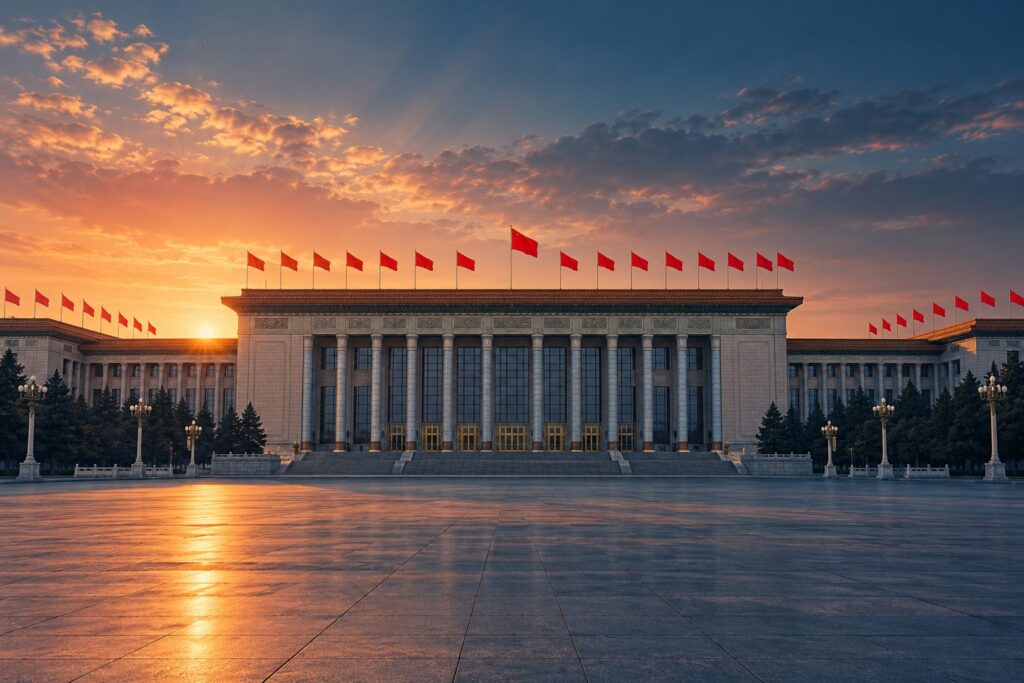
Next week’s plenum is about one thing: discipline. Here is what to watch

The fifth plenary session of the 20th Central Committee opens in Beijing on October 26 and runs four days. Its stated agenda is to “study major issues on advancing the Party’s full and rigorous self-governance,” and the Politburo will report its work to the full committee. That is the whole official description. The rest is inference.
Start with what a plenum does. The Central Committee has roughly 370 full and alternate members and meets in plenary once or twice a year. Each session usually has one headline document. Last October’s fourth plenum adopted the recommendations for the 15th Five-Year Plan covering 2026 to 2030. The third plenum in July 2024 was about economic reform. This one has already been handed its text: the Politburo has reviewed a draft decision on “strengthening full and rigorous party self-governance with perseverance,” after consultation with regional officials, central organs and non-party groups. The plenum’s job is to approve it.
Why discipline, and why now? The Party’s 21st National Congress is due in autumn 2027, and the year before a congress is when the leadership settles who is in, who is out and on what terms. A plenum devoted to internal governance is the mechanism for that. Xia Lu of Renmin University, quoted by CGTN, called the session “pivotal and bridging” and said it is not about “enforcing discipline for the sake of discipline” but about making the Party a more capable governing instrument. Liu Suhua of the Central Party School described full governance as the “fundamental guarantee” of China’s modernisation goals.
Three things to watch. First, personnel: plenums are where the Central Committee formally confirms expulsions of members already under investigation, and this one follows a year of purges in the military leadership. Some analysts expect it to close the files on senior generals removed earlier. Second, the text of the decision itself, which will tell cadres what the next five years of inspections will look for. Third, the communiqué’s economic language, if any, given that it lands a week after third-quarter GDP data that showed exports strong and investment weak.
What not to expect is policy. This is not an economic plenum and will not produce stimulus. Its audience is the Party’s own 100 million members, and its purpose is to tell them, in the clearest terms available, what the rules are before 2027.