
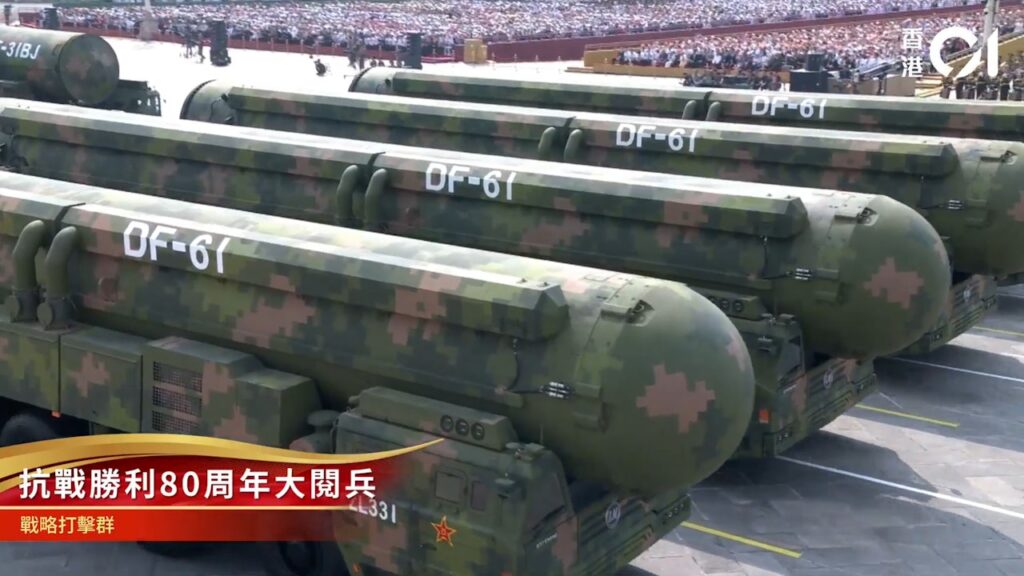
Washington thought it understood China’s nuclear arsenal. Then the Dongfeng-61 appeared
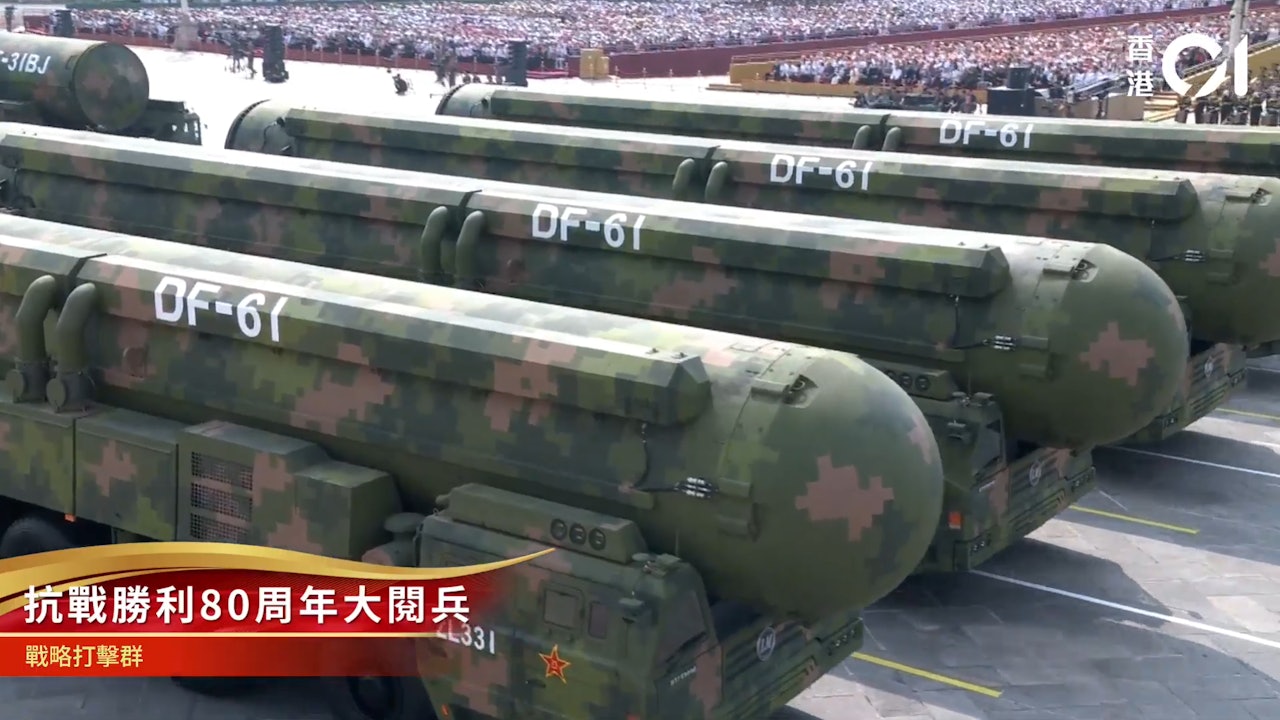
According to assessments by defense think tanks Army Recognition and Defence Security Asia, the rapid 14-month operational timeline was largely driven by the missile’s heavy reliance on a proven, mature launch platform. The Dongfeng-61 utilizes the same eight-axle, 16-wheel transporter-erector-launcher (TEL) mobile chassis as the Dongfeng-41, sharing identical launch canister dimensions and interface designs. This compatibility allows the Rocket Force to integrate the new weapon into existing field supply chains, strategic communication networks, maintenance fleets, and launch pad infrastructure with minimal modifications, significantly compressing training and deployment schedules.
The weapon has caught U.S. intelligence and military analysts off guard. The U.S. defense publication The War Zone reported that Washington remains entirely in the dark regarding the Dongfeng-61’s core parameters, penetration mechanisms, payload configurations, and deployment patterns, noting that traditional intelligence-gathering and analytical models for tracking Chinese military developments have effectively broken down.
Beijing has maintained complete silence on the missile’s specifications, withholding official data on range, warhead capacity, hypersonic glide vehicle compatibility, deployment regions, and launch preparation times. Military observers widely speculate that the missile employs advanced solid-fuel rocket motors designed to shorten launch preparation windows and may carry a hypersonic glide vehicle capable of terminal speeds up to Mach 25. Such a weapon would possess lateral maneuverability and trajectory-shifting capabilities within the atmosphere, posing a direct challenge to conventional ballistic missile defense networks that rely on predictable flight paths for interception.
Beyond its flight characteristics, the Dongfeng-61 offers high tactical survivability. Unlike fixed silo installations vulnerable to satellite surveillance, road-mobile systems can leverage highway networks, mountainous terrain, and underground tunnel infrastructure for concealment during nocturnal movements. Satellites can capture momentary imagery but struggle to maintain continuous tracking of dynamic transporter vehicles. The proliferation of mobile, hard-to-track launchers complicates U.S. calculus regarding China’s nuclear counterstrike capabilities.
The compressed operational timeline also underscores the depth of China’s domestic supply chain. Developing an intercontinental ballistic missile requires advanced capabilities across high-performance carbon fibers, specialty metallurgy, high-energy solid propellants, precision inertial guidance, and ultra-heavy multi-axle vehicle engineering. Decades-old Western export controls prompted a domestic substitution drive, resulting in a fully localized manufacturing ecosystem spanning raw materials, core electronic components, final assembly, and system integration.
From a geopolitical perspective, the deployment alters the strategic balance in the Asia-Pacific. As Washington and its regional allies continue to expand missile defense infrastructure, the introduction of the Dongfeng-61 complements existing silo-based and road-mobile deterrents like the Dongfeng-41. While Beijing maintains a stated policy of no-first-use and a minimum deterrent posture, military planners emphasize that survivable second-strike capabilities remain foundational to its overarching national defense strategy.