A Johns Hopkins award winner is still trapped by his vocational school diploma in China
At 31, He Shihao has spent 12 years climbing from a vocational college in China’s eastern Shandong province to the upper echelons of global neurosurgery. In October, Johns Hopkins University awarded him its Career Impact Award, honoring his generosity, mentorship, and advocacy in supporting the professional growth of others. He is the first Chinese national to receive the honor since the award’s inception, a distinction chosen from a pool of professors, faculty, postdoctoral researchers, and alumni across the entire university.
Yet despite publishing 30 SCI-indexed papers as a lead or corresponding author in top-tier journals like Stroke and completing stints at Stanford University, He cannot shake the stigma of his vocational school roots in a country obsessed with elite university credentials.
01 Starting from a 430
In 2013, He entered the clinical medicine program at Shandong Medical Vocational College with a score of 430 on his *gaokao*, China’s grueling national college entrance examination. Walking onto campus, he found himself surrounded by an atmosphere of apathy. Classrooms buzzed with students who spent nights playing video games until 4:00 or 5:00 AM, sleeping through lectures the next morning.
By the end of his first semester, He ranked tenth out of more than fifty students in his class, bolstered by a basic understanding of medicine passed down from his parents, both of whom are medical workers. The modest success sparked a realization: “If I try just a little harder, could I go further?”
He abandoned entertainment, trading vocational textbooks for five-year undergraduate medical volumes. When the dormitory lights went out at 10:00 PM and roommates turned on desk lamps to game, he switched on his own light to study. Frustrated by the noise, roommates eventually smashed his desk lamp and tore up his notebooks. Undeterred, He relocated to the building’s 24-hour boiler room, using a small plastic basin across his knees as a desk, studying until 5:00 AM on just three hours of sleep.
Across the grade, he earned a new moniker: “He 5 AM.” The online handle he adopted then remains with him today. His drive, he recalls, stemmed from “disappointment with my environment and a fear of falling into self-degradation.” Knowing that only about one-tenth of his school’s students successfully transferred to four-year universities each year, he told himself, “If I can’t even grasp this, I’ll end up just like them.”
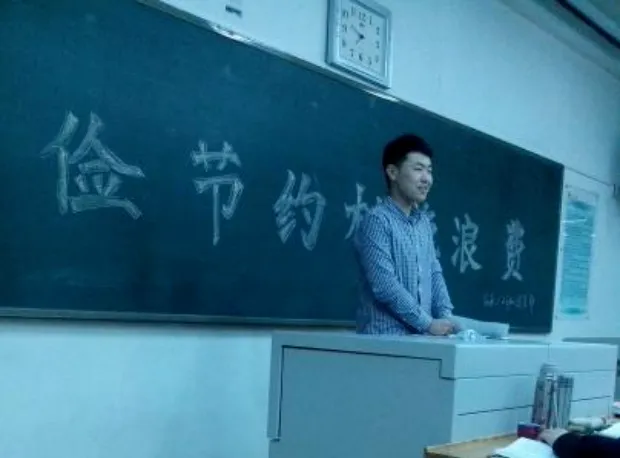
In 2016, He outscored thousands of peers to rank in the provincial top 100, transferring to Taishan Medical University—now known as Shandong First Medical University—to complete his undergraduate degree.
02 Climbing Higher
During his undergraduate years, He set his sights on Capital Medical University, home to China’s top-ranked neurosurgery department. To an outsider, the goal felt impossible: no student from his undergraduate institution had ever gained admission there. When advisors suggested safer options, He remained fixed on his target.
For two years, he maintained his punishing routine of sleeping three to four hours a night. His body soon revolted. He began vomiting whatever he ate, and his liver function markers soared to 240, far above the normal range of 10 to 40. Classmates jokingly called him a “gutter oil detector” for his erratic digestion.
In 2018, while riding a crowded bus from Linyi to his hometown of Tengzhou amid the smell of discarded sunflower seed shells and restless passengers, a notification lit up his phone: an interview invitation from Capital Medical University.
“At that moment,” he recalled, “the sunshine was bright, the sunflower seeds tasted sweet, the children were full of life, and everything was wonderful.”
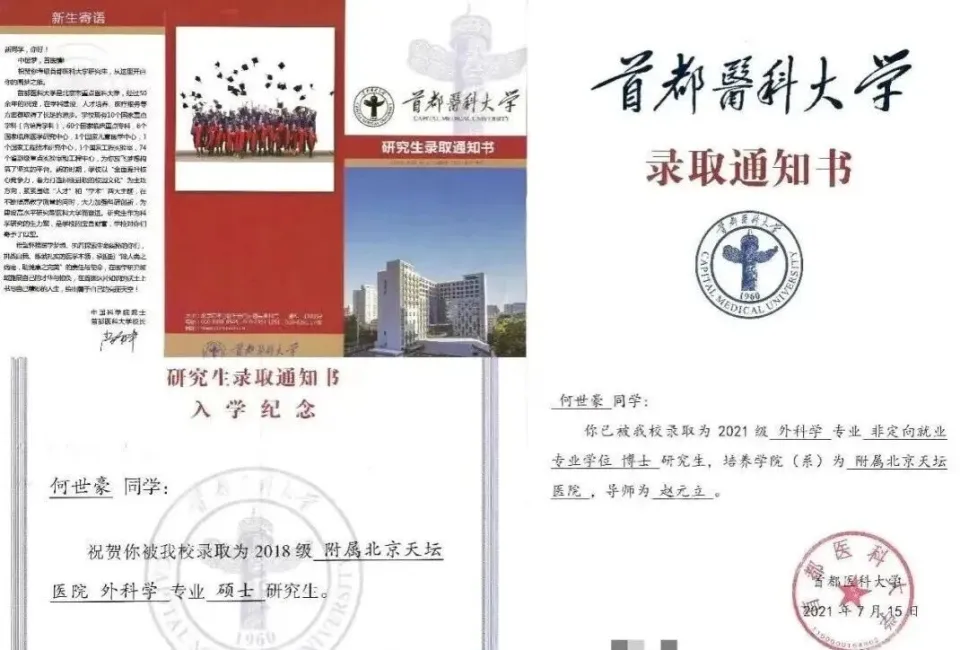
He was accepted into the neurosurgery department at Beijing Tiantan Hospital, affiliated with Capital Medical University, becoming the first graduate student in the hospital’s history to rise from a three-year vocational background. Fearing that professors might harbor biases against his pedigree, he skipped his undergraduate graduation ceremony and rushed to Beijing early to begin working as an intern.
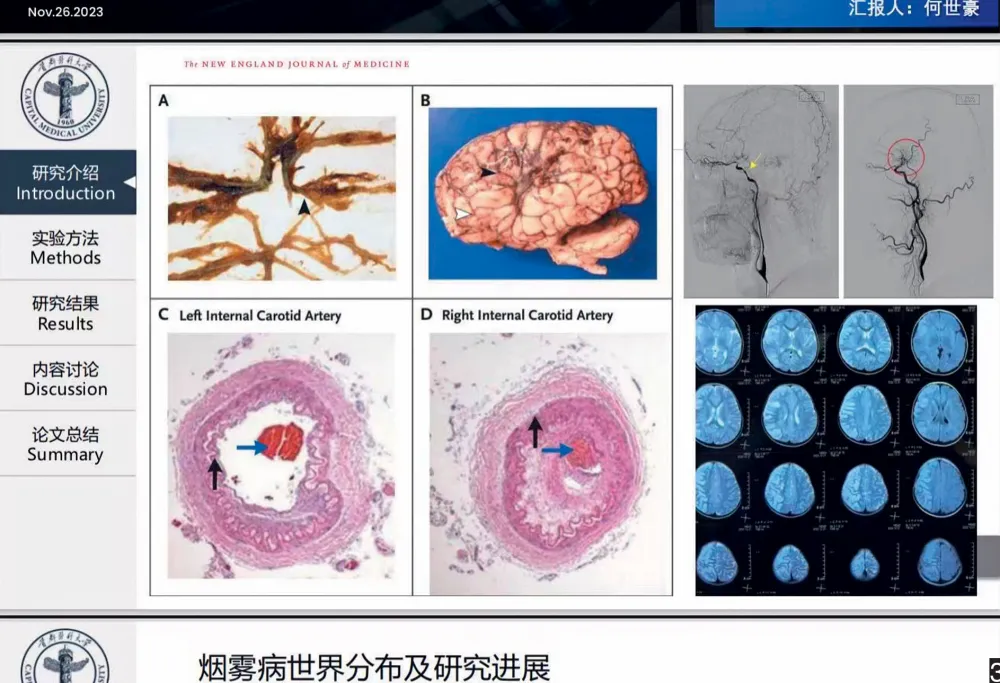
During his graduate studies, He focused his research on Moyamoya disease (MMD), a rare, progressive cerebrovascular disorder characterized by the narrowing of internal carotid arteries. While the etiology remains unknown, it is a major cause of stroke among children and young adults in China. With no pharmacological cure available, surgical interventions remain complex, risky, and financially burdensome.
Working alongside his advisor, Professor Wang Rong, He joined rounds twice a week, evaluating groups of up to 30 patients at a time and handling nearly 3,000 cases a year, predominantly among children aged 5 to 10 and adults aged 37 to 45. One case left a lasting impression: an 11-year-old boy who scored just 3 or 4 out of 10 on a basic cognitive arithmetic test. The boy’s father broke down in tears, confessing he had routinely beaten his son for failing to study, unaware an underlying medical condition was to blame.
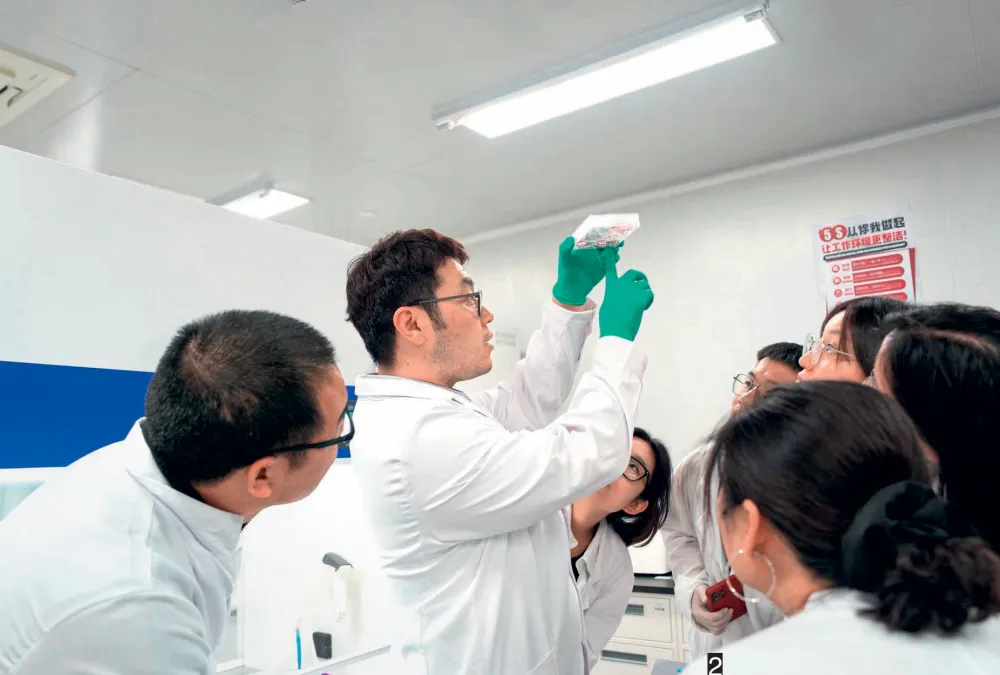
Recognizing the urgent need for better clinical insights, He spent six months downloading and analyzing more than 3,000 academic papers on Moyamoya disease without the aid of artificial intelligence. Balancing daytime clinical training with nighttime literature reviews, he published his first SCI paper on cognitive impairment in Moyamoya patients. Years later, he noticed the paper had been cited more than 50 times.
He eventually published 30 SCI papers in prestigious journals like *Stroke* as lead or corresponding author, earning international recognition. European specialists in Italy and the Netherlands even published independent reports highlighting his findings.
03 Stigma and Success
Yet back home, his parents maintained a culture of unrelenting pressure. When he published a paper with an impact factor of 2, they remarked, “Other people are hitting 5.” When he reached 5 or 6, they countered, “Some people can hit 10; you haven’t even passed the passing line.” When his research appeared in top-tier global journals, they dismissed it: “You’re still light-years away from an academician.”
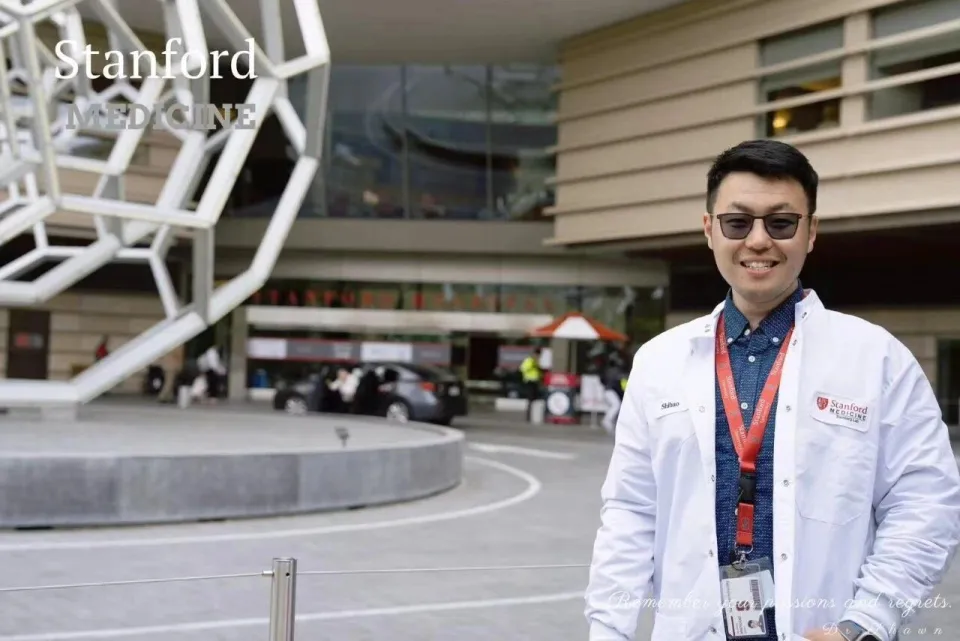
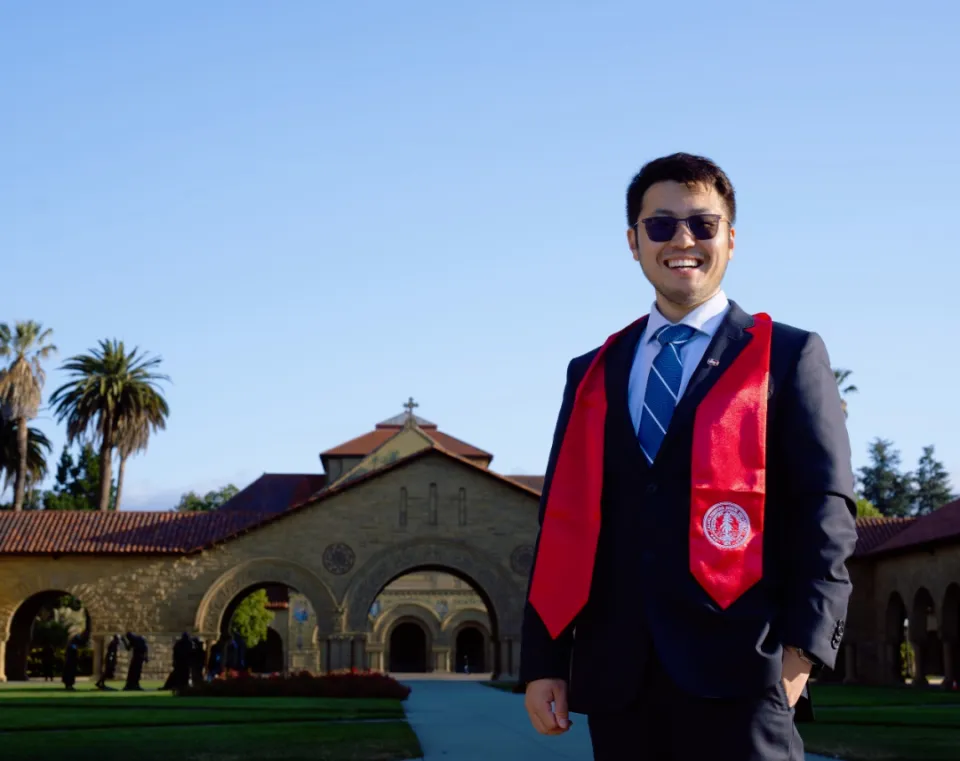
In the summer of 2024, He traveled to Stanford University as a joint-training PhD candidate, eventually joining the Stanford Stroke Center and Moyamoya Center under the mentorship of former department chair Gary K. Steinberg. When he shared the milestone, his father remained unimpressed: “You still don’t have an undergraduate degree. Real graduates get a proper diploma.” Frustrated, He noted, “I knew nobody there. I earned recognition from a top global institution purely through my results, yet he couldn’t comprehend how difficult that was.”
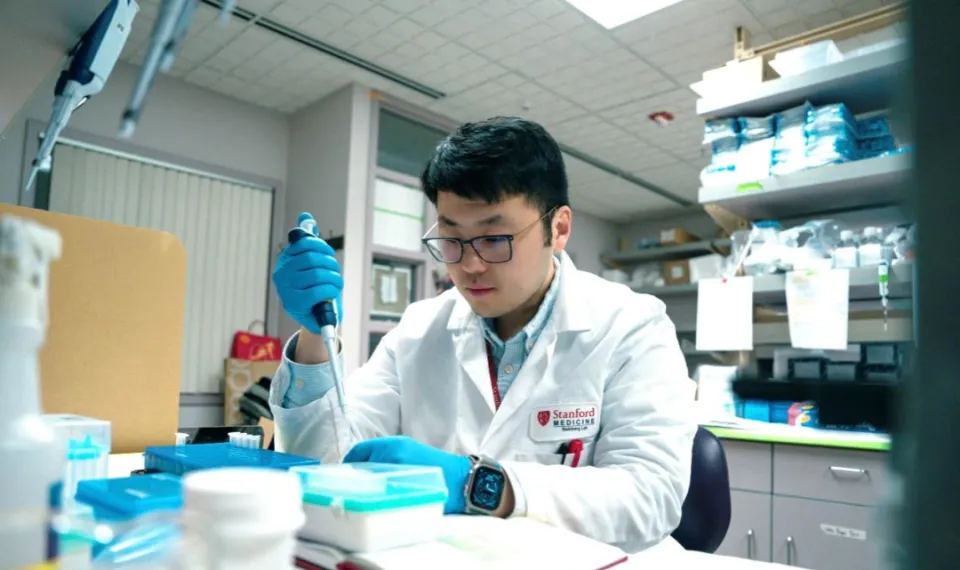
In April 2025, He accepted a postdoctoral invitation from Johns Hopkins University. Moving to Baltimore on a $60,000 annual salary, he now splits his days between translational neuroscience research at the Johns Hopkins School of Medicine and handling editorial duties for multiple international medical journals, fielding one or two peer-review invitations daily.
Even so, the vocational school label follows him. Across China’s hyper-competitive academic landscape, elite universities explicitly bar medical applicants whose lowest degree is a vocational diploma. When applying to Capital Medical University years earlier, He had to dial the admissions office from three different phones just to confirm he was legally permitted to take the exam.
As he ascends higher, the ambient pressure grows. An acquaintance once told him bluntly, “I would never let someone whose first degree is a vocational school treat me as a doctor.” He is constantly reminded that achievements cannot completely overwrite origins.
He refuses to name the people who uttered such remarks. Yet on his English-language CV, his lowest educational credential remains quietly listed in full. “What truly terrifies me,” he admitted, “is not failing an exam, but that lingering feeling—the sense that you have given everything you have, yet you have no idea if there is any road left ahead.”
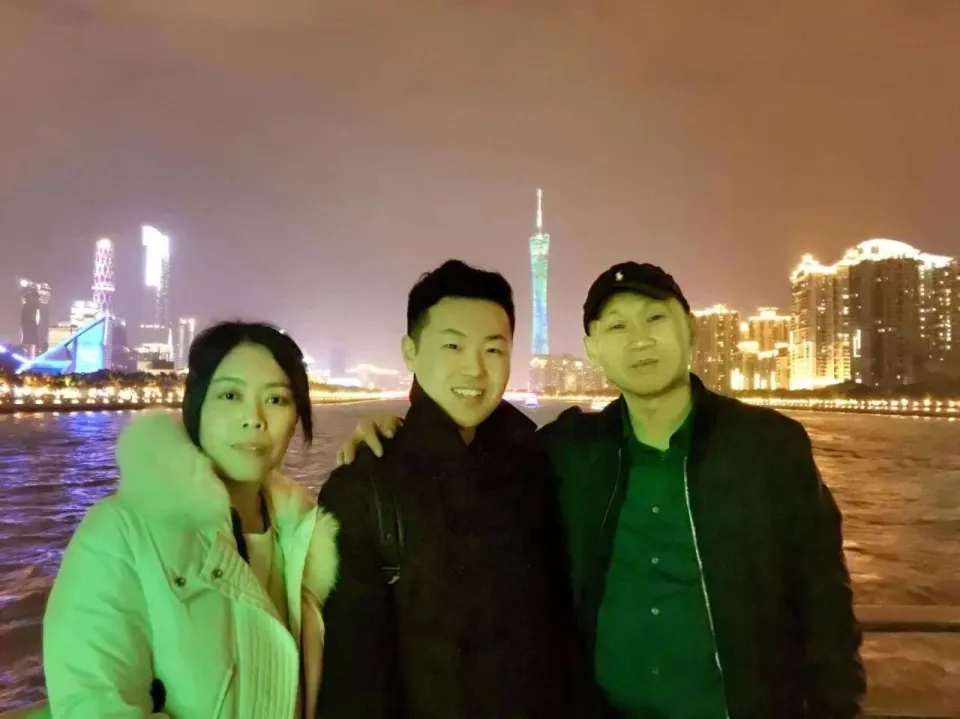
Recalling his initial graduate school interview years prior, He remembered his father driving a modest family car for nine hours to bring him to Beijing. It was He’s first time in the capital, and the pair stayed in a cramped guesthouse ten minutes away from the university. Each night, his father chain-smoked inside the small room while He studied through the haze.
Following days of crushing nervous tension, He vomited into a roadside trash can after eating a bowl of wontons for lunch, his liver function severely compromised by chronic sleep deprivation.
Returning to the room that evening, his father extinguished his cigarette and turned off his phone’s audio-video player. Overhearing a phone call to his mother, He listened as his father said, “The boy has been through a lot. If he doesn’t pass this time, let’s stop yelling at him.”
It was, He felt, the first time his father truly witnessed the physical toll of his ambition.
04 Endurance and the Far Beam
At 3:00 AM local time, replying to interview messages, He noted that the hour remains a routine fixture of his life. Asked why he refuses to rest, he flashed a tired grin: “Just working hard.”
His philosophy on effort is resolute: “People always say hard work doesn’t guarantee equivalent rewards, but I believe no step of effort is ever wasted. I may gain lessons from failure or resilience in my mindset—those are equivalent rewards. The extreme suffering I endure yields returns.”
Yet he acknowledges that such endurance is not meant for everyone. When asked for advice by current vocational students, he offers a sobering caveat: “To be honest, if you are relatively happy staying inside your comfort zone, don’t leave it. True happiness is too hard to find.”
He remains fundamentally results-driven, finding solace in breaking the surface after a long, oxygen-deprived dive to catch the first glimpse of sunlight. His trajectory has stretched from Shandong to Beijing, and eventually across international borders to Stanford, New York, Philadelphia, and Hong Kong.
During a holiday visit to the National Museum of Singapore, he watched a group of four- and five-year-old children conversing fluently in English. A sudden sense of surrealism washed over him: “It took me 28 years of walking to see a dinosaur fossil, and these children are seeing it at age four.”
Reflecting on the journey in a social media post, he wrote: “I walked a very long road and finally saw the light. Years of painstaking research, unwavering resilience, and constant introspection—now, I will continue this journey at Johns Hopkins.”