

China’s youth are buying 30-yuan disposable outfits just for one photo. Then they throw them away

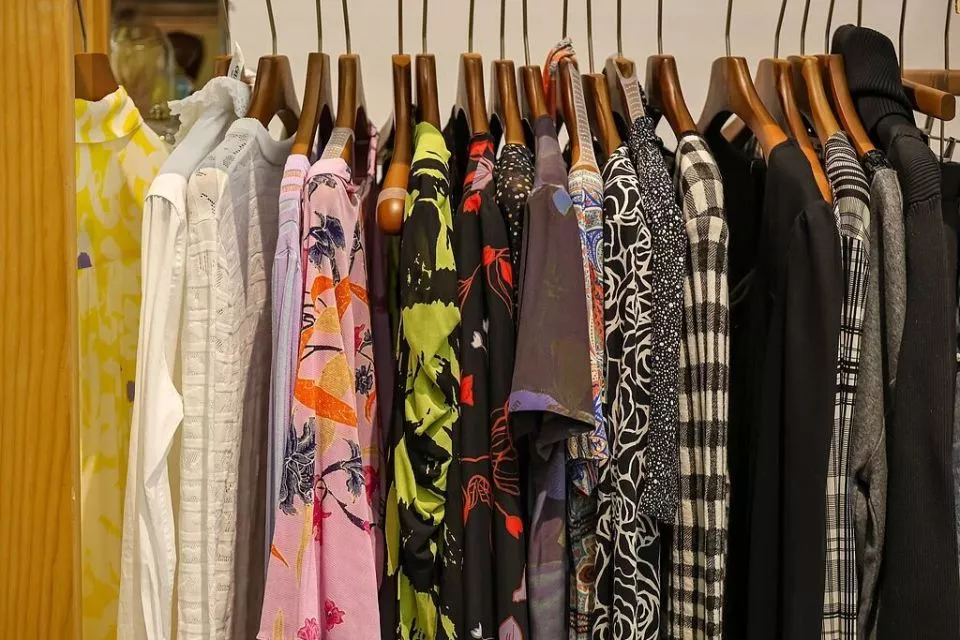
The rise of “staged living” has rewritten the rules of retail, pushing China’s ultra-fast fashion supply chains to a grueling new extreme.
As millions of travelers returned from holiday breaks across China, a startling new retail phenomenon dominated social media: “disposable clothing,” or *cifouyi* (次抛衣).
As the name suggests, these garments are designed to be worn once and discarded. Their sole purpose is to serve as a photographic backdrop for desert treks, coastal getaways, or ancient town tours. Because their designs are hyper-specific and their manufacturing is intentionally rudimentary, they have no place in a normal wardrobe. Yet, because they cost as little as 30 yuan (about $4.20), throwing them away at the end of a trip carries virtually no psychological or financial guilt.
For travelers like Xiao Wen, who changed her packing strategy ahead of an overseas trip earlier this year, the math is simple. In the past, she would pack two massive suitcases—one for clothes and an empty one for souvenirs. This time, she packed her bags entirely with dirt-cheap travel outfits, tossing them out one by one along her route. When she flew home, her luggage was filled exclusively with local gifts and souvenirs.
In the past, even cheap travel clothes would be brought home, washed, and left to languish in a closet for years before being tossed. But with disposable garments, durability is completely irrelevant. The only metric that matters is how they look through a camera lens.
While cheap, trendy clothing is nothing new, the disposable clothing trend marks a fundamental shift in consumption driven by what Chinese internet users call “staged living”—the relentless social media pressure to curate a picturesque, highly aestheticized life. Fast fashion brands long ago trained consumers to chase trends on a budget, but disposable clothing has taken that playbook to its absolute limit.
According to industry insider Yang Qingsee, while the term itself is novel, the manufacturing apparatus behind it has been entrenched for years. It is the ultimate expression of fast fashion logic. Yet within this hyper-cheap supply chain, factories and merchants find their margins relentlessly squeezed, leaving e-commerce platforms as the only reliable beneficiaries.
Consumers routinely source these items across platforms like Alibaba-backed Taobao, Pinduoduo, secondhand marketplace Xianyu, and wholesale giant 1688. A search on lifestyle app Xiaohongshu yields more than 8,400 items, while related hashtags have racked up over 74 million views. On short-video platform Douyin, the keyword has generated more than 61 million video views.

(Posts related to disposable clothing trending on Xiaohongshu and Douyin)
As the trend surged, growing concerns over product quality and ecological waste prompted swift regulatory and platform crackdowns. Several major e-commerce apps restricted or outright blocked searches for the term, prompting merchants to scrub the phrase from their product listings.
A current search for the term on Xianyu returns no results. On Taobao and Pinduoduo, the same search now mostly redirects users to disposable underwear. While ultra-cheap outerwear matching the description remains widely available, sellers have quietly removed the promotional label.


How ‘staged living’ redefined shopping
The evolution of consumer behavior provided the fertile soil in which disposable fashion took root.
A booming domestic tourism and entertainment economy has injected fresh imagination into travel wardrobes. Official statistics show that during a single holiday week, domestic tourist trips across China hit 826 million. Meanwhile, the commercial performance sector proved equally robust, drawing 43.38 million attendees in a recent full-year span, marking an 18.81% year-on-year increase.
This surge in leisure spending collided head-on with the “photogenic culture” of the social media era—where every trip must yield frame-worthy snapshots, every outing demands digital documentation, and the version of oneself projected through a camera lens is paramount. Consequently, the urge to buy single-use garments has soared.
Yet, when looking at individual spending metrics, consumers have grown noticeably more cautious. Total national tourism expenditure during the holiday reached 738.3 billion yuan. Based on 826 million trips, per capita spending averaged roughly 894 yuan, dipping slightly from 911 yuan the previous year.
As social media amplifies the visual value of clothing, traditional markers of quality have evaporated. Taobao’s seasonal fashion trend reports show surging search volumes for terms like “beach vacation maxidresses,” “Xinjiang trip outfits,” and “travel aesthetic vibes,” while travel styling topics on Xiaohongshu have crossed 2.7 billion views.
A garment’s value is increasingly defined by a single photographic moment. For items worn under such temporary, hyper-specific circumstances, low price becomes the ultimate filter.
Xiao Wen and her friends primarily turn to Pinduoduo for its endless array of 20-yuan apparel options. Xianyu serves as a backup, occasionally offering better-crafted secondhand pieces at similar price points. Even in the secondhand market, however, price remains the deciding variable. “Clothes priced at a few dozen yuan find no buyers, and anything over a hundred yuan is entirely ignored,” she noted.
Xiaohongshu lifestyle blogger Xia Yishi packed her bags for a recent trip to France entirely with Southern European-style disposable outfits. Photography was their sole function, after all, and they were discarded from her life the moment the camera stopped rolling. Her sourcing strategy involves stalking seasonal drops from global fast-fashion giants like Zara and H&M, then searching Taobao for identical designs—frequently unearthing de-labeled export overruns at less than half the price. Ironically, these unbranded disposable items struggle to find buyers on secondhand apps, whereas genuine fast-fashion pieces listed under the banner of “disposable wear” easily flip for cash.
In this sense, traditional international fast-fashion brands have found a backdoor into the modern youth consciousness. Yet because supply chains are already thoroughly saturated, their actual financial gains remain modest.
The operational logic of traditional fast fashion and disposable clothing is fundamentally identical: both thrive on rock-bottom prices and rapid inventory turnover. When international giants like Zara and H&M first entered the Chinese market around 2006, they expanded at breakneck speed. Armed with affordable pricing and trend-sensitive designs, they captured a massive cohort of young buyers while accelerating the disposable fashion cycle.
By 2016, however, the expansion trajectories of these foreign brands began to diverge. As domestic manufacturing chains and e-commerce ecosystems matured, Chinese consumers gained access to cheaper, faster alternatives. Brands like New Look and Forever 21 pulled out of the market starting in 2018, while Zara began steadily trimming its physical store footprint.
Yet the retreat of international labels did little to cool the market for cheap, fast-updating apparel. On the contrary, those foreign brands had already conditioned consumers to chase trends whenever prices dropped. Backed by China’s sprawling industrial base and robust e-commerce infrastructure, the lifecycle of a garment was compressed to a razor-thin window, giving birth to the *cifouyi* phenomenon.

Where does the money actually go?
Yang Qingsee points out that the explosive demand for disposable clothing has driven upstream factories—already operating on razor-thin margins—into an even fiercer cycle of internal cutthroat competition.
These garments are standardized commodities. Take beach slip dresses, for instance: they are almost universally crafted with eye-catching, vibrant colors while omitting zippers, inner linings, or pockets. Their minimalist silhouettes allow sewing lines to operate with maximum efficiency, keeping production costs below 10 yuan per unit.
During the fabric-cutting stage, factories map out garment components to minimize waste, relying on automated machinery to slice through stacks of material. The simpler the pattern, the tighter the layout, and the fewer scraps left behind.
Simpler patterns minimize labor costs, leaving fabric quality as the next variable to squeeze. Gram weight, width, and textile patterns become financial shock absorbers, prompting some fringe manufacturers to take dangerous shortcuts, utilizing substandard fabrics or uncertified chemical dyes.
Early production planning also helps suppress costs. Beach slip dresses, for example, peak in sales around May, allowing factories to front-load their manufacturing schedules.
“Disposable clothing follows the classic hit-chasing rule of the industry—small batches and rapid turnover,” notes e-commerce merchant Li Na. “Factories rapidly reproduce whatever sells. These products look virtually identical; whoever drops their price the hardest wins.”
For merchants like Li Na, however, the true pressure of selling disposable apparel does not lie in procurement, but in advertising spend.
Because platforms are flooded with identical cheap listings, simply uploading a product guarantees no visibility. To secure orders, merchants must pump cash into paid traffic acquisition, fighting tooth and nail for search rankings and algorithmic recommendations.
It has become a high-stakes gamble between cost and return. If conversion rates dip even slightly, the revenue generated from clothing sales may fail to cover advertising expenses.
Disposable apparel is also plagued by punishing logistics costs. While casual observers might assume consumers simply toss unwanted items in the trash rather than dealing with returns, Li Na’s data reveals return rates hovering between 60% and 70%—completely on par with regular apparel. “Consumers still buy ten pieces and return five,” she notes, with return shipping and handling eating directly into merchant margins.
Ultimately, across the entire low-cost fashion supply chain, factories and merchants find their profits squeezed to the bone, leaving e-commerce platforms as the sole stable winners.
The craze over disposable clothing demonstrates how apparel consumption is fracturing into hyper-niche categories. While this demand has real sociological roots and expands the industry’s imaginative horizons, chasing it need not rely on an endless race to the bottom. In an excessively cutthroat market, after all, there are ultimately no winners.