
China’s truck drivers face a brutal trap: pull over to obey safety laws and get fined, or keep driving and lose their livelihood
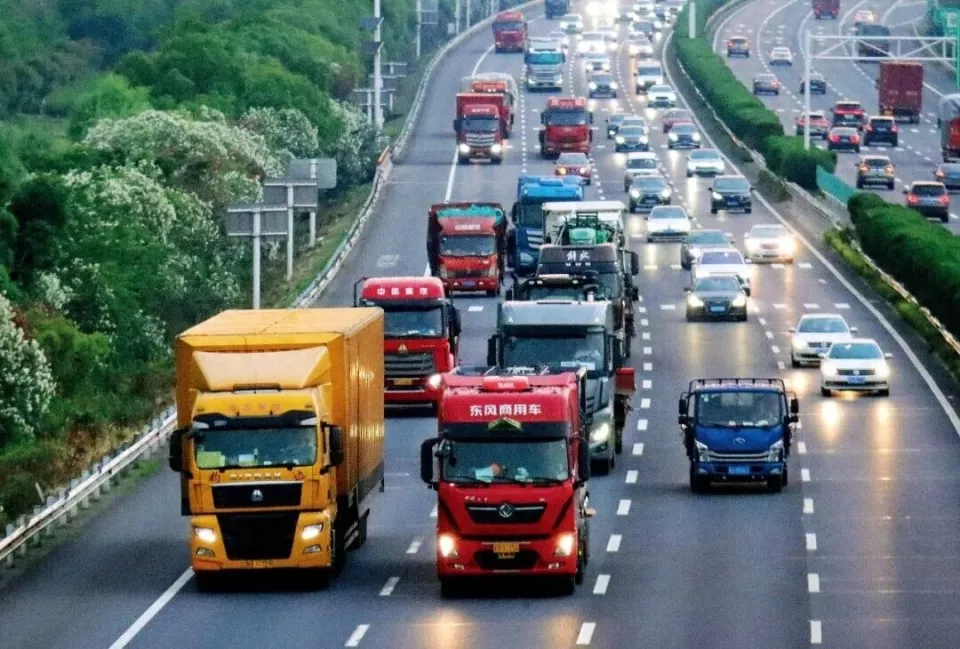
The predicament caught national attention recently after a driver in Chengdu filed a public grievance pointing out a glaring legal paradox. While Sichuan’s provincial transport regulations mandate a 20-minute break for every two hours of night driving, local highways and rural roads suffer from a severe scarcity of designated truck bays. Drivers are frequently forced to abandon their heavy rigs in active traffic lanes, only to be assigned full liability if a rear-end collision occurs. The provincial transport department responded that the ordinance is currently undergoing revisions to resolve conflicts with higher-level national laws.
The collision between rigid rest mandates and a severe shortage of physical parking infrastructure has thrust China’s millions of highway haulers into an impossible squeeze. On June 1, China’s Ministry of Public Security rolled out updated regulations for identifying driver fatigue. The old, single-metric standard—which penalized drivers for going four hours without a 20-minute break—was replaced by a multi-dimensional framework evaluating actual driving behavior, physiological indicators, and travel trajectories during accident investigations.
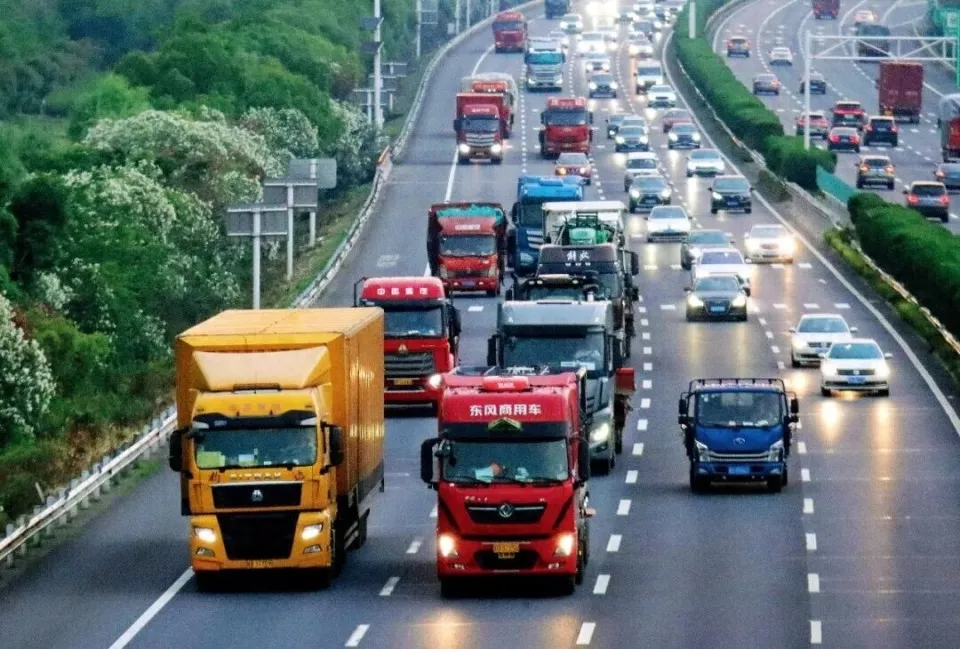
Data from Yunlian Think Tank highlights a glaring supply-demand imbalance for heavy-duty truck parking along major expressways. Although the Ministry of Transport reports that 296,000 truck parking bays and 1,000 standardized “drivers’ homes” have been built nationwide, uneven freight distribution leaves consecutive service areas completely saturated during peak hours, stranding drivers without legal places to rest.
Yang Xinmiao, deputy director of the Transport Research Institute at Tsinghua University, noted that the more pragmatic solution lies in expanding auxiliary parking capacity along ordinary trunk roads rather than just expressways. “The Ministry of Transport is overhauling more than 2,000 expressway service areas this year, which is great news,” Yang said. “However, it remains unclear how many usable spaces actually exist along national and provincial highways. The priority should not be blindly expanding networks, but rapidly auditing and disclosing our baseline capacity.”
Photo/VCG
The Penalty Trap
Since the new fatigue rules took effect, Wei has found that multi-dimensional evaluations have done little to lift the heavy sword of algorithmic enforcement hanging over his head. Daily enforcement relies heavily on vehicle-mounted Beidou satellite navigation systems and telematics platforms. The moment the system flags an overdue driving duration or a rest stop shorter than 20 minutes, an automatic fine is generated.
Wei once fell victim to a system miscalculation. After driving his mandatory four hours, he swapped places with his co-driver, updating their digital identification credentials in the vehicle’s terminal. Yet the backend system continued to log the vehicle as moving under a single operator, triggering a call from highway traffic police.
Although drivers have the right to appeal, the burden of proof rests entirely on them. Data upload delays often mean traffic authorities receive records belonging to the original driver instead of the relief driver. “There are no cameras inside the cab, so we have no audio or video evidence to prove a driver swap actually occurred,” Wei said. After running the numbers, he realized that traveling out-of-town for an offline appeal—factoring in lost wages, tolls, and fuel—would far exceed the 200-yuan ($28) fine. Weighing his options, he chose to swallow the penalty: a 200-yuan fine and three points docked from his license.
The definition of fatigue driving has evolved over decades. The four-hour driving limit paired with a 20-minute break traces back to the Road Traffic Safety Law enacted in 2004. Yang Xinmiao points out that years of enforcement have embedded this standard into widespread social consensus, making it an unyielding metric for traffic safety.
Yet practical execution remains fraught with blind spots. The lead drafter of the Ministry of Public Security’s new fatigue rules admitted in interviews that determining whether a driver was genuinely fatigued at the exact microsecond of a crash is immensely difficult.
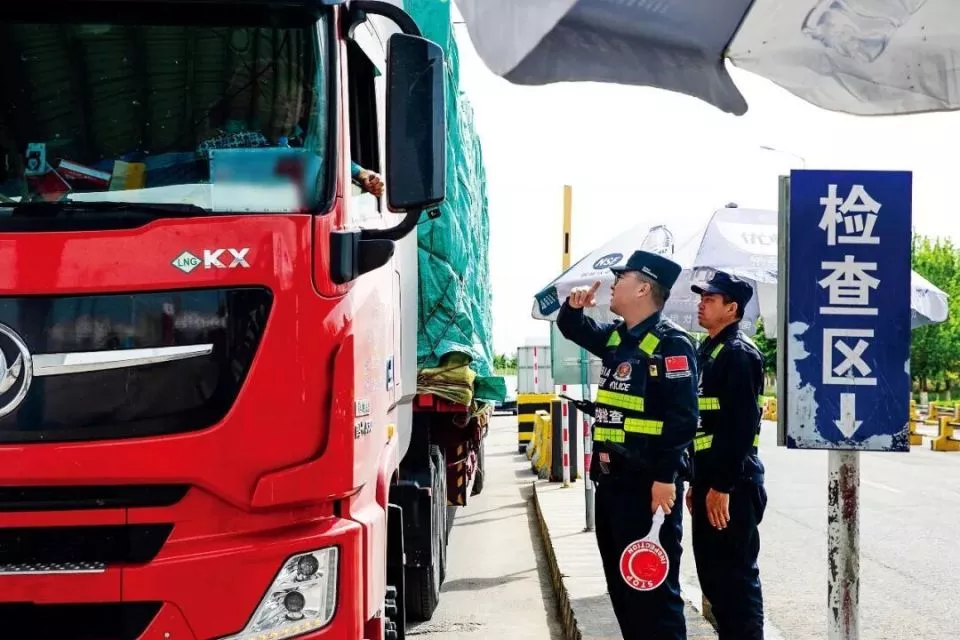
In April 2024, traffic police in Xinjiang’s Ili guide passing drivers and remind them to rest to avoid fatigue. Photo/VCG
Hedi Dengbo, an assistant professor at the Hong Kong University of Science and Technology (Guangzhou) who has long studied driver fatigue, observed that while the new rules retain continuous driving duration caps, they introduce three new evaluation layers: driving behavior, physiological manifestations, and lifestyle patterns.
Under the rules, continuous driving exceeding four hours without a stop, or rest breaks under 20 minutes, are classified as direct fatigue violations. Passenger transport drivers face even stricter caps on night driving and 24-hour cumulative hours. Meanwhile, indicators such as “eyes fully closed for two seconds or more within 10 minutes prior to an accident,” “brain wave fatigue indices dropping below 30,” or “manifesting disorientation during questioning” are primarily reserved for post-accident investigations as supplementary evidence.
From an academic standpoint, Hedi emphasizes that electroencephalogram (EEG) data is among the most sensitive physiological parameters for detecting cognitive fatigue. However, brainwave monitoring equipment is prohibitively expensive and cumbersome to wear, making it impossible to equip every commercial truck and driver. Without such hardware, these advanced metrics remain largely theoretical.
For all practical intents and purposes, driving duration and rest stop intervals remain the frontline metrics for fatigue control. This makes stringent local rules, such as Sichuan’s transport regulations, a constant source of anxiety for truckers.
Wei, who has 14 years of driving experience crisscrossing southwestern China, does not oppose mandatory rest in principle. “As industry professionals, we fully support safety,” he said. However, he argues that Sichuan’s rule requiring a 20-minute break after just two hours of night driving squanders actual rest efficiency. Long-haul night drivers are accustomed to sleeping during the day. When a convoy first hits the road between 10:00 p.m. and midnight, drivers are usually alert and do not need frequent stops. By contrast, the pre-dawn hours—when exhaustion peaks just before sunrise—carry the highest risk of accidents.
Data from the *China Highway Freight Industry Smart Safety White Paper* indicates that roughly 37% of truck accidents stem from human factors such as aggressive or fatigued driving. Crash density peaks between 7:00 a.m. and 9:00 a.m., hitting 4.7 incidents per million kilometers.
Current management measures, however, fail to account for biological circadian rhythms, applying a rigid hourly template across the board. Xie Xiaowen, a specially appointed researcher at the China Logistics Society, notes that road conditions, traffic friction, and psychological fatigue vary wildly between expressways and rural roads, rendering blanket duration caps inherently flawed.

In August 2024, a truck driver rests at a drivers’ home in Jiande, Zhejiang province. Photo/VCG
Nowhere to Park
More pressing than poor time management is the acute scarcity of legal parking spots.
Driving from the plains of central Sichuan into the mountainous terrain, Wei notices how geography chokes off service area capacity. While the Chengdu-to-Yibin stretch features service areas with hundreds of bays, traveling northward from Yibin toward Yinchuan shrinks truck parking availability to single digits.
When no bays are available, Wei is forced to park his rig at the entrance or exit lanes of a service area, flashing his hazard lights. During peak traffic hours, he must step out of the cab, don a reflective vest, and stand at the rear of his trailer to wave off oncoming vehicles. What should be a relaxing 20-minute break turns into a high-anxiety vigil, more mentally draining than driving itself.
Sun Ying and her husband operate a 6.8-meter freight truck in Shandong province, handling short-haul orders under two hours. Drawing on her long-haul experience, she has watched multiple consecutive service areas fill to capacity past 11:00 p.m. Large commercial vehicles are barred from entry; parking on the shoulder risks heavy fines; emergency lanes are strictly off-limits; and stopping on highway off-ramps is both unsafe and impractical. “If you keep driving to find a spot, you violate fatigue regulations,” she said.
This Catch-22 is systemic. Recent Ministry of Transport data shows that during a seven-day peak period, national expressway truck traffic hit 45.58 million vehicle-trips. Calculations by Lan Senfeng, founder of Huochebao Technology and a special expert at the China Federation of Logistics and Purchasing, show that the country’s 296,000 expressway parking bays cover less than 1% of total demand.
Lan points to an underlying real estate paradox: sky-high land prices in tier-one and tier-two cities mean commercial and industrial real estate yield far greater returns than logistics land. Because a single semi-trailer occupies massive acreage, dedicating 20 to 30 mu (about 3.3 to 5 acres) of land exclusively for truck parking yields dismal economic returns. When large logistics operators acquire land, commercial logic dictates prioritizing high-value assets like multimodal transport hubs, high-spec warehousing parks, or heavy-duty electric truck charging stations. Consequently, parking shortages are heavily concentrated in specific bottlenecks: expressway service areas, urban centers, and major ports.
As a result, more than 80% of daily truck parking takes place in non-standardized spaces—rural vacant lots, roadside dirt clearings, or makeshift zones. Lan notes that these spontaneous resting spots along national highways sit on temporarily occupied idle land, lacking basic paving, infrastructure, or security.
Wei’s experiences echo this reality. Finding a parking spot along ordinary national and provincial highways is even harder. On expressways, he knows the service area layouts by heart and has backup plans when bays fill up. State trunk roads, by contrast, lack predictable spacing or orderly planning.
“You can park on wider stretches of road outside townships, but if an electric bicycle, three-wheeler, or pedestrian scrapes your truck, you shoulder full liability for illegal parking,” Wei said. He recalled an incident from last Spring Festival: a driver from Henan province finished unloading late at night and, unable to find a compliant parking bay, pulled over on the roadside to rest. A drunken elderly cyclist crashed into the rear of the truck, leaving the driver stranded and his vehicle impounded while dealing with local authorities.
Drivers hold coastal eastern provinces in higher regard. Wei points out that when expressway service areas run out of space in Zhejiang, local authorities often designate temporary parking strips along highway off-ramps, complete with police patrols and basic facilities. “It offers a safety net, but you rarely see that elsewhere.”
Reports show that provinces like Zhejiang and Hunan have begun experimenting with anti-fatigue parking zones outside toll plazas, offering temporary bays, hot water supplies, and video monitoring to make up for the shortfall in expressway service areas.

In September 2026, a truck driver shops inside a drivers’ home at an electric heavy-truck charging station in Kunming, Yunnan province. Photo/Xinhua
A Path Forward
During China’s annual legislative sessions earlier this year, Minister of Transport Liu Wei noted that the country has completed roughly 4,200 pairs of expressway service areas spaced at roughly 50-kilometer intervals.
Addressing the rest dilemmas of freight operators, industry experts agree that massive expansion of traditional expressway service areas is neither necessary nor cost-effective.
Yang Xinmiao advocates auditing available space along ordinary national and provincial highways, widening shoulders where appropriate and building complementary temporary rest zones. Because county and township roads fall under local jurisdiction, central authorities should coordinate initiatives primarily at the provincial and national highway levels.
Lan Senfeng points to the rising penetration of new energy heavy trucks, which typically require around 40 minutes for a fast charge—aligning perfectly with a driver’s mandatory rest window. If charging stations incorporate driver lounges, shower facilities, and food services, they naturally morph into modern “drivers’ homes.” Under this model, charging stations gain commercial incentives to attract customers while securing self-sustaining operational revenue.
An implementation plan launched in May to promote the scaled adoption of new energy heavy trucks sets ambitious targets: by 2030, the market penetration of electric heavy trucks is projected to reach 40%, with a total fleet size of 1.6 million vehicles accounting for 20% of commercial heavy haulers. The initiative calls for building 3,000 new heavy-truck battery charging and swapping stations along expressway networks, aiming for an 18% new energy share in highway freight.
“Within two to three years, new energy heavy truck adoption will skyrocket,” Lan predicts. “For the same payload, diesel fuel costs roughly 4 yuan per kilometer, whereas charging with off-peak grid electricity drops costs to 0.7 to 0.8 yuan. Once the economic edge becomes clear, the transition will outpace passenger electric vehicles. Building traditional diesel-oriented drivers’ homes now risks creating stranded investments in a few years.”
Until those market economics fully materialize, short-term solutions depend on information sharing. Lan suggests pushing for real-time, granular public data feeds on available service area parking bays, allowing commercial navigation apps to seamlessly route drivers. This requires leadership from transport ministries or provincial departments, as private mapping firms cannot breach administrative barriers to install sensors independently across franchise-operated expressways.
Xie Xiaowen summarizes that a decade of fatigue driving governance has evolved from blunt time-based mandates to a dual-track system balancing driving duration with physiological monitoring—a necessary phased improvement to balance logistics efficiency with road safety. However, enforcement mechanisms must be backed by multi-layered social support systems rather than time restrictions alone. “Without adequate physical infrastructure, time-management policies cannot succeed,” Xie warned.
“The next phase must rely on a combination of resources—integrating dynamic monitoring with fundamental infrastructure support and tailoring policies to local realities,” Xie emphasized. “We must protect safety red lines while minimizing negative friction on freight efficiency.”