
Washington gambled that trade would liberalize China. A US senator says it was a generational miscalculation
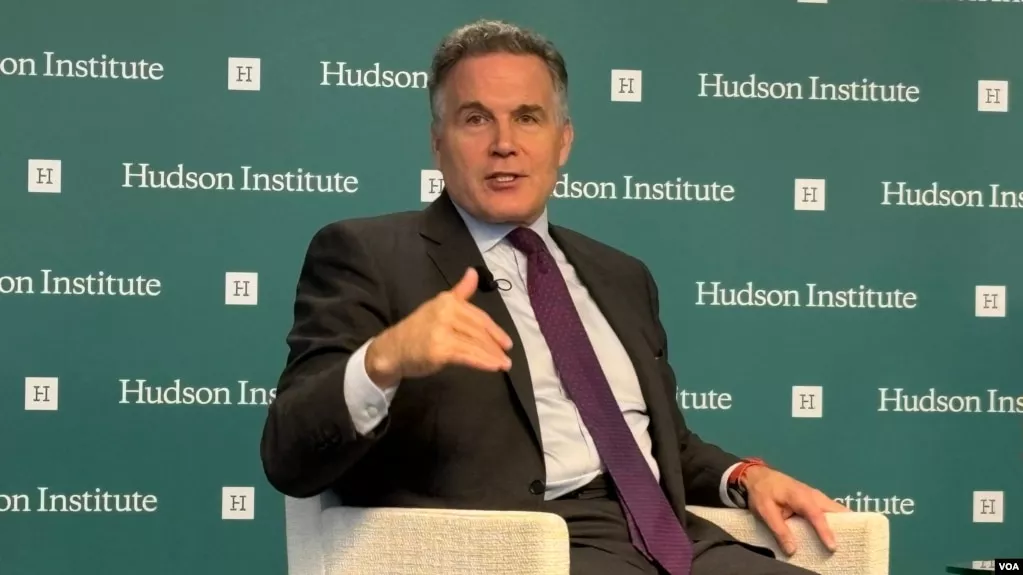
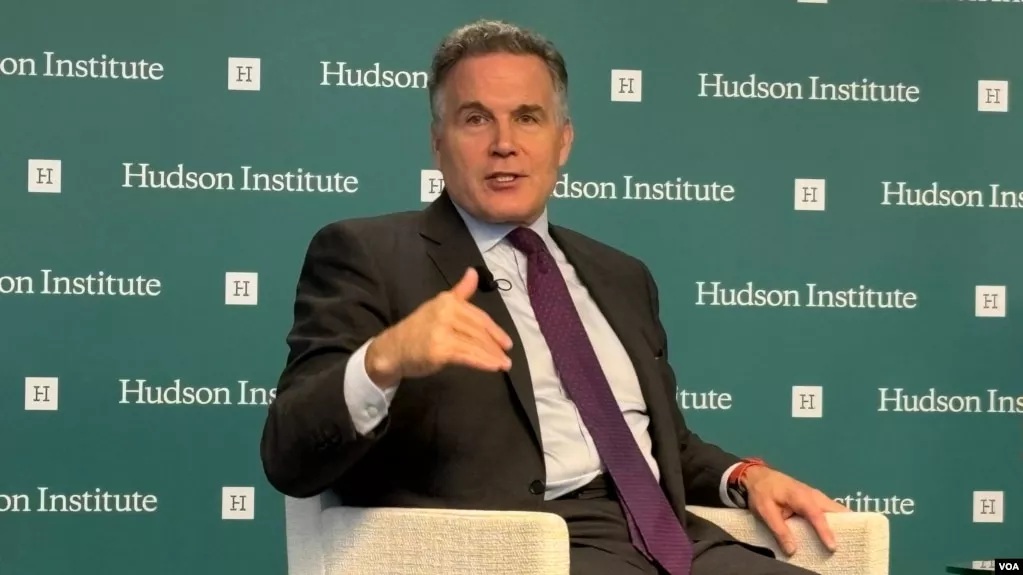
Washington’s long-running wager that economic engagement would steer China toward political liberalization was a generational miscalculation, according to U.S. Senator Dave McCormick.
Speaking at the Hudson Institute, a prominent Washington-based think tank, the Republican lawmaker from Pennsylvania delivered a stark assessment of bilateral relations, declaring that Beijing now poses the most severe national security challenge the United States has faced since World War II. McCormick argued that instead of embracing Western-style reforms, Beijing deftly converted American goodwill and trade access into strategic leverage.
“We made the wrong bet,” McCormick told the audience, looking back at the watershed decision two decades ago to admit China into the World Trade Organization. At the time, he noted, bipartisan consensus held that commercial ties would foster a more cooperative partner. Instead, history moved in the opposite direction.
A West Point graduate and former George Bush administration official who now sits on the Senate Foreign Relations Committee, McCormick traced how the paradigm shifted after 2017 when Washington formally codified Beijing as a strategic competitor. Today, he warned, that competition spans a vastly expanded frontier defined by artificial intelligence, advanced semiconductors, and quantum computing.
“This is a generational contest,” McCormick said, drawing parallels to the Cold War. While adversaries like Moscow, Tehran, and Pyongyang harbor distinct regional agendas, he argued they share a unifying objective: eroding American power. “And the architect-in-chief of that effort is Beijing.”>
McCormick asserted that Washington must deny Beijing the power to write the rules governing critical infrastructure, digital trade, and data privacy. To meet this challenge, he laid out a four-pillar strategy: securing absolute technological supremacy, revitalizing domestic economic and defense muscle, cementing alliances with nations like Japan and South Korea, and fiercely defending democratic values.
“They only understand one language: strength,” he said.
Technology Restrictions and Research Funding
To measure Washington’s success in out-pacing Beijing, McCormick outlined four operational benchmarks, beginning with an unyielding defense of America’s technological edge.
He called for aggressive chokeholds on advanced chips, semiconductor manufacturing equipment, and biotechnology, alongside stringent measures to block the leakage of dual-use technologies. Referencing legislative efforts, McCormick highlighted the Remote Access Security Act—co-authored last December with Senator Ron Wyden—which aims to plug regulatory loopholes in cloud computing services that adversaries allegedly exploit to siphon off U.S. artificial intelligence models.
The bill builds upon the existing Export Control Reform Framework, expanding Washington’s extraterritorial reach. The legislation is currently winding through the Senate Banking Committee, following a bipartisan companion bill sponsored by Representative Mike Lawler that cleared the House in January.
Beyond technology controls, McCormick renewed calls to strip Beijing of its long-standing permanent normal trade relations status, arguing that the trade privileges have been exploited for a quarter of a century.
He also stressed the urgent need to ramp up federal investment in fundamental scientific research. While private sector research and development spending is climbing, corporate capital naturally gravitates toward short-term commercial returns, leaving long-term theoretical breakthroughs dependent on patient public funding.
Rebuilding American Manufacturing and Alliances
Turning to domestic industrial policy, McCormick argued that the U.S. must broaden its domestic manufacturing base to ensure that economic growth reaches blue-collar workers. Citing his home state of Pennsylvania, he pointed to heavy investments in steel, energy, shipbuilding, and advanced data centers.
However, he issued a sharp warning against repeating the pitfalls of globalization, which hollowed out industrial towns and left working-class families behind. The economic windfalls of the artificial intelligence boom, he insisted, must translate into higher wages and quality domestic jobs.
Drawing on his upbringing in Bloomsburg, Pennsylvania, McCormick recalled firsthand how previous trade policies sacrificed industrial communities in pursuit of cheap consumer goods. “This time, it has to be different. American workers must share the spoils of technological progress.”>
The third pillar of his strategy focuses on deepening cooperation with democratic allies in Asia. Fresh off a diplomatic trip to Tokyo and Seoul, McCormick praised both capitals for stepping up their defense commitments. Japan has accelerated its path toward defense spending equivalent to two percent of its GDP, while South Korea has rolled out a record-breaking defense budget that includes a $25 billion procurement package for American military hardware.

Senator McCormick (left) participates in a discussion with Hudson Institute senior fellow Mike Gallagher in Washington on Oct. 16, 2026.
During a subsequent fireside chat with former Republican Representative and Hudson Institute senior fellow Mike Gallagher, McCormick emphasized that the U.S. defense industrial base requires a complete overhaul to scale up modern naval shipbuilding and autonomous drone manufacturing.
“While we study the evolving lessons of modern warfare in places like the Middle East and Ukraine,” McCormick said, “the speed of our practical implementation at home and with allies still falls short of what is required.”>
Defending Democratic Values
In his closing remarks, McCormick returned to the ideological dimensions of the rivalry, framing the defense of democratic institutions not merely as a moral duty, but as a core pillar of national power.
An open, free world order ultimately reinforces American security and prosperity, he argued. By relentlessly driving innovation, rebuilding industrial capacity, and binding allies closer together, Washington can secure its global leadership for the remainder of the century.
“Our chain of imperatives is clear: innovation leads to capacity, capacity leads to national strength, and national strength leads to enduring global leadership,” McCormick said.
He concluded the address by quoting General Douglas MacArthur’s famous address to Congress during the Korean War: “There is no substitute for victory.”>